A day after the U.N.'s recent international climate negotiations were supposed to conclude, delegates reached agreement on a deal that keeps alive hope for a more substantial treaty to replace the Kyoto Protocal.


After two weeks of disheartening backtracking and arguments over climate injustice, delegates in Warsaw were able to come to agreement on what the AP calls a "modest deal".
"Delegates agreed to the broad outlines of a proposed system for pledging emissions cuts and gave their support for a new treaty mechanism to tackle the human cost of rising seas, floods, stronger storms and other expected effects of global warming," reports David Jolly. "The measures added momentum to the talks as United Nations members look toward a 2015 conference in Paris to replace the moribund Kyoto Protocol."
“I think this is what they needed to move the ball forward,” said Jennifer Morgan, director of the climate and energy program at the World Resources Institute, “even if you can’t say that it provided a lot of new ambition.”
Read the full story: Deals at Climate Meeting Advance Global Effort

The Super Typhoon and Climate Change
The head of the Philippines delegation at the United Nations Framework Convention on Climate Change in Warsaw suggests climate change is responsible for Typhoon Haiyan. Is he right? Quartz investigates the connection.
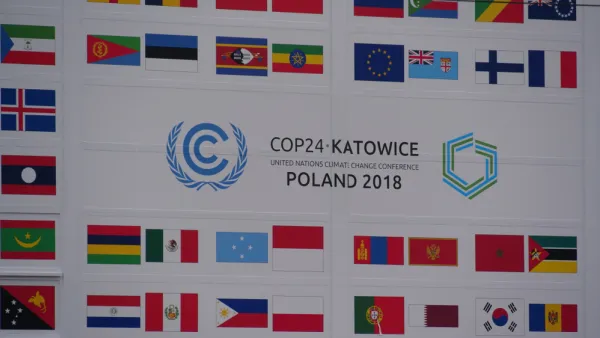
Implementing the Paris Climate Agreement in Katowice, Poland
Representatives from nearly 200 nations have been attending the U.N. Climate Change Conference in Katowice since Dec. 2 to work on implementing the 2015 Paris climate agreement. Scheduled to end Friday, it will be extended two days due to discord.
Paris Climate Accord Will Take Effect November 4
October 5 was an historic day, hailed President Obama, as nations responsible for emitting more than 55 percent of world carbon emissions have now signed the Paris climate agreement, the threshold needed for the accord to take effect in 30 days.

Planetizen Federal Action Tracker
A weekly monitor of how Trump’s orders and actions are impacting planners and planning in America.

Amtrak, CN end decades-long dispute with eight-year agreement
The new operating agreement establishes an updated framework for the companies to work together, including processes to resolve disputes.

Judges permit Denver to divert 77,000 acre feet from the Colorado River for reservoir expansion
Overuse and climate change have caused the Colorado River’s water levels to plummet.

Philadelphia to invest $2 billion into upgrading city airports as PHL places last in customer satisfaction
Modernizations to Philadelphia's airports will include baggage system upgrades and a new automated parking garage guidance system.

The LA housing policies making developers turn away from the city
Despite LA’s housing shortage, developers say the city’s "mansion-tax" and pandemic-era policies make it an unappealing place to build housing.

New density bill would require 7 California cities to establish regional transit hubs
The bill would also require major cities in California to permit high-rise residential buildings.

FREE Course: Walkable City 1: Why Walkability?
After describing his path towards focusing on walkability as the essence of good planning, Jeff Speck marches through his five principal reasons for making more walkable places.
Reinventing Malls: Planning Alchemy—Turning Gray Fields Into Gold
The course focuses on the opportunities and imperatives that shape reinvention of mall sites.

City of Wisconsin Rapids
Harvard University Graduate School of Design
KFH Group Inc.
The Architects Foundation
University of Cincinnati Online
The Pocatello Development Authority
The Urban Renewal Agency of the City of Pocatello