The concentration of carbon dioxide in the Earth's atmosphere is fast approaching levels not seen for millions of years. At 400 parts per million (p.p.m.), the planet is fast approaching the point of no return for avoiding dangerous climate change.


"Near the moonscape summit of the Mauna Loa volcano in Hawaii, an infrared analyser will soon make history. Sometime in the next month, it is expected to record a daily concentration of carbon dioxide in the atmosphere of more than 400 parts per million (p.p.m.), a value not reached at this key surveillance point for a few million years," reports Richard Monastersky.
"There will be no balloons or noisemakers to celebrate the event. Researchers who monitor greenhouse gases will regard it more as a disturbing marker of humanity’s power to alter the chemistry of the atmosphere and by extension, the climate of the planet. At 400 p.p.m., nations will have a difficult time keeping global warming in check, says Corinne Le Quéré, a climate researcher at the University of East Anglia in Norwich, UK, who says that the impact 'is getting very dangerously close to reaching the 2 °C target that governments around the world have pledged not to exceed'."
When monitoring began at the station in 1958, 'the CO2level stood at 316 p.p.m., not much higher than the 280 p.p.m. that characterized conditions before the industrial revolution.'"
Read the full story: Global carbon dioxide levels near worrisome milestone

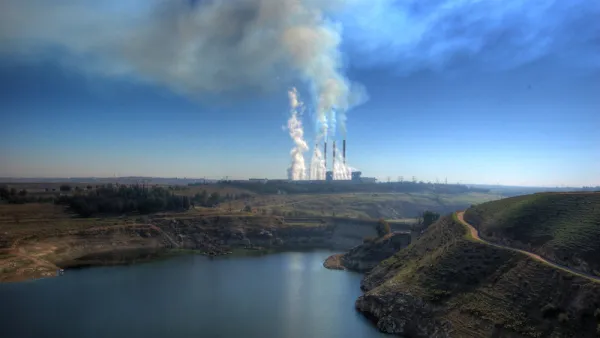
Progress on a Moonshot: Direct-Air Capture of CO2
Long considered unfeasible, direct-air capture of carbon dioxide has been achieved by a set of entrepreneurs. Scaled up, the expensive technology could slow climate change.
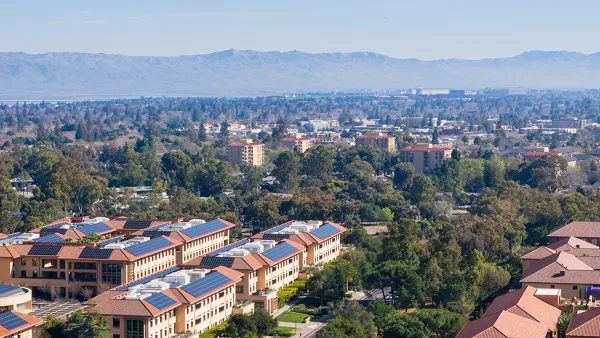
Clean Energy's Impact on Public Health
Because of the coal power it displaces, solar and wind energy generated in the Mid-Atlantic, and Upper Midwest has an outsized impact.
New Facility Captures Atmospheric Carbon and Stores it Underground
On April 7, the illinois Industrial Carbon Capture and Storage commenced operations, taking carbon that corn sequestered from the atmosphere and storing it safely almost a mile and a half underground in a sandstone formation.

Planetizen Federal Action Tracker
A weekly monitor of how Trump’s orders and actions are impacting planners and planning in America.

Amtrak, CN end decades-long dispute with eight-year agreement
The new operating agreement establishes an updated framework for the companies to work together, including processes to resolve disputes.

Judges permit Denver to divert 77,000 acre feet from the Colorado River for reservoir expansion
Overuse and climate change have caused the Colorado River’s water levels to plummet.

NYC DOT wants faster, more permanent street upgrades
The city is examining ways to build more concrete infrastructure without getting entangled in 'decades-long' projects.

'Something we’ve never seen before:' rising utility rates could strain city finances nationwide
Data centers, climate change and other factors have caused utility rates in the United States to increase by 38% since 2020.

Trump to overrule local leaders, lease millions of acres of America’s Pacific Island territories’ seafloors to mining companies
International law says that the Indigenous people of America’s territories have a right to prior and informed consent regarding projects that impact their countries.

FREE Course: Walkable City 1: Why Walkability?
After describing his path towards focusing on walkability as the essence of good planning, Jeff Speck marches through his five principal reasons for making more walkable places.
Reinventing Malls: Planning Alchemy—Turning Gray Fields Into Gold
The course focuses on the opportunities and imperatives that shape reinvention of mall sites.

Harvard University Graduate School of Design
KFH Group Inc.
Greater Baltimore Committee
The Architects Foundation
University of Cincinnati Online
The Pocatello Development Authority
The Urban Renewal Agency of the City of Pocatello