The technological advances transforming "Edison’s 130-year-old industry" promise to revolutionize the way light is integrated in our homes, workplaces, and cities.


As "the last industrial-age analog technology" is digitized, Felicity Barringer looks at "the fundamental rethinking of lighting now under way in research labs, executive offices and investor conferences."
"Innovations on the horizon range from smart lampposts that can sense gas hazards to lights harnessed for office productivity or even to cure jet lag. Digital lighting based on light-emitting diodes — LEDs — offers the opportunity to flit beams delicately across stages like the San Francisco-Oakland Bay Bridge — creating a light sculpture more elegant than the garish marketers’ light shows on display in Times Square, Piccadilly Circus and the Shibuya district in Tokyo."
She explains other possible applications, such as lampposts that function as "nodes in a smart network that illuminate spaces, visually monitor them, sense heat and communicate with other nodes and human monitors."
"James Highgate, an expert on the new technology who runs an annual LED industry conference, sees a transition period ahead 'for the next three to five years, until the eight billion sockets in the U.S. get filled' with LEDs. 'Some people will never change,' he added. 'They’ll be in the alleys buying 100-watt incandescents.'”
Read the full story: New Technology Inspires a Rethinking of Light
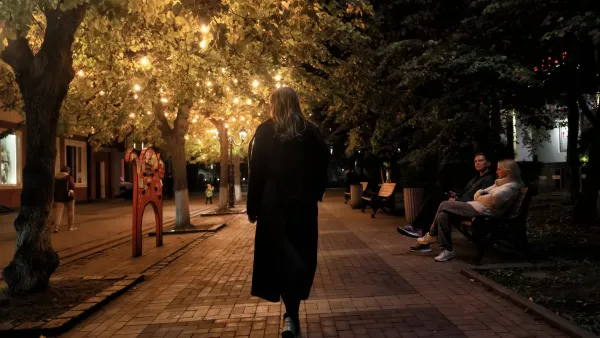
How urban design can deter crime
Well-designed public spaces and good lighting can prevent crime and make residents feel safer.
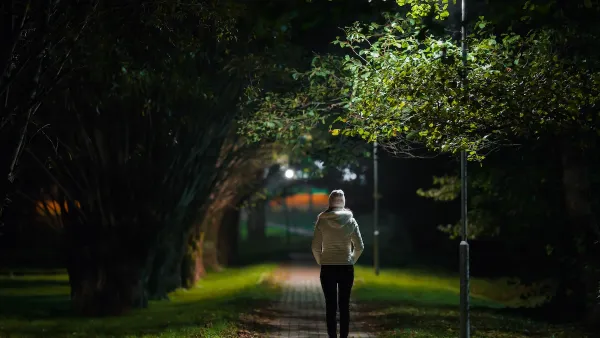
How Effective Street Lighting Improves Women’s Mobility
A lack of effective lighting in streets, parks, and transit stations limits the places where many women and other vulnerable groups feel safe traveling at night.
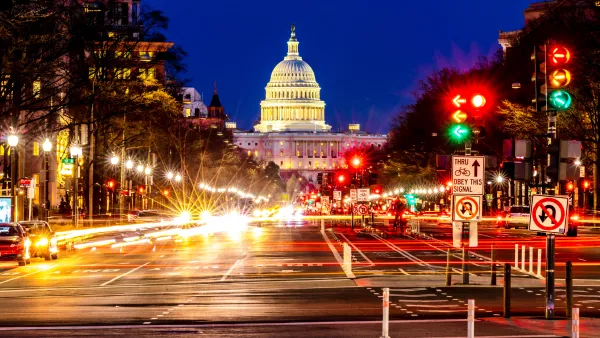
D.C. Residents Fight Light Pollution
New LED lighting has raised concerns about the health and environmental impacts of excessive or harsh lighting.

Planetizen Federal Action Tracker
A weekly monitor of how Trump’s orders and actions are impacting planners and planning in America.

California plans to bury El Niño’s downpour
If the state plays its cards right, it may be able to store a billion acre-feet of El Niño’s water in aquifers.

Desperate measures: Advocates weigh draining Lake Powell to fill Colorado River
Draining the reservoir could reduce evaporation losses by a couple hundred thousand acre-feet.

US buildings threatened, destroyed by fires set to triple by 2060
Researchers found a high fire risk for socioeconomically vulnerable neighborhoods in the American West.

LA residents may be allowed to paint their own crosswalks
Councilwoman Katy Yaroslavsky put out a motion instructing the Los Angeles Department of Public Transportation to study the feasibility of allowing volunteers to paint crosswalks.

Dallas moves to overhaul its zoning code
The city's zoning reform will allow more multi-family and mixed-use developments.

FREE Course: Walkable City 1: Why Walkability?
After describing his path towards focusing on walkability as the essence of good planning, Jeff Speck marches through his five principal reasons for making more walkable places.
Reinventing Malls: Planning Alchemy—Turning Gray Fields Into Gold
The course focuses on the opportunities and imperatives that shape reinvention of mall sites.

City of Rosemead
Rutgers University, Edward J. Bloustein School of Planning and Public Policy
One Hundred Miles
Hunter College, City University of New York (CUNY)
The Architects Foundation
University of Cincinnati Online
City of Cambridge
Montrose County
The Pocatello Development Authority