The General Services Administration, which is looking for ways to fund a new FBI campus, has more ideas at its fingertips with three tantalizing proposals for redeveloping the Hoover Building in downtown Washington, D.C., writes Jonathan O'Connell.


Three teams of real estate and finance graduate students from Cornell, Georgetown and MIT emerged as the finalists in an ideas competition for the 6.66 acre site of the unloved Hoover building, which has been serving as FBI headquarters in Washington, D.C.
The three teams provided very different takes on the balance of uses, possible anchor tenants, and relationship to surrounding context and parking, with the Cornell team's proposal selected as the winner by a panel of industry professionals.
Jonathan O'Connell provides the details of each proposal down to the square footage, including the jury's partiality toward the proposal that valued the site the highest at $600 million. Georgetown, the local bidder, which claims to have an inside perspective on what mix of uses would thrive in this location on highly visible Pennsylvania Avenue, valued the site at $110 million, the lowest of the three finalists.
Read the full story: More ideas for the Hoover building

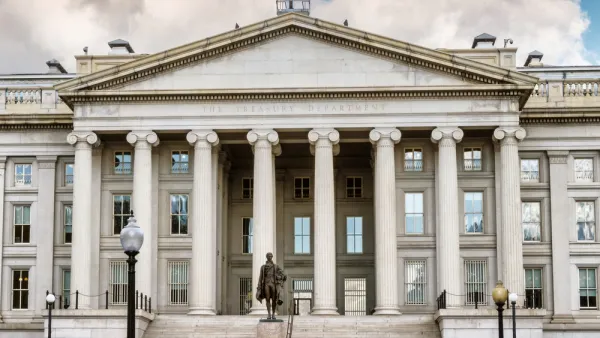
White House Could Mandate Classical Style for All Federal Buildings
The Trump administration prefers the Neoclassical style of buildings like the Treasury Building in Washington, D.C.
Making the Most of the Federal Government's Vast Portfolio of Commercial Properties
As the largest commercial property holder int he United States, the federal government's development plans can contribute to the economic and cultural success of communities.
GSA Proposes a Trade for D.C.'s Unloved Hoover Building
The FBI may get the new building it's been clamoring for, and developers may get a prime opportunity on D.C.'s most prestigious avenue, if a recent proposal by the GSA comes to pass. But what will happen to one of the city's last Brutalist buildings?

Planetizen Federal Action Tracker
A weekly monitor of how Trump’s orders and actions are impacting planners and planning in America.

‘Going backwards:’ Baltimore mayor, students rally against state's transit funding plan
Maryland's proposed six-year plan provides no funding for Baltimore’s BMORE bus program and reduces its road maintenance funding.

Detroit to transform waterfront with $2.2 billion investment
Developers will convert about 18 acres of unused parking lot space into civic spaces.

Data center developers are using lawsuits, cash offers to ‘overwhelm’ rural America
Newsrooms in five states worked together to uncover the tactics big tech developers use to buy land from reluctant communities.

U.S.-Iran war may have ‘devastating’ impact on cost to warm homes
Vermont and Maine residents may see a 76% increase in the cost of warming their homes this winter.

Senate bill would ‘overhaul’ environmental permitting laws
Under the proposed act, government agencies would also not be able to suspend or rescind permits after granting them.

FREE Course: Walkable City 1: Why Walkability?
After describing his path towards focusing on walkability as the essence of good planning, Jeff Speck marches through his five principal reasons for making more walkable places.
Reinventing Malls: Planning Alchemy—Turning Gray Fields Into Gold
The course focuses on the opportunities and imperatives that shape reinvention of mall sites.

One Hundred Miles
County of Mendocino
planning NEXT
The Architects Foundation
University of Cincinnati Online
Montrose County
Northern Illinois Transit Authority (NITA)
The Pocatello Development Authority