Green buildings "make business sense," says Jane Hanley, World Green Building Council CEO.


A new report by the World Green Building Council (WorldGBC) has aggregated green building data from case studies across the world, finding that green buildings cost the same as conventional ones to construct, have added occupant health and productivity benefits, mitigate regulatory risk factors, have increasing marketability and asset value as markets mature and demonstrate lower operating costs.
The report, "The Business Case for Green Buildings: A Review of the Costs and Benefits for Developers, Investors and Occupants", concludes that implementing green building measures at a city scale can significantly help to combat the effects of global warming, create jobs and provide energy security.
Read the full story: Economic benefits of green buildings highlighted
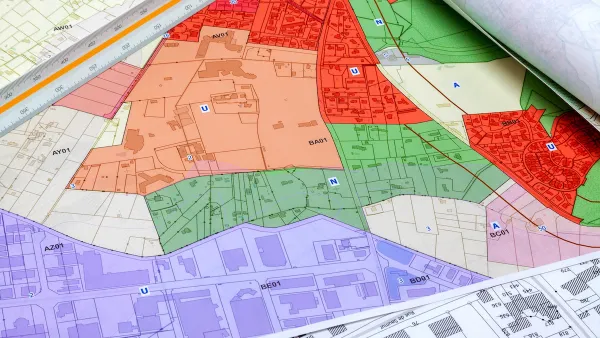
How Zoning Affects Greenhouse Gas Emissions
As the urgency of the climate crisis increases, a paper in the Notre Dame Law Review argues that increased density is not a universally effective strategy to reduce emissions and that different strategies are needed for low-carbon places versus high-carbon ones.
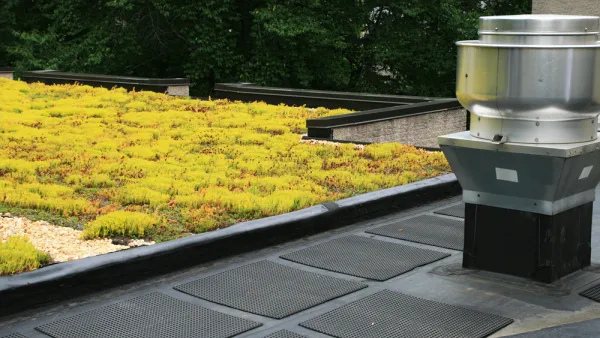
Fighting Climate Change With Green Building Standards
Localities in Canada's Durham Region are implementing green building regulations to promote sustainable development and reduce resource use.
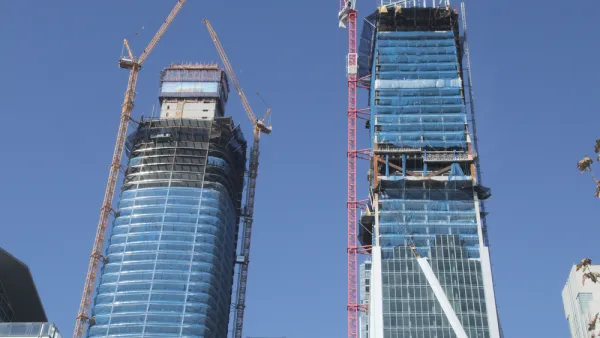
Another Big City Announces Sweeping Energy Plans for Buildings
San Francisco and New York City made a theme of this year's Earth Day: mandating emissions reductions from buildings.

Planetizen Federal Action Tracker
A weekly monitor of how Trump’s orders and actions are impacting planners and planning in America.

Washington state to charge fee to drivers with fuel-efficient cars
Revenue from the fee will go towards supporting the state’s highways.

Trump to blast ‘hydrocarbon highway’ through ‘world’s longest art gallery’
Environmental and historic preservation groups are suing to stop the project.

Minnesota Gold Line extension now has launch date
Plans to extend the Gold Line have existed since 2025.

Data centers need power – lower income, rural residents pay the price
In 2025, data centers paid only 38% of the energy infrastructure costs linked to their growth, with households, especially rural and low-income residents, bearing the remaining burden.

MBTA Green Line project moved to next phrase of CIG program
The modernization effort will cost $4.08 billion.

FREE Course: Walkable City 1: Why Walkability?
After describing his path towards focusing on walkability as the essence of good planning, Jeff Speck marches through his five principal reasons for making more walkable places.
Reinventing Malls: Planning Alchemy—Turning Gray Fields Into Gold
The course focuses on the opportunities and imperatives that shape reinvention of mall sites.

City of Charlotte
City of Rosemead
Rutgers University, Edward J. Bloustein School of Planning and Public Policy
University of Michigan School for Environment and Sustainability (SEAS)
Hunter College, City University of New York (CUNY)
The Architects Foundation
University District Partnership