The habitable bridge, "out of favor since the Renaissance," is having a moment, as cities across America seek to "shift the task of mending the urban fabric toward the private sector," reports Henry Grabar.


According to Grabar, "At one time, nearly every city in Europe could boast at least one
chaotic span that balanced people, shops and houses over a river." However, by the early 2000s only the iconic Ponte Vecchio in Florence and three other habitable bridges were left on the continent.
The infrastructure challenges that led to the historic decline of the habitable bridge may be a thing of the past, as the later half of the last decade saw the construction of new habitable bridges in Columbus, Ohio (America's first), Zaragoza, Spain, and Beijing.
Now, writes Grabar, "Plans are underway for habitable bridges over highways in Washington,
D.C., and New Haven, Connecticut, and architects and planners have
proposed similar ideas in Montreal, Abu Dhabi, Amsterdam, Acapulco, and London."
Read the full story: The Habitable Bridge, Resurrected

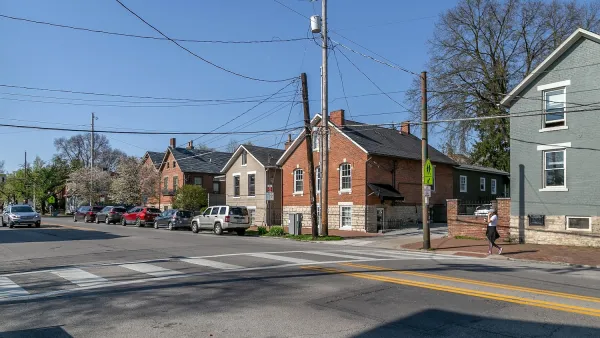
Columbus Introduces New Rules Allowing ADUs in all Residential Districts
The city’s recent zoning code updates include new rules for secondary housing units.

DC, Columbus Bike Share Fleets Introduce Cargo Bikes
Shared mobility is ‘growing up,’ with rental options increasingly expanding to include e-bikes, scooters, and cargo bikes.
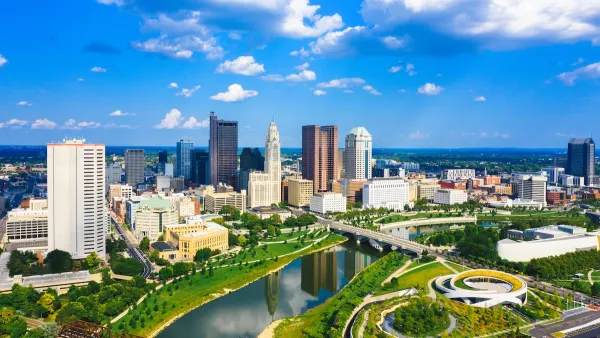
Low-Income Columbus Households Struggle to Find Housing
The Ohio city has a more severe affordable housing crisis than more traditionally expensive cities like New York and San Francisco.

Planetizen Federal Action Tracker
A weekly monitor of how Trump’s orders and actions are impacting planners and planning in America.

Amtrak, CN end decades-long dispute with eight-year agreement
The new operating agreement establishes an updated framework for the companies to work together, including processes to resolve disputes.

Judges permit Denver to divert 77,000 acre feet from the Colorado River for reservoir expansion
Overuse and climate change have caused the Colorado River’s water levels to plummet.

NYC DOT wants faster, more permanent street upgrades
The city is examining ways to build more concrete infrastructure without getting entangled in 'decades-long' projects.

'Something we’ve never seen before:' rising utility rates could strain city finances nationwide
Data centers, climate change and other factors have caused utility rates in the United States to increase by 38% since 2020.

Trump to overrule local leaders, lease millions of acres of America’s Pacific Island territories’ seafloors to mining companies
International law says that the Indigenous people of America’s territories have a right to prior and informed consent regarding projects that impact their countries.

FREE Course: Walkable City 1: Why Walkability?
After describing his path towards focusing on walkability as the essence of good planning, Jeff Speck marches through his five principal reasons for making more walkable places.
Reinventing Malls: Planning Alchemy—Turning Gray Fields Into Gold
The course focuses on the opportunities and imperatives that shape reinvention of mall sites.

Harvard University Graduate School of Design
KFH Group Inc.
Greater Baltimore Committee
The Architects Foundation
University of Cincinnati Online
The Pocatello Development Authority
The Urban Renewal Agency of the City of Pocatello