Increasingly utilized as 'black boxes' in the aftermath of collisions with motorized vehicles, video cameras are the newest addition to the arsenal of tools being employed to make streets safer for bikes.


Nick Wingfield reports on the increasing use of small, bicycle- or rider-mounted video cameras, that are, "providing high-tech evidence in what is sometimes an ugly
contest between people who ride the roads on two wheels and those who
use four."
According to Wingflield, "Video from these cameras has begun to play an invaluable role in police
investigations of a small number of hit-and-runs and other incidents
around the country, local authorities say. Lawyers who specialize in
representing bicyclists say they expect the use of cameras for this
purpose to increase as awareness of the devices goes up and their
prices, now starting at around $200, come down."
The growing use of such cameras may even work as a deterrent to prevent motorist harassment, a widespread nuisance that new laws in Los Angeles and Berkeley have sought to address.
"'It's a fact of life that on American roads that you get punked, cut off
purposely, harassed, not once but on a regular basis,' said Bob
Mionske, a former Olympic cyclist who is now a lawyer representing
bicyclists in Portland, Ore. 'If motorists start to hear about bikes
having cameras, they're going to think twice about running you off the
road.'"
Read the full story: Cameras Are Cyclists’ ‘Black Boxes’ in Accidents
All Aboard L.A.'s Bike Commuter Train
This train is not steel wheels on steel rail - it is multiple two-wheeled rubber tires, commuting together, providing support and safety to novice cyclists, but sometimes it backfires. Interviewed is a frustrated motorist who intimidated them.
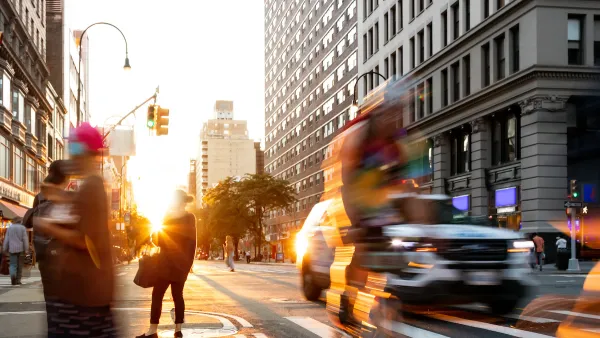
Research: Bike Rolling-Stop Laws Don’t Lead to Unsafe Behavior
Rolling stops by bicyclists get a bad rap, particularly among motorists who perceive them to be breaking the law. But new research shows laws that allow for rolling stops for cyclists do not lead to unsafe behavior by either group.
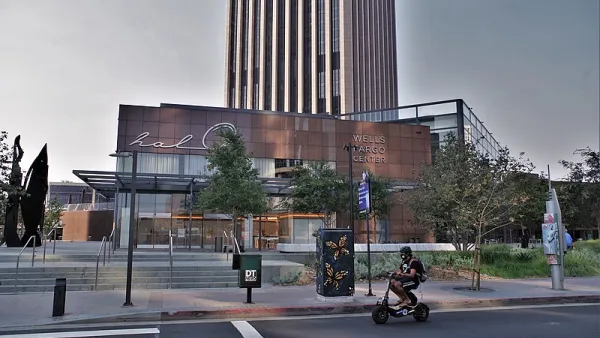
Climate Action: As Simple as Riding an E-Bike
A new e-bike credit, if coupled with improved bike safety infrastructure, could encourage many Americans to replace short car trips with e-bike rides, reducing emissions and congestion.

Desperate measures: Advocates weigh draining Lake Powell to fill Colorado River
Draining the reservoir could reduce evaporation losses by a couple hundred thousand acre-feet.

Eastern Nebraska is running out of electricity
Data centers and electrification are straining eastern Nebraska’s grid, throttling economic development.

Move over, LA: St. Louis gears up for Olympics, invests millions in downtown redevelopment
The Missouri city will host the 2028 Olympic soccer group stage and knockout matches.

Mass. votes against statewide minimum lot size for single-family homes
Over 2 million residents voted on Question 7; it was decided by just over 30,000 votes.

Maryland’s $15 billion bridge project gains key approval
The Maryland Transit Authority said the project will create over 60,000 jobs and add $23 billion to the local economy.

‘No clear next steps’ for Chicago's permanent festival grounds
Eleventh Ward Ald. Nicole Lee has suggested Soldier Field as a possible location for the permanent event space.

FREE Course: Walkable City 1: Why Walkability?
After describing his path towards focusing on walkability as the essence of good planning, Jeff Speck marches through his five principal reasons for making more walkable places.
Reinventing Malls: Planning Alchemy—Turning Gray Fields Into Gold
The course focuses on the opportunities and imperatives that shape reinvention of mall sites.

City of Rosemead
Rutgers University, Edward J. Bloustein School of Planning and Public Policy
One Hundred Miles
University of Michigan School for Environment and Sustainability (SEAS)
Hunter College, City University of New York (CUNY)
The Architects Foundation
City of Cambridge
Montrose County
The Pocatello Development Authority