Pittsburgh is smoothing over the residue of its industrial past, turning an abandoned railway into a waterfront park, Paige Miller reports.


Just two years ago, Forbes gave Pittsburgh the distinction of America's most livable city, noting a trend it called a "rust belt renaissance." And as it makes its way out of a three-decades-long slump, Steel City is finding ways to take advantage of the landscape it once relegated to manufacturing and shipping.
"The riverfronts were designed around industry rather than the community, and the land around them does not connect to our neighborhoods," said Lena Andrews, senior planning specialist at the Urban Redevelopment Authority of Pittsburgh.
But with the help of federal grants from the Department of Transportation and the Department of Housing and Urban Development, the city was able to move forward with the Allegheny Riverfront Green Boulevard, "a multi-modal transportation corridor that includes park access, open space programming, neighborhood design, stormwater management and habitat restoration," writes Miller.
Officials are considering proposals to use the Green Boulevard as a transit corridor, as well.
Read the full story: Spotlight on Sustainability: Pittsburgh’s Waterfronts

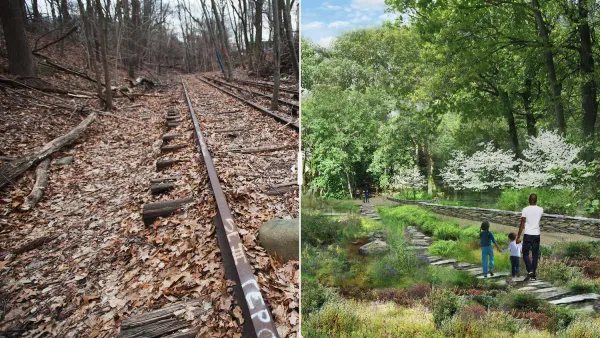
From Queens to Chattanooga, Federal Funding Cuts are Killing Park Projects
Cuts to grants from the Department of Transportation to the EPA are impacting small and large park projects across the country.
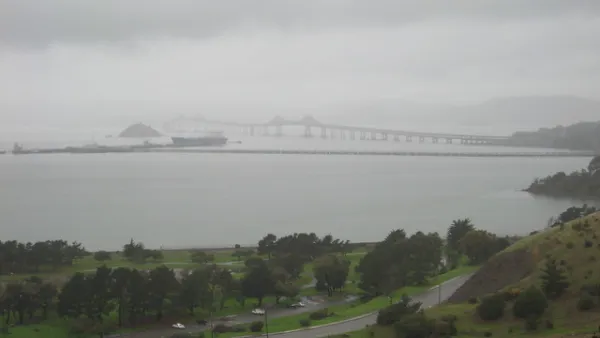
Trails and Rails Battle in San Francisco Bay Shoreline Park
Can freight trains and a scenic shoreline park along San Francisco Bay coexist, or are they incompatible uses? The East Bay Regional Park District voted to remove old rail tracks that BNSF Railway wants to reactivate. A local court may decide.
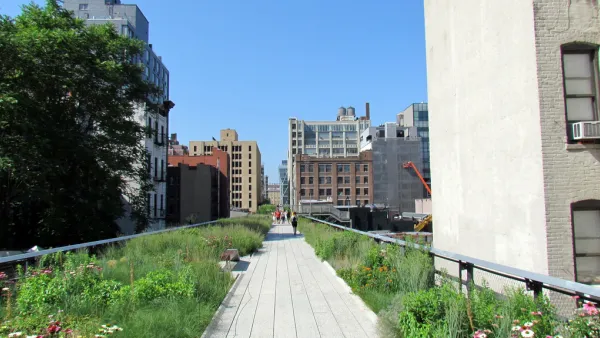
Pittsburgh's Version of the High Line Takes Off
Pittsburgh is betting on its own version of New York City's famed elevated park, based on a 500-foot-long raised roadway connecting two warehouses.

Planetizen Federal Action Tracker
A weekly monitor of how Trump’s orders and actions are impacting planners and planning in America.

California plans to bury El Niño’s downpour
If the state plays its cards right, it may be able to store a billion acre-feet of El Niño’s water in aquifers.

Chicago breaks ground on $3 billion megadevelopment
The new neighborhood, titled Foundry Park, will one day host 3,700 residences.

California High-Speed Rail Authority CEO resigns after $600,000 scandal
Under Ian Choudri, the authority used taxpayer dollars to fund first class flights and trips to nightclubs.

Want to study the Missouri River? Soon, you may need unanimous approval from 10 states
Legislation would require 10 governors’ permission to study or build projects moving water outside the basin.

Desperate measures: Advocates weigh draining Lake Powell to fill Colorado River
Draining the reservoir could reduce evaporation losses by a couple hundred thousand acre-feet.

FREE Course: Walkable City 1: Why Walkability?
After describing his path towards focusing on walkability as the essence of good planning, Jeff Speck marches through his five principal reasons for making more walkable places.
Reinventing Malls: Planning Alchemy—Turning Gray Fields Into Gold
The course focuses on the opportunities and imperatives that shape reinvention of mall sites.

City of Rosemead
Rutgers University, Edward J. Bloustein School of Planning and Public Policy
One Hundred Miles
Hunter College, City University of New York (CUNY)
The Architects Foundation
University of Cincinnati Online
City of Cambridge
Montrose County
The Pocatello Development Authority