Twenty years ago, Oriole Park at Camden Yards began a revolution in baseball stadium design when it opened in downtown Baltimore. Two decades onward, Mark Byrnes asks if the retro ballpark movement is officially over.


When it opened in 1992, Oriole Park at Camden Yards, designed by HOK Sport, was novel in its throwback quirks. "With a 19th century warehouse for a backdrop, a pedestrian walkway that respects the pre-existing street grid, and exposed, dark green painted steel beams, Camden Yards instantly became the model for the perfect urban ballpark," notes Byrnes.
With clubs across the country clamoring for new digs after decades of moribund ballpark construction, Oriole Park's successes spawned at least a dozen imitators. Byrne sees Citi Field in New York, home to the Mets, which opened in 2009, as the last of the retro-classic ballparks.
In its place, and represented by the newest sign of changing tastes opening on Wednesday in Miami, are modern stadiums that take their design cue from contemporary trends and embrace progressive, less familiar, forms.
With the retro craze seemingly coming to a close, Byrnes presents a slide show of every new stadium to debut since 1992, many of which were strongly influenced by Camden Yards.
Read the full story: Is the Retro Ballpark Movement Officially Over?

Doubts Over Development Benefits of New Atlanta Braves Stadium
The Atlanta Braves are planning a new stadium, opening in 2017, in suburban Cobb County. How much residual development investment should local stakeholders expect?
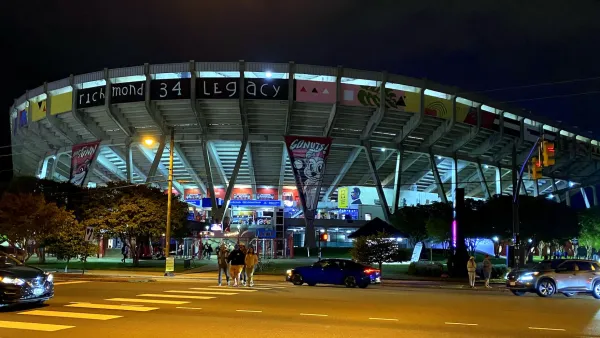
Richmond's new 'stadium district' will include hundreds of homes, offices, jobs
The city is planning for a neighborhood revival in the area around a new baseball stadium.
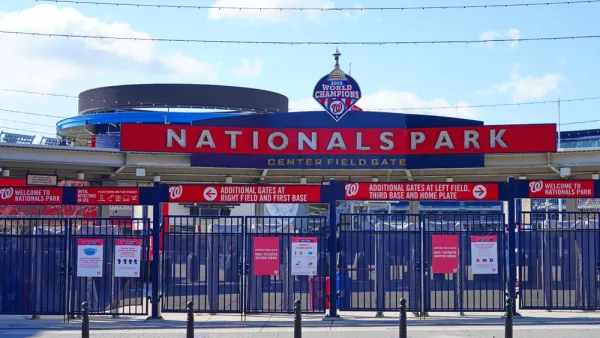
Nationals Park Survives Permitting Scare, Remains Open for Final Games of the Baseball Season
The Washington Nationals, winners of the 2019 World Series, almost needed to find a new home for the final games of the 2022 baseball season after Events D.C. failed to meet the terms of the certificate of occupancy for Nationals Park.

Planetizen Federal Action Tracker
A weekly monitor of how Trump’s orders and actions are impacting planners and planning in America.

‘Going backwards:’ Baltimore mayor, students rally against state's transit funding plan
Maryland's proposed six-year plan provides no funding for Baltimore’s BMORE bus program and reduces its road maintenance funding.

Detroit to transform waterfront with $2.2 billion investment
Developers will convert about 18 acres of unused parking lot space into civic spaces.

HUD, USDA agree on framework to simplify housing environmental review standards
Their agreement is a requirement of the 21st Century ROAD to Housing Act.

Cost of water rising at a faster pace than inflation, median household income
California and Maryland residents have seen their water bills grow especially high.

NYC building owners overwhelmingly comply with new emissions limits
The New York City Department of Buildings is fining owners who did not file emissions reports.

FREE Course: Walkable City 1: Why Walkability?
After describing his path towards focusing on walkability as the essence of good planning, Jeff Speck marches through his five principal reasons for making more walkable places.
Reinventing Malls: Planning Alchemy—Turning Gray Fields Into Gold
The course focuses on the opportunities and imperatives that shape reinvention of mall sites.

City of Thousand Oaks
City of Wisconsin Rapids
Harvard University Graduate School of Design
The Architects Foundation
University of Cincinnati Online
Northern Illinois Transit Authority (NITA)
The Pocatello Development Authority
The Urban Renewal Agency of the City of Pocatello