Ariel Schwartz reports on the findings of a new study from Urban Affairs Review that surveyed residents from 10 major international cities on what qualities make them most happy.


According to Schwartz, the findings show a significant association between happiness and the built urban environment. "In general, respondents were happiest when their cities had easy access to public transportation, cultural activities, libraries, shops, and sports facilities." Moreover, respondents attributed amenities like clean drinking water and a safe environment as important to their levels of happiness.
Interestingly, the study showed that the concept of a "beautiful city" had little to do with a city's cleanliness. "Living in a ‘beautiful city' was the most important predictor of happiness among survey respondents, but having clean streets, sidewalks, and public spaces weren't rated as being important," writes Schwartz.
Researchers speculate that connectedness is also a key to happiness, pointing to a major difference between the designs of city environments and gated suburban communities. A city is designed and built around shared space, which promotes the building of social connections through shared experiences. Whereas the typical gated suburb, in its layout and appearance, discourages such connections, and by inference, makes people less happy.
Read the full story: Forget The Suburbs: Living In Beautiful, Well-Designed Cities Makes People Happy
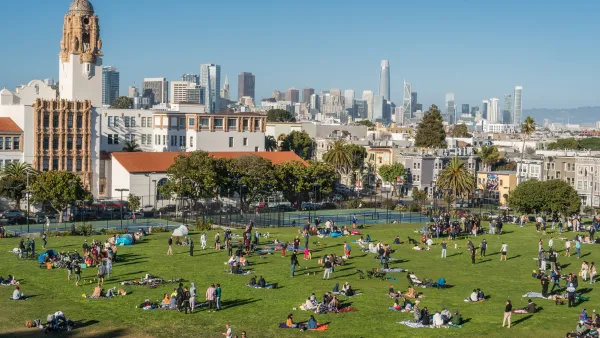
Only one US city makes the Happy City Index top 50
The list is topped by Copenhagen, Helsinki, and Geneva.

January Must-Reads: Top 10 Articles From Last Month
How a tidal wave of potential changes at the federal level could throw many programs planners depend on into chaos, a roundup of last year’s zoning stories, and the continuing ripple effects of a landmark Supreme Court case.
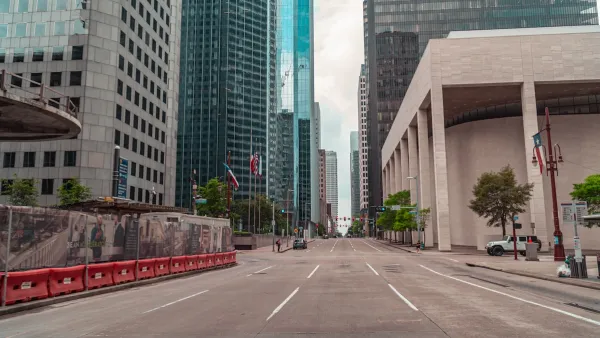
Research Links Urban Design and Human Happiness
An emerging field of ‘neuroarchitectural’ research is revealing how building facades and urban design impact the human brain and body.

Planetizen Federal Action Tracker
A weekly monitor of how Trump’s orders and actions are impacting planners and planning in America.

California plans to bury El Niño’s downpour
If the state plays its cards right, it may be able to store a billion acre-feet of El Niño’s water in aquifers.

Desperate measures: Advocates weigh draining Lake Powell to fill Colorado River
Draining the reservoir could reduce evaporation losses by a couple hundred thousand acre-feet.

Los Angeles just elected an urban planner as its mayor
Transportation analysts are optimistic that Raman will be more aggressive in addressing transit issues than Bass.

Mamdani’s pied-à-terre tax survives legal challenge
A panel of judges found that the plaintiffs failed to demonstrate injury as a result of New York City's implementation of the tax.

Eastern Nebraska is running out of electricity
Data centers and electrification are straining eastern Nebraska’s grid, throttling economic development.

FREE Course: Walkable City 1: Why Walkability?
After describing his path towards focusing on walkability as the essence of good planning, Jeff Speck marches through his five principal reasons for making more walkable places.
Reinventing Malls: Planning Alchemy—Turning Gray Fields Into Gold
The course focuses on the opportunities and imperatives that shape reinvention of mall sites.

City of Rosemead
Rutgers University, Edward J. Bloustein School of Planning and Public Policy
One Hundred Miles
University of Michigan School for Environment and Sustainability (SEAS)
Hunter College, City University of New York (CUNY)
The Architects Foundation
City of Cambridge
Montrose County
The Pocatello Development Authority