Sarah Laskow reports on new findings that show California’s green economy fared much better in the economic downturn than the economy as a whole, demonstrating the overall staying power of green jobs.


The new study, published by Next 10, a non-profit focused on California's future, compared growth in 15 industries in what they deem the "core green economy" with growth in the overall economy over the short and long terms, with compelling results.
Althought the Green Economy did struggle during the recession, it was impacted far less than the overall economy. In California, "while the downturn reset core green employment back to 2008 levels, total state employment was set back to 2001 levels." The growth in green industries over the longer term is even more dramatic, "growing 53 percent since 1995" while "the economy grew 12 percent overall".
According to Laskow, one explanation for the strength of the green economy is that, "green industries become more attractive economic opportunities in times of downturn, since they promise cost savings and resilience in the face of rising costs." It probably doesn't hurt that green jobs are able to provide such savings along more altruistic principles.
Laskow concludes that the staying power of green jobs will provide a springboard as the overall economy returns to growth.
Read the full story: In California, Green Jobs Are Recession-Proof


Report: Cities’ Climate Plans Fail to Include Workforce Development
While a few cities have detailed goals and investment strategies for building their green workforce, most U.S. cities fail to address the need for the training and education of a new generation of workers.
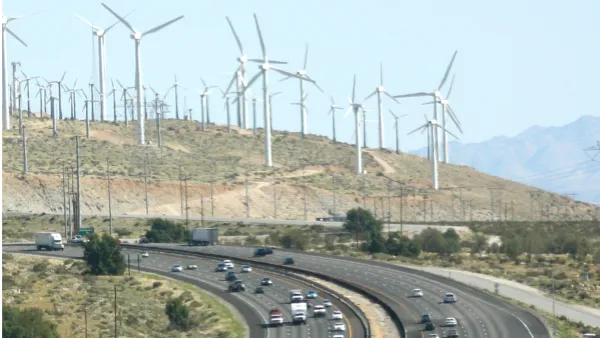
Can Emissions Reductions Last Beyond the Pandemic?
The dramatic reductions in carbon emissions during the last year only highlight how drastically humans must change behavior to meet climate goals.
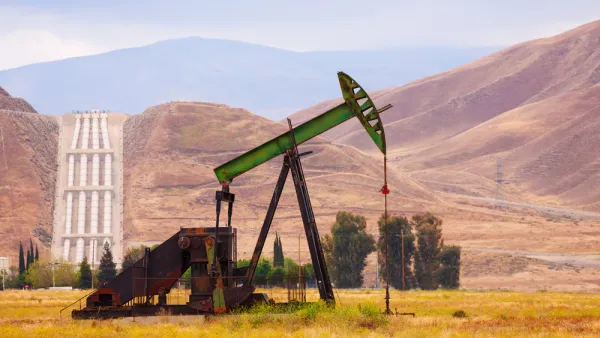
New Oil and Gas Drilling in California May Be Subject to Moratorium
Gov. Gavin Newsom pleased environmentalists by doing what his predecessor, Gov. Jerry Brown, refused – halting all new oil and gas fracking and placing a moratorium on another extraction method linked to a massive oil spill in Kern County.

Planetizen Federal Action Tracker
A weekly monitor of how Trump’s orders and actions are impacting planners and planning in America.

Chicago breaks ground on $3 billion megadevelopment
The new neighborhood, titled Foundry Park, will one day host 3,700 residences.

This MA town is drowning in its own sewage — and residents like it that way
Susan Murcott, a waste water expert, said if Carlisle didn't address their leaking sewage, the problem could turn “deadly.”

Iowa taxpayers are paying thousands to clean manure out of their water
While the Clean Water Act makes states responsible for regulating factory farms that discharge pollutants, Iowa has turned a blind eye to the polluting farms.

Amtrak cuts ribbon on Seattle Airo maintenance facility
The $250 million, nearly 100,000-square-foot building can house an entire Cascades Airo trainset.

To power data centers, Google seeks autonomous control of thousands of homes’ electricity
The tech company has signed a deal to indirectly pay Mid-Atlantic residents to reduce their power demand when the grid is strained.

FREE Course: Walkable City 1: Why Walkability?
After describing his path towards focusing on walkability as the essence of good planning, Jeff Speck marches through his five principal reasons for making more walkable places.
Reinventing Malls: Planning Alchemy—Turning Gray Fields Into Gold
The course focuses on the opportunities and imperatives that shape reinvention of mall sites.

City of Rosemead
Rutgers University, Edward J. Bloustein School of Planning and Public Policy
One Hundred Miles
The Architects Foundation
University of Cincinnati Online
Montrose County
The Pocatello Development Authority
The Urban Renewal Agency of the City of Pocatello