When compared to China's accomplishments in completing subway lines, North America's cities look exceedingly timid, where construction timeframes can stretch into decades. Will Doig examined why.


As part of Salon's "Dream City" feature, Will Doig looks at how North American cities' mass transit schemes often get bogged down in bureaucracy, politics, financial woes and mismanagement, to the point where it's not unreasonable for people to wonder if they'll still be alive when the line in their city is expected to be completed. He writes,
"It only takes one politician to gum up a world-class transit plan...Voters want a subway stop on their block, so their elected officials fight for it, whether or not it really makes sense from an urban planning perspective. Or they don't want the subway coming near them. Or they want light rail but not a bus. Or they want an airport link, but they want it to go around their neighborhood rather than through it.
Good public transit is a cherished ideal of many progressives. Ironically, progressive values can end up making transit construction take longer. Part of the reason we don't build as fast as China does is because we have workers' unions, ADA compliance rules, and environmental concerns that require time-consuming impact studies...Good, affordable transit is a human rights issue too, though, and in many ways the common link in our desire for healthier, less wasteful cities that serve everyone equally."
Read the full story: Should it take decades to build a subway?

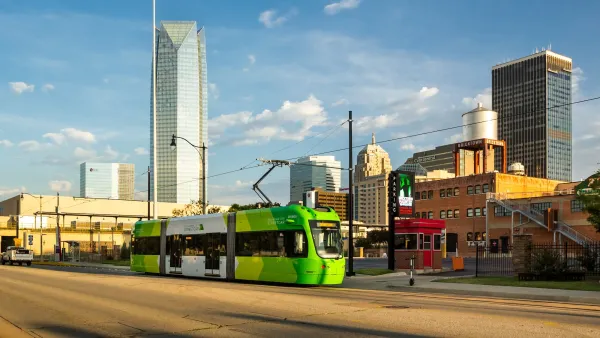
Oklahoma City bets on transit
The city's mayor is urging residents to support a new sales tax that would fund transit expansion in the growing city.
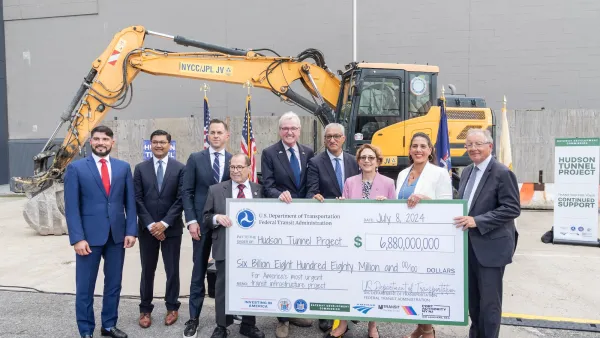
Trump administration is withholding over $7B in transit grants
Congress allocated $7.7 billion to the Capital Investment Grants program. The Federal Transit Administration has yet to sign a single agreement.
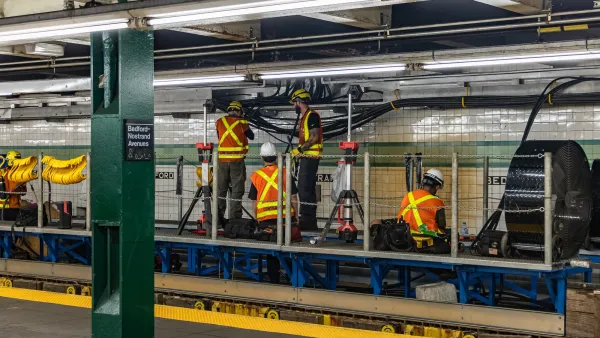
Report: BUILD Act would strip over $2B in transit projects from California and New York alone
The proposed federal transportation bill would eliminate billions in funding from the Federal Transit Administration, the Federal Railroad Administration and other federal agencies that fund transit and multimodal transportation programs.

Planetizen Federal Action Tracker
A weekly monitor of how Trump’s orders and actions are impacting planners and planning in America.

The state-sanctioned urbicide of Austin
People don’t kill cities. Freeways do.

Colorado’s Largest Data Center Could Rise Next to Homes — Without a Public Hearing
The proposed campus would consume 11 times the power of Denver International Airport; as it has across the country, opposition mounts.

Judges permit Denver to divert 77,000 acre feet from the Colorado River for reservoir expansion
Overuse and climate change have caused the Colorado River’s water levels to plummet.
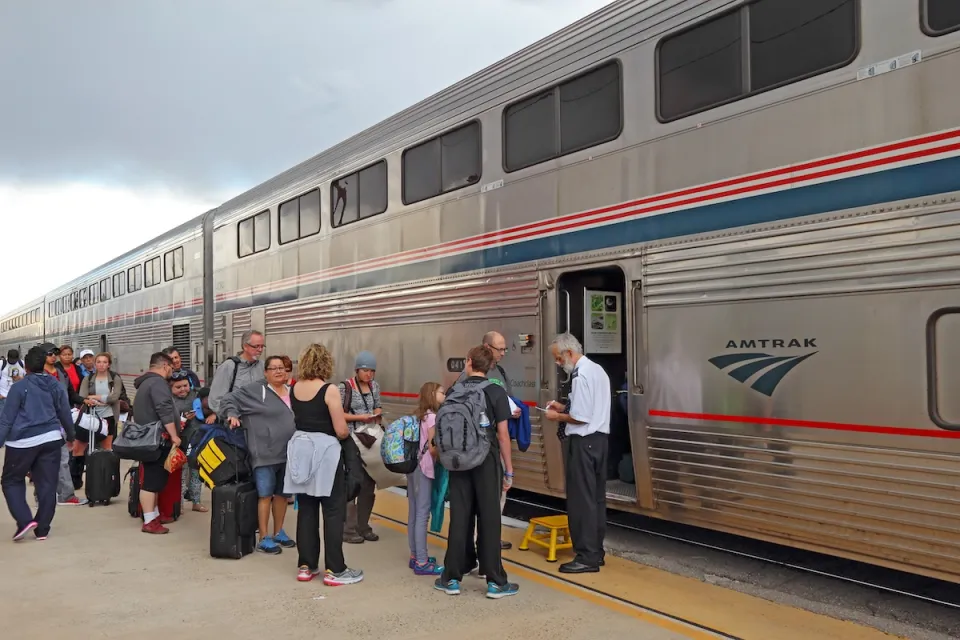
Amtrak, CN end decades-long dispute with eight-year agreement
The new operating agreement establishes an updated framework for the companies to work together, including processes to resolve disputes.
Raised interest rates may kill financially vulnerable construction projects
The chief economist at ConstructConnect warns that if construction project owners are negatively impacted by the raised rates, it could result in delayed payments to contractors.

FREE Course: Walkable City 1: Why Walkability?
After describing his path towards focusing on walkability as the essence of good planning, Jeff Speck marches through his five principal reasons for making more walkable places.
Reinventing Malls: Planning Alchemy—Turning Gray Fields Into Gold
The course focuses on the opportunities and imperatives that shape reinvention of mall sites.

KFH Group Inc.
Greater Baltimore Committee
Eagle County Government
The Architects Foundation
University of Cincinnati Online
The Pocatello Development Authority
The Urban Renewal Agency of the City of Pocatello