A new report released Wednesday, to coincide with a U.S. Conference of Mayors gathering in Washington D.C., finds that only 26 of the nation’s 363 metropolitan areas had recovered the jobs lost during the recession by the end of last year.


Michael Cooper reports on the bleak outlook found in the study commissioned by the Conference, "It will take at least five years for the 80 hardest-hit areas to recover the jobs they lost."
The report comes as the country's mayors -- Democrat and Republican -- grow increasingly frustrated that the Federal Government, rather than providing cities with tools to improve their economies, have in fact cut many of the programs that cities have come to rely on to fund operations and improvements.
"Not only has Congress failed to overcome partisan gridlock to agree on a way to created much-needed jobs by spending more money on infrastructure, mayors said, but even the small sources of federal support that cities rely on - whether the Community Development Block Grants that were devised by Republican administrations in the 1970s or more recent federal programs that help struggling cities pay for more police officers or firefighters - are being scaled back as Washington has made cutting the deficit a priority."
"We're looking for a partnership with the Congress to put America back to work," Mayor Antonio Villaraigosa of Los Angeles, a Democrat who is the president of the mayors' group, said in an interview. "We're looking for the Congress to do its job. If we were to grade the 112th Congress, I think you'd have to say the midterm report card grade would be very clear: an F for failure."
Read the full story: Few Cities Have Regained Jobs They Lost, Report Finds


Long Beach, New York pledges $600K for pedestrian safety
The city will use $500,000 in community block development grant funding to improve pedestrian infrastructure.
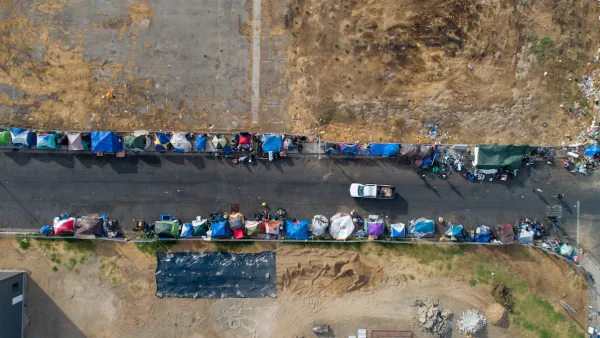
Mayors’ Meeting Focuses on Housing Crisis
As the number of unhoused Americans grows, mayors met to learn from each other and assess their needs for federal support.
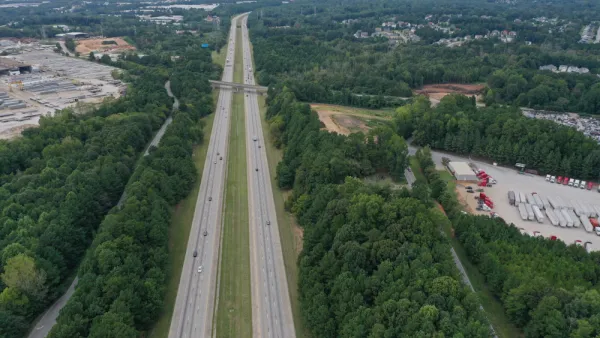
Study: Transit Cuts Can Increase Poverty, Unemployment
An analysis of Clayton County, Georgia, which lost access to public transit for five years, shows a significant increase in unemployment rates and poverty during that timeframe.

Planetizen Federal Action Tracker
A weekly monitor of how Trump’s orders and actions are impacting planners and planning in America.

Colorado’s Largest Data Center Could Rise Next to Homes — Without a Public Hearing
The proposed campus would consume 11 times the power of Denver International Airport; as it has across the country, opposition mounts.

US to reduce Colorado River water deliveries to Mexico
A new Colorado Treaty amendment reduces Mexico’s Colorado River water allocation by 250,000 acre feet.

'This is going to be painful:’ Virginia stares down $1.7 billion funding gap for highway maintenance
The state may address the deficit by shifting $290 million from its construction budget to maintenance projects.

Judges permit Denver to divert 77,000 acre feet from the Colorado River for reservoir expansion
Overuse and climate change have caused the Colorado River’s water levels to plummet.

Amtrak, CN end decades-long dispute with eight-year agreement
The new operating agreement establishes an updated framework for the companies to work together, including processes to resolve disputes.

FREE Course: Walkable City 1: Why Walkability?
After describing his path towards focusing on walkability as the essence of good planning, Jeff Speck marches through his five principal reasons for making more walkable places.
Reinventing Malls: Planning Alchemy—Turning Gray Fields Into Gold
The course focuses on the opportunities and imperatives that shape reinvention of mall sites.

KFH Group Inc.
Greater Baltimore Committee
Eagle County Government
The Architects Foundation
University of Cincinnati Online
The Pocatello Development Authority
The Urban Renewal Agency of the City of Pocatello