They mayor of Troy, Mich. chooses ideology over investment, The Atlantic's says Eric Jaffe.


Even as populist sentiment gains ground in the U.S., many cities still feel the sting of anti-government mentalities. The Atlantic looks at the case of Troy, Mich., where a recently elected Tea Party mayor is threatening to kill a proposed transit center. While the center will be completely paid for by the federal government, Mayor Janice Daniels says she's worried about operating expenses. The annual cost of the bus/train station? About $30K a year-not really much for a city of 80,000.
Some Troy locals say the city simply doesn't need the transit center. This thinking, as well as Daniels' anti-D.C. values, is reminiscent of Florida governor Rick Scott, who last year canceled his state's high-speed rail project, even though it was fully funded by the feds. Some argued the bullet train wouldn't be effective because the cities it planned to connect-Tampa and Orlando-have undeveloped transit systems. Instead of thinking of how to prepare Tampa and Orlando for the future, Scott ended any immediate impetus for improvement. Daniels is hoping to do the same thing.
Thanks to Neal Broverman
Read the full story: Free Federal Money May Doom a Transit Center in Troy

Trails Win Big in Florida's 2015-16 State Budget
Florida Governor Rick Scott approved a $78 billion state budget last week, which includes $25 million for a statewide network of non-motorized trails.
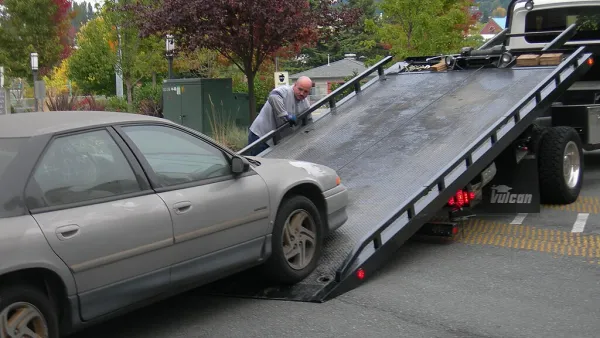
Milwaukee can now Impound Cars of Reckless Drivers
The city compares reckless drivers to firearms — “Let’s get as many of them off the street as possible.”
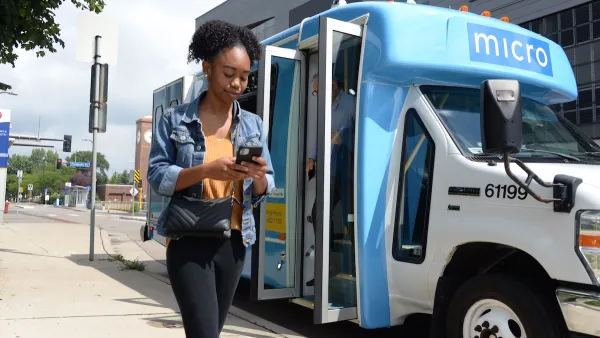
Public Transit Alternatives to Rideshare Offer Affordable and Accessible Mobility
In Minnesota, local transit agencies are seeing growth in ridership for on-demand microtransit services since the start of the pandemic.

Planetizen Federal Action Tracker
A weekly monitor of how Trump’s orders and actions are impacting planners and planning in America.

Amtrak, CN end decades-long dispute with eight-year agreement
The new operating agreement establishes an updated framework for the companies to work together, including processes to resolve disputes.

Judges permit Denver to divert 77,000 acre feet from the Colorado River for reservoir expansion
Overuse and climate change have caused the Colorado River’s water levels to plummet.

Boston has spent millions making the Green Line more accessible — and there’s no end in sight
While the city has invested millions into expanding and adding platforms to the Green Line to make it more accessible, new train cars set to arrive next year will be too tall for disabled passengers to board without raising the current platforms.

Idaho may see an 18% drop in federal surface transit funding — the largest estimated cut in the US
Transit systems in rural communities are much more reliant on federal funding to provide their services.

How ‘post-disaster gentrification’ alters neighborhoods after natural calamities
After hurricanes, fires or other calamities, the original residents of a community are often replaced by younger, wealthier residents.

FREE Course: Walkable City 1: Why Walkability?
After describing his path towards focusing on walkability as the essence of good planning, Jeff Speck marches through his five principal reasons for making more walkable places.
Reinventing Malls: Planning Alchemy—Turning Gray Fields Into Gold
The course focuses on the opportunities and imperatives that shape reinvention of mall sites.

City of Wisconsin Rapids
Harvard University Graduate School of Design
KFH Group Inc.
The Architects Foundation
University of Cincinnati Online
The Pocatello Development Authority
The Urban Renewal Agency of the City of Pocatello