A new report from the Federal Housing Finance Agency says that U.S. counties with a significant number of jobs in the energy sector have seen a rise in home prices that is unusual in this recession.


The study looked at changing home prices from 2006-2011 in energy-producing states. The Oklahoman says the way an "energy job" is defined is a bit problematic, in that the sizable number of white collar jobs in Tulsa created by the oil industry is overlooked (classified with "general management"):
"Home prices in counties with the higher energy employment outperformed the other counties in every state but Oklahoma. Here, high-energy counties saw home price gains of 4.8 percent while the other counties saw better gains of 5.3 percent."
Alaska, Louisiana, New Mexico, North Dakota, Texas, West Virginia and Wyoming are the other states the FHFA looked at, and they all saw a more significant increase in home prices in high-energy counties.
Read the full story: Home price gains in Oklahoma's high-energy counties lag others in the oil patch
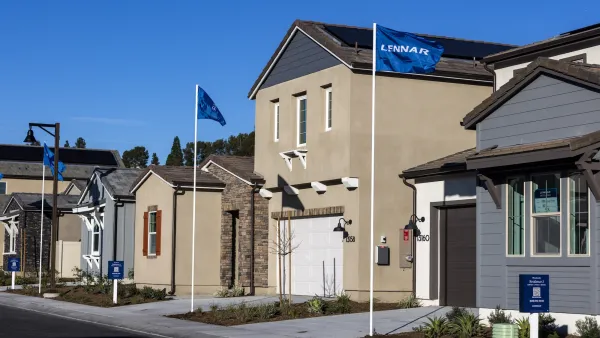
Just 17% of San Diego households can afford the city's $1M+ median home prices
The city is becoming increasingly unaffordable to prospective homebuyers.
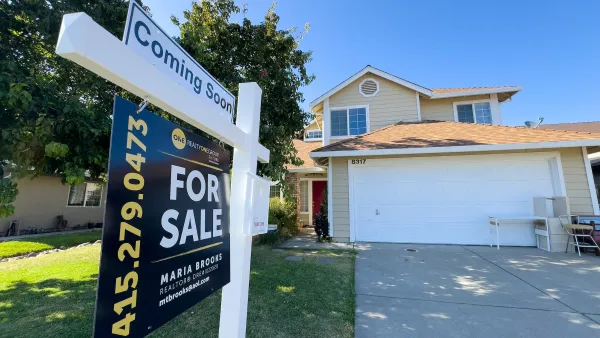
'Starter' homes cost over $1M in 242 US cities
Once concentrated in coastal regions, cities with starter homes valued at over $1 million are now spread across 26 states.
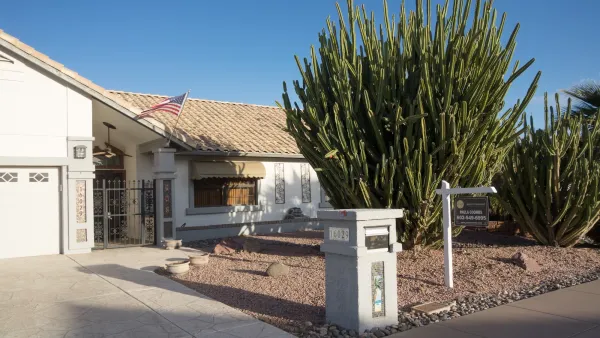
Phoenix, Tampa top list of housing markets with the most price cuts
Nearly a third of Phoenix homes for sale had price cuts last April.

Planetizen Federal Action Tracker
A weekly monitor of how Trump’s orders and actions are impacting planners and planning in America.

Eastern Nebraska is running out of electricity
Data centers and electrification are straining eastern Nebraska’s grid, throttling economic development.

Study reveals best places in the U.S. for cycling, walking
New research from Streetlight Data examines bicycle and pedestrian miles per capita in the 100 largest U.S. cities by population.

DSA members accuse Mamdani of 'abandoning values' over housing redevelopment
New York City's mayor plans to replace about 2,000 units of public housing with private, mixed-income housing.

All sides of BRT debate unhappy with CDOT’s most recent move
The Colorado Department of Transportation is no longer considering center-running bus lanes for Colorado Boulevard.

Massachusetts bogs generate both power, and cranberries
Putting solar panels above farmland is one way Massachusetts is advancing toward its goal of net-zero carbon emissions by 2050.

FREE Course: Walkable City 1: Why Walkability?
After describing his path towards focusing on walkability as the essence of good planning, Jeff Speck marches through his five principal reasons for making more walkable places.
Reinventing Malls: Planning Alchemy—Turning Gray Fields Into Gold
The course focuses on the opportunities and imperatives that shape reinvention of mall sites.

City of Rosemead
Rutgers University, Edward J. Bloustein School of Planning and Public Policy
One Hundred Miles
University of Michigan School for Environment and Sustainability (SEAS)
Hunter College, City University of New York (CUNY)
The Architects Foundation
City of Cambridge
The Pocatello Development Authority
The Urban Renewal Agency of the City of Pocatello