Israeli writer Etgar Keret has commissioned a home to be built in the narrow space between two buildings in Warsaw, Poland. The house will be 4 feet across at the widest point.


The narrowest spot in this unusual home will be just 28 inches across - "thinner than the average doorway," writes Suzanne LaBarre. The place is so thin it is technically against building codes and is only being allowed because it is classified as an art installation:
"The place will have off-grid plumbing inspired by boat sewage technology and electricity lifted from a neighbor. To save space, the entry stairs will fold up at the press of a button and become part of the first floor."

Commentator Robert Krulwich thinks that the home is a violation of biological imperatives, namely, the "'Size/Abundance Rule', which says bigger animals live farther apart, smaller animals live closer together. Mr. Keret is hundreds (maybe thousands) of times bigger than a finch. His home territory should reflect that. Midsize mammals shouldn't live like midsize avians."
Read the full story: Check Out The Skinniest House In The World


In These Cities, Most New Housing is Under 441 Square Feet
With loosened restrictions on “micro-housing,” tiny units now make up as much as 66% of newly constructed housing.

Poland Building £25B Transit Hub
The mega project will include an airport and links to high-speed rail lines.
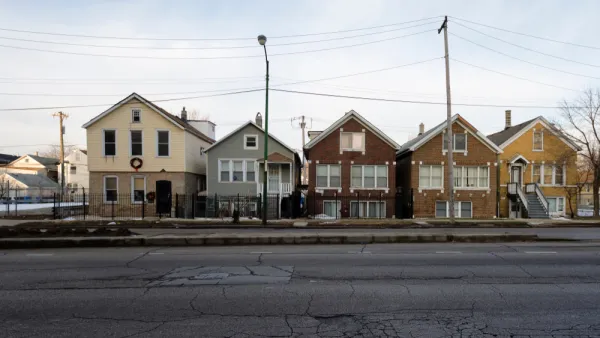
Redevelopment Threatens Iconic, Affordable Chicago Homes
The ‘workers’ cottages’ are being replaced with larger, more expensive homes, threatening one of the city’s original forms of affordable housing.

Planetizen Federal Action Tracker
A weekly monitor of how Trump’s orders and actions are impacting planners and planning in America.

Amtrak, CN end decades-long dispute with eight-year agreement
The new operating agreement establishes an updated framework for the companies to work together, including processes to resolve disputes.

Northwest rail fans eager for Sept. 30 debut of Amtrak’s Airo fleet
Get ready for that new train smell and more seats. But they won’t go faster or run more frequently on the Cascades route in Washington and Oregon.

NYC to turn city-owned property into thousands of homes
The city has scheduled a public hearing regarding the development for October.

Buses travel at 5mph along this route in NYC. The Bronx's first-ever busway looks to change that
Prior to the busway, buses on the Bx36 route traveled as slowly as 5 miles per hour.

Pittsburg launches 'EZ permits,' aims for one-day turnaround for low-risk permits
The pilot ‘fast lane’ for permits is part of a bundle of modernization efforts for Pittsburg’s permitting process.

FREE Course: Walkable City 1: Why Walkability?
After describing his path towards focusing on walkability as the essence of good planning, Jeff Speck marches through his five principal reasons for making more walkable places.
Reinventing Malls: Planning Alchemy—Turning Gray Fields Into Gold
The course focuses on the opportunities and imperatives that shape reinvention of mall sites.

City of Thousand Oaks
City of Wisconsin Rapids
Harvard University Graduate School of Design
The Architects Foundation
University of Cincinnati Online
The Pocatello Development Authority
The Urban Renewal Agency of the City of Pocatello