Utopian developments often fail. This post from The Awl ranks the best and most desirable of the failed utopias throughout history.


The utopias listed include Brook Farm, the Garden of Eden and Jonestown.
"The scary thing about Jonestown is how noble its intentions were from the quick; its inhabitants, at the beginning, saw themselves building a community free of racism, buoyed by faith. If you look at archival footage of the construction of Jonestown, it's men and women of all ages and races, working together, singing in the sun. The whole sordid thing happened-and fell apart-because it was founded on earnest hope, and nobody wanted to let go of that. Easier just to lie down on the jungle floor and pretend like that was the plan to begin with. When it comes down to it, a lot more of us would drink the Kool-Aid than we're comfortable admitting."
Read the full story: Which Failed Utopia Was Best?
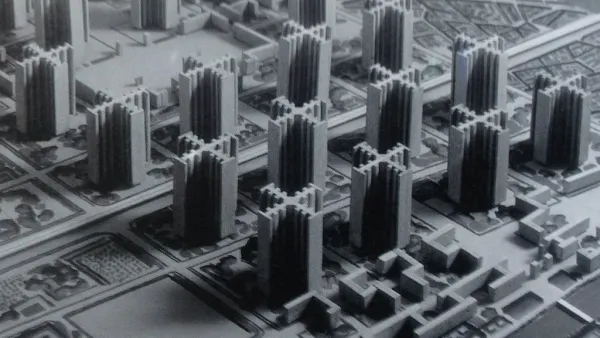
Op-Ed: Utopian Thinking Poses Continued Dangers for Urbanists
Charles Wolfe calls attention to similarities between contemporary urbanism and yesterday's debunked utopias. The two may differ in substance, but both tend toward a certain level of dogma that isn't necessarily helpful on the ground.
Arcosanti Revisited: The Sustainable Utopia
A short video profile shows renewed interest in Arcosanti, the utopian community founded by architect Paolo Soleri. Could Soleri's 40 yr. old utopia be the wave of the sustainable future?
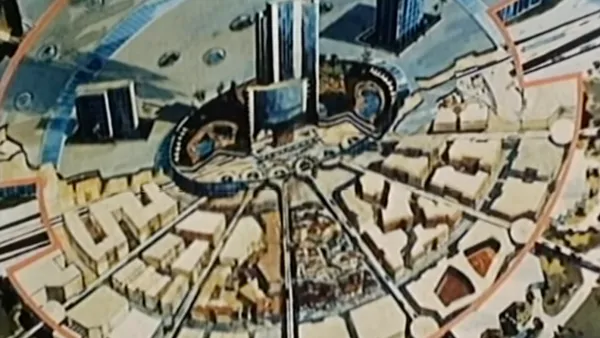
EPCOT: The Original 'Smart City'
What can today’s futurists learn from Disney’s unrealized utopia?

Planetizen Federal Action Tracker
A weekly monitor of how Trump’s orders and actions are impacting planners and planning in America.

Eastern Nebraska is running out of electricity
Data centers and electrification are straining eastern Nebraska’s grid, throttling economic development.

Study reveals best places in the U.S. for cycling, walking
New research from Streetlight Data examines bicycle and pedestrian miles per capita in the 100 largest U.S. cities by population.

Next-generation nuclear reactors are coming to Texas
The reactors will not require towering containment structures thanks to new safety features.

California distributes $1.3 billion to prevent transit service cuts, bolster projects
Twenty-eight projects across California received a portion of the funding.

Pennsylvania Democrats have 15 affordability, clean energy bills for flipped state Senate
Bills in consideration include a bill supporting geothermal energy and a bill supporting solar on warehouses.

FREE Course: Walkable City 1: Why Walkability?
After describing his path towards focusing on walkability as the essence of good planning, Jeff Speck marches through his five principal reasons for making more walkable places.
Reinventing Malls: Planning Alchemy—Turning Gray Fields Into Gold
The course focuses on the opportunities and imperatives that shape reinvention of mall sites.

City of Charlotte
City of Rosemead
Rutgers University, Edward J. Bloustein School of Planning and Public Policy
University of Michigan School for Environment and Sustainability (SEAS)
Hunter College, City University of New York (CUNY)
The Architects Foundation
City of Cambridge
The Pocatello Development Authority
The Urban Renewal Agency of the City of Pocatello