Spring is conference season for many major professional associations including the American Planning Association. However, if you missed APA this year, or even if you didn’t, a number of more specialized groups meet over the summer in smaller and more focused settings. Student registrations and deals on accommodation can make these very affordable.



Spring is conference season for many major professional associations including the American Planning Association. However, if you missed APA this year, or even if you didn't, a number of more specialized groups meet over the summer in smaller and more focused settings. Student registrations and deals on accommodation can make these very affordable.
The one I am attending this year is the Planners Network in Memphis, May 18-21: http://www.memphis.edu/plannersnetwork/. The cost at this stage-for both students and others--is $335 for the conference, all meals, and lodging shared by two people (they'll match you if you need). It is a little more to stay on your own. You just need to get to Memphis! Planners Network conferences are known for their participatory workshops with local communities and interesting cultural receptions reflecting the organization's interest in social equity and environmental justice.
The Congress for the New Urbanism meets in Wisconsin on June 1-4: http://www.cnu.org/cnu19/. These conferences have grown quite large. I've only been to one and was struck by how much of the conference was a dating game matching consultants, local governments, and developers. However, that is interesting in itself and there is typically some vivid debate between larger than life characters. The student price for 4 days of registration is $125 (going up on May 6); the registration rate for non-student, non-members is $585.
I'm sure there are other summer conferences of interest but these two represent some of the range of summer opportunities for meeting others who want to make a difference.
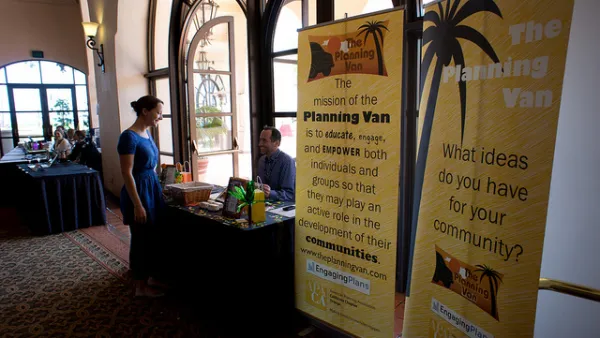
Should I Present at a Conference? And If I Don't Present, Should I Attend?
One question I get asked a lot is if students should present at conference. In fact it is often more of a statement of intent rather than a question about whether it is useful. The answer, however, is not as clear as many students believe.

Children in 55 countries are redesigning their cities in Minecraft
A U.N.-backed program lets students and community members reimagine sites in their neighborhoods in the game — and translate them into real-life buildings.

Bus Driver Shortage is Creating a Crisis for Schools and Families
With not enough bus drivers to maintain a reliable schedule, school districts risk rising rates of absenteeism.

Planetizen Federal Action Tracker
A weekly monitor of how Trump’s orders and actions are impacting planners and planning in America.

Eastern Nebraska is running out of electricity
Data centers and electrification are straining eastern Nebraska’s grid, throttling economic development.

Study reveals best places in the U.S. for cycling, walking
New research from Streetlight Data examines bicycle and pedestrian miles per capita in the 100 largest U.S. cities by population.

DSA members accuse Mamdani of 'abandoning values' over housing redevelopment
New York City's mayor plans to replace about 2,000 units of public housing with private, mixed-income housing.

All sides of BRT debate unhappy with CDOT’s most recent move
The Colorado Department of Transportation is no longer considering center-running bus lanes for Colorado Boulevard.

Massachusetts bogs generate both power, and cranberries
Putting solar panels above farmland is one way Massachusetts is advancing toward its goal of net-zero carbon emissions by 2050.

FREE Course: Walkable City 1: Why Walkability?
After describing his path towards focusing on walkability as the essence of good planning, Jeff Speck marches through his five principal reasons for making more walkable places.
Reinventing Malls: Planning Alchemy—Turning Gray Fields Into Gold
The course focuses on the opportunities and imperatives that shape reinvention of mall sites.

City of Rosemead
Rutgers University, Edward J. Bloustein School of Planning and Public Policy
One Hundred Miles
University of Michigan School for Environment and Sustainability (SEAS)
Hunter College, City University of New York (CUNY)
The Architects Foundation
City of Cambridge
The Pocatello Development Authority
The Urban Renewal Agency of the City of Pocatello

