Architect Alan Pullman talks about how adaptive reuse and green architecture can be used to revitalize urban neighborhoods and springboard economic growth, using a recent project to demonstrate.


Tara Sturm, writing for Buildipedia.com, investigates how a blighted Long Beach warehouse-turned-sustainable office space catalyzed urban transformation:
"This chain-like effect has just as much to do with economics as it has to do with the bolstering of creative energy. Pullman explains, 'What we find with adaptive reuse is that you can do them fairly economically. They are not super luxurious buildings. They are adapted that way. It's kind of raw, actually. What that does, though, is allows development at a level that can bring independent stores – and these are all independent stores. Creative tenants just can't afford to pay really high rent, downtown prices. I think in a lot of ways it is part of economic development to have adaptive reuse and create a place for more interesting, independent, and locally focused tenants to incubate and grow.'"
Thanks to Tara D. Sturm
Read the full story: Adaptive Reuse: Green Space as a Tool for Neighborhood Revitalization

‘Shawshank Redemption’: 5 Adaptive Reuse Strategies for Shuttered Jails
Redeveloping closed correctional facilities in ways that foster just and thriving communities is a growing trend across the United States.
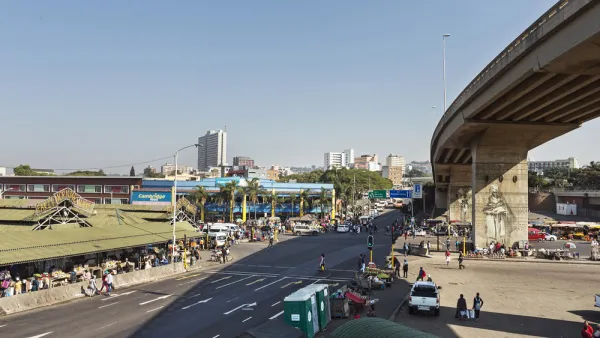
6 International Models of Urban Revitalization
The New York Times recently published an article exploring six cities from around the world reinventing themselves for the 21st century: Paris, Sydney, Medellin, Lisbon, Singapore, and Durban.
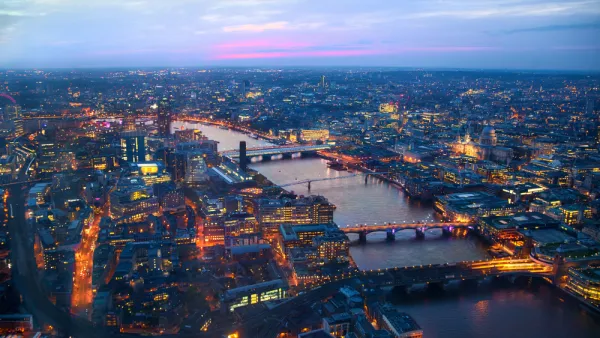
The Return of Cities
Major cities like London continue their rebound from the pandemic, with some tweaks.

Planetizen Federal Action Tracker
A weekly monitor of how Trump’s orders and actions are impacting planners and planning in America.

California plans to bury El Niño’s downpour
If the state plays its cards right, it may be able to store a billion acre-feet of El Niño’s water in aquifers.

Desperate measures: Advocates weigh draining Lake Powell to fill Colorado River
Draining the reservoir could reduce evaporation losses by a couple hundred thousand acre-feet.

Los Angeles just elected an urban planner as its mayor
Transportation analysts are optimistic that Raman will be more aggressive in addressing transit issues than Bass.

Mamdani’s pied-à-terre tax survives legal challenge
A panel of judges found that the plaintiffs failed to demonstrate injury as a result of New York City's implementation of the tax.

Eastern Nebraska is running out of electricity
Data centers and electrification are straining eastern Nebraska’s grid, throttling economic development.

FREE Course: Walkable City 1: Why Walkability?
After describing his path towards focusing on walkability as the essence of good planning, Jeff Speck marches through his five principal reasons for making more walkable places.
Reinventing Malls: Planning Alchemy—Turning Gray Fields Into Gold
The course focuses on the opportunities and imperatives that shape reinvention of mall sites.

City of Rosemead
Rutgers University, Edward J. Bloustein School of Planning and Public Policy
One Hundred Miles
University of Michigan School for Environment and Sustainability (SEAS)
Hunter College, City University of New York (CUNY)
The Architects Foundation
City of Cambridge
Montrose County
The Pocatello Development Authority