Malcolm Gladwell and others attest to the effectiveness of working in restaurants, coffee shops and bars, and why it works.


Writing in public places has had a long tradition, writes Conor Friedersdorf, but the advent of laptops has made this the era of coffee shop telecommuting. Friedersdorf thinks that is the level of distraction in restaurants that is just right to keep the brain from freezing up:
"Put in a silent room before a blank page, it's almost impossible to write. Neither is it be ideal to work near a television set that keeps drawing one's attention or a room where a child keeps interrupting. In a coffeehouse, its rare for someone to intrude on the space of a patron with an open laptop and a look of concentration. Still, there is just enough conversation and foot traffic in the background that you're forced to semi-consciously tune it out."
The article highlights a handful of other explanations for the phenomenon.
Read the full story: Working Best at Coffee Shops

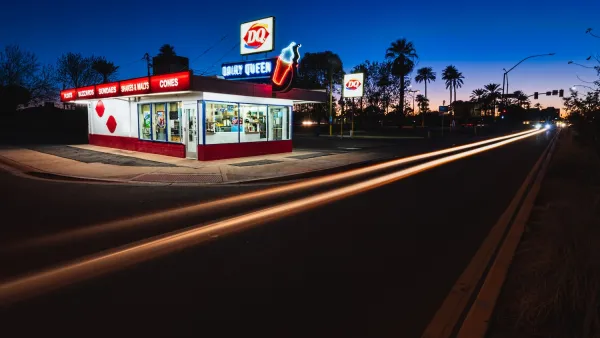
Dairy Queen and Rural Third Places
Dozens of Dairy Queen restaurants across Texas are closing, taking a critical community space with them.
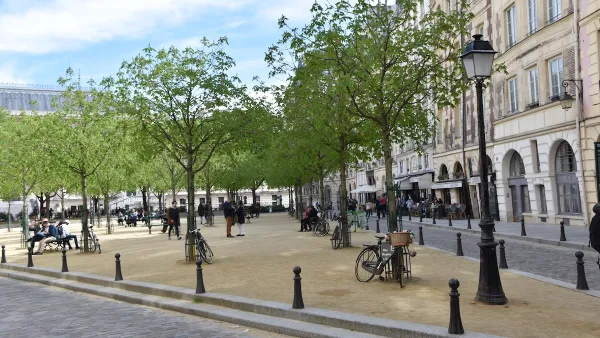
Lost and Found: Fighting Loneliness With Parks and Third Places
To combat the epidemic of loneliness, Susan Henderson's evocative photos of “third places” reflect on how these spaces have evolved and their importance in fostering connection.

Reports of the Third Place’s Death are Greatly Exaggerated
Starbucks is shifting to more drive-throughs and less comfy armchairs, but that doesn’t mean the demand for common spaces outside of home and work is waning.

Planetizen Federal Action Tracker
A weekly monitor of how Trump’s orders and actions are impacting planners and planning in America.

Amtrak, CN end decades-long dispute with eight-year agreement
The new operating agreement establishes an updated framework for the companies to work together, including processes to resolve disputes.

Judges permit Denver to divert 77,000 acre feet from the Colorado River for reservoir expansion
Overuse and climate change have caused the Colorado River’s water levels to plummet.

Philadelphia to invest $2 billion into upgrading city airports as PHL places last in customer satisfaction
Modernizations to Philadelphia's airports will include baggage system upgrades and a new automated parking garage guidance system.

The LA housing policies making developers turn away from the city
Despite LA’s housing shortage, developers say the city’s "mansion-tax" and pandemic-era policies make it an unappealing place to build housing.

New density bill would require 7 California cities to establish regional transit hubs
The bill would also require major cities in California to permit high-rise residential buildings.

FREE Course: Walkable City 1: Why Walkability?
After describing his path towards focusing on walkability as the essence of good planning, Jeff Speck marches through his five principal reasons for making more walkable places.
Reinventing Malls: Planning Alchemy—Turning Gray Fields Into Gold
The course focuses on the opportunities and imperatives that shape reinvention of mall sites.

City of Wisconsin Rapids
Harvard University Graduate School of Design
KFH Group Inc.
The Architects Foundation
University of Cincinnati Online
The Pocatello Development Authority
The Urban Renewal Agency of the City of Pocatello