New South China Mall in Dongguan, China has been 99% vacant since it was built in 2005. Is Chinese development running amok? Sarah Goodyear looks at a recent documentary that explains why the mall was built.


Apparently the story, is this: "...a local businessman who had gotten fabulously rich in the new Chinese market economy wanted to make his mark in the world by building something fantastic. No matter that the site, which was farmland, had no good access - by road or rail or any other conveyance."
Goodyear uses the New South China Mall as an example of China's penchant towards "the construction of gigantic infrastructure projects with no regard for human needs."
Read the full story: China’s ghost cities and the biggest property bubble of all time
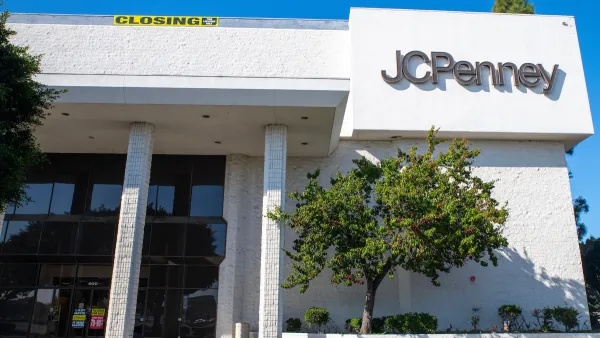
Thousands of new homes are replacing Orange County's dead malls
Southern California cities are adjusting their zoning codes to support mixed-use and residential developments that are replacing dying shopping malls.
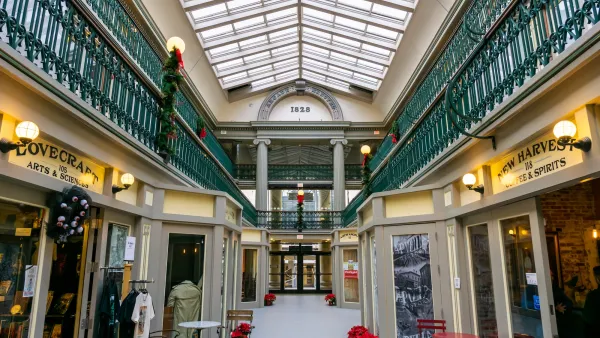
You Can Live Inside America’s Oldest Indoor Shopping Mall
The Arcade in Providence, Rhode Island, first built in 1828, was redeveloped into 48 micro-housing units.
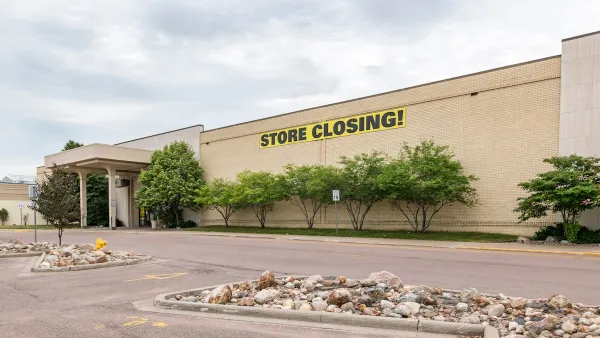
Shifts in Shopping: Transforming Malls Into Parks
Maybe zombie malls still have a second life — one with a little greenery.

Desperate measures: Advocates weigh draining Lake Powell to fill Colorado River
Draining the reservoir could reduce evaporation losses by a couple hundred thousand acre-feet.

Eastern Nebraska is running out of electricity
Data centers and electrification are straining eastern Nebraska’s grid, throttling economic development.

Malls are becoming the midtowns of the future
Mall and office park redevelopments are a generational opportunity to create new nodes of urbanity.

NYC breaks ground on anti-flooding infrastructure project
New York City's new system will reduce stormwater flows to local sewers by 90%.

One Kentucky town’s secret to affordable housing
The Smoketown Community Land Trust has already built seven affordable homes for community members.

Houston gains petal-shaped cooling infrastructure to make streets more ‘delightful’
The city has installed the pavilions along 15 blocks in Houston.

FREE Course: Walkable City 1: Why Walkability?
After describing his path towards focusing on walkability as the essence of good planning, Jeff Speck marches through his five principal reasons for making more walkable places.
Reinventing Malls: Planning Alchemy—Turning Gray Fields Into Gold
The course focuses on the opportunities and imperatives that shape reinvention of mall sites.

City of Rosemead
Rutgers University, Edward J. Bloustein School of Planning and Public Policy
One Hundred Miles
University of Michigan School for Environment and Sustainability (SEAS)
Hunter College, City University of New York (CUNY)
The Architects Foundation
City of Cambridge
Montrose County
The Pocatello Development Authority