There are many challenges facing cities and suburbs across the country. How they handle such issues may determine if they thrive or fail in the 21st century, writes Mary Newsom.


Newsom discusses the role of suburbs over the next century, recapping what it has been this past decade. She wonders if the country will be able to re-invent the suburb so as to prevent some severe implications in the future:
"Although some first-ring suburbs are thriving, others aren't. Many suburban neighborhoods are seeing rising poverty and crime, dead or dying shopping malls and derelict strip centers and big-box stores. Can we just abandon them to blight?"
Newsom also sees some growing trends that are encouraging for urban areas across the country:
"Gen Y-ers (aka the Millennials) have a clear preference, at least at this stage in their lives, for urban living. Meantime, aging Baby Boomers will be selling the family house and moving to condos or apartments. And as age, illness and infirmity start to take their toll, many boomers will have to give up driving. They're going to want walkable neighborhoods."
Read the full story: Our Suburbs: Re-imagined, Re-invented?

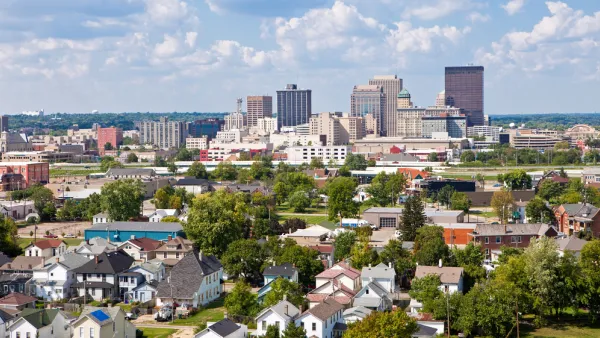
The Common Traits of Successful Inner Ring Suburbs
Two suburbs of Cleveland provide a case study in how older, inner-ring suburbs can compete with the newer suburbs on the fringes of the region.
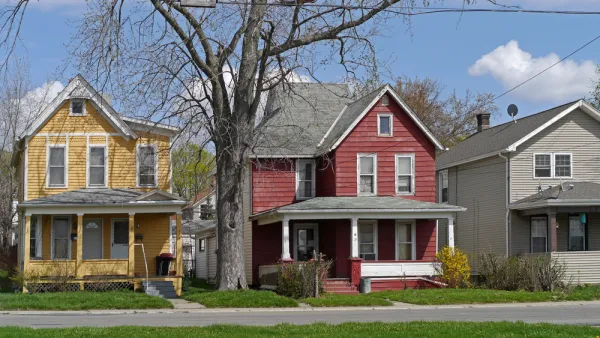
Inner Suburbs Face Identity Crisis
Places like Columbia Heights, an older suburb north of Minneapolis, lie at the focal point of conflict over development and gentrification. Can these places support a 21st-century urbanism?
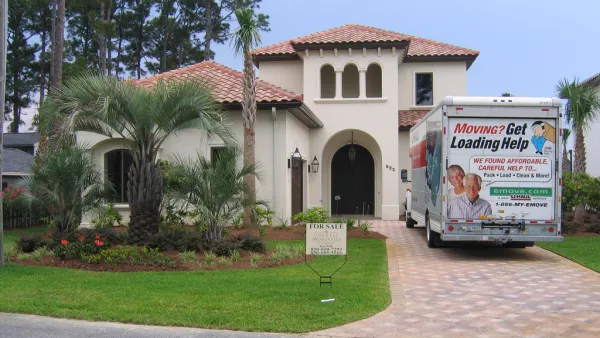
Millennials Leaving Their Mark on Suburbia
How will millennial homebuyers change suburbia, or will they? Realtors observe that millennials relocating from the city look for parts of their urban lifestyle, e.g., walkable neighborhoods, yet they also have traditional suburban tastes.

Planetizen Federal Action Tracker
A weekly monitor of how Trump’s orders and actions are impacting planners and planning in America.

California plans to bury El Niño’s downpour
If the state plays its cards right, it may be able to store a billion acre-feet of El Niño’s water in aquifers.

Chicago breaks ground on $3 billion megadevelopment
The new neighborhood, titled Foundry Park, will one day host 3,700 residences.

California High-Speed Rail Authority CEO resigns after $600,000 scandal
Under Ian Choudri, the authority used taxpayer dollars to fund first class flights and trips to nightclubs.

Want to study the Missouri River? Soon, you may need unanimous approval from 10 states
Legislation would require 10 governors’ permission to study or build projects moving water outside the basin.

Desperate measures: Advocates weigh draining Lake Powell to fill Colorado River
Draining the reservoir could reduce evaporation losses by a couple hundred thousand acre-feet.

FREE Course: Walkable City 1: Why Walkability?
After describing his path towards focusing on walkability as the essence of good planning, Jeff Speck marches through his five principal reasons for making more walkable places.
Reinventing Malls: Planning Alchemy—Turning Gray Fields Into Gold
The course focuses on the opportunities and imperatives that shape reinvention of mall sites.

City of Rosemead
Rutgers University, Edward J. Bloustein School of Planning and Public Policy
One Hundred Miles
Hunter College, City University of New York (CUNY)
The Architects Foundation
University of Cincinnati Online
City of Cambridge
Montrose County
The Pocatello Development Authority