The Obama administration yesterday announced that it would put $50 million dollars into speeding up the process to get offshore wind farms built along the Atlantic coast.


In his recent State of the Union, President Obama announced a goal of switching the United States to getting 80% of its electricity from clean energy sources by 2035. On Monday, his administration took a step towards that goal by dedicating funding to expediting four wind projects off the coasts of Virginia, Maryland, Delaware and New Jersey.
From USA Today:
"Wind advocates called for a streamlined process after it took eight years for the Cape Wind project off Cape Cod, Mass., to obtain a lease as the nation's first offshore wind farm. That project faced opposition from Indian tribes, some environmentalists and residents, who argued it threatened marine life and ruined ocean views."
Read the full story: Obama fast-tracks Mid-Atlantic offshore wind energy

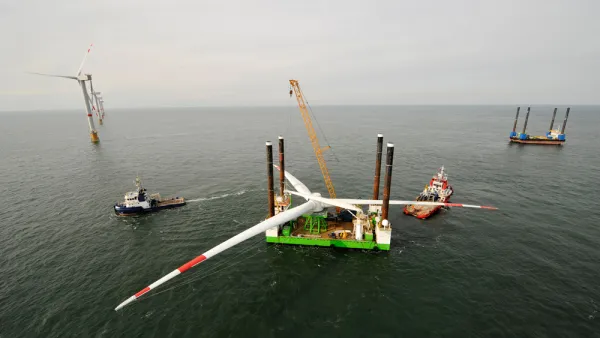
Nation's Largest Offshore Wind Farm Gets Green Light From New Jersey
There are still approvals necessary to get to the finish line, but the Ocean Wind offshore wind project took a big step forward late last week.
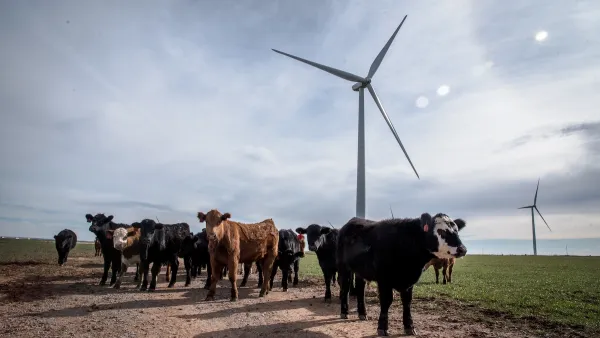
Renewable Energy Overtakes Coal for First Time
Solar and wind power generated close to a third of U.S. electricity supplies in 2024.

New York Offshore Wind Farm Offers Hope for Nascent Industry
The first commercial-scale offshore wind installation in the United States is powering roughly 70,000 homes in Long Island, New York.

Planetizen Federal Action Tracker
A weekly monitor of how Trump’s orders and actions are impacting planners and planning in America.

Amtrak, CN end decades-long dispute with eight-year agreement
The new operating agreement establishes an updated framework for the companies to work together, including processes to resolve disputes.

Judges permit Denver to divert 77,000 acre feet from the Colorado River for reservoir expansion
Overuse and climate change have caused the Colorado River’s water levels to plummet.

Philadelphia to invest $2 billion into upgrading city airports as PHL places last in customer satisfaction
Modernizations to Philadelphia's airports will include baggage system upgrades and a new automated parking garage guidance system.

The LA housing policies making developers turn away from the city
Despite LA’s housing shortage, developers say the city’s "mansion-tax" and pandemic-era policies make it an unappealing place to build housing.

New density bill would require 7 California cities to establish regional transit hubs
The bill would also require major cities in California to permit high-rise residential buildings.

FREE Course: Walkable City 1: Why Walkability?
After describing his path towards focusing on walkability as the essence of good planning, Jeff Speck marches through his five principal reasons for making more walkable places.
Reinventing Malls: Planning Alchemy—Turning Gray Fields Into Gold
The course focuses on the opportunities and imperatives that shape reinvention of mall sites.

City of Wisconsin Rapids
Harvard University Graduate School of Design
KFH Group Inc.
The Architects Foundation
University of Cincinnati Online
The Pocatello Development Authority
The Urban Renewal Agency of the City of Pocatello