Dickson Despommier says that the goal of cities today should be to be a "closed loop" ecosystem, where everything that is needed to support the city - energy, food, etc. - is contained within its borders.


Despommier looks to the natural world as a model for urban growth management:
"I would encourage all city planners and developers to take a long, hard look into the ways in which ecosystems behave. It is the model for how we should be handling things like water management, energy utilization, and the recycling of waste into usable resources. In an ecosystem, assemblages of plants and animals are linked together by a common thread: the sharing of nutrients, the transfer of energy from sunlight to plants and then to animals, and the recycling of all the elements needed to ensure the survival of the next generation of those living within the boundaries of that geographically defined area."
Read the full story: Cities alive!
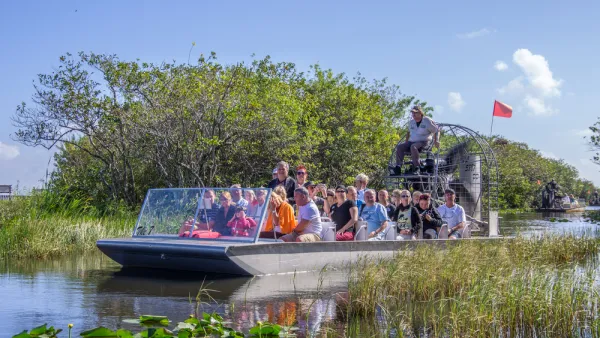
Everglades Restoration To Receive $1.1 Billion in Federal Funds
An 'unprecedented' investment of more than one billion dollars will go toward efforts to restore and conserve the fragile and troubled South Florida ecosystem.
Mass Deaths Indicate Marine Ecosystem in Distress
The deaths of hundreds of pelicans, dolphins and manatees across Florida's Indian River estuary - 'one of the richest marine ecosystems in the continental United States' - have scientists concerned, and wondering if rapid urbanization is to blame.
Abandonment and Opportunity in Rural Areas
As the world's population urbanizes, rural areas are being abandoned. But they don't have to sit empty and unused, according to this piece from GOOD.

Desperate measures: Advocates weigh draining Lake Powell to fill Colorado River
Draining the reservoir could reduce evaporation losses by a couple hundred thousand acre-feet.

Eastern Nebraska is running out of electricity
Data centers and electrification are straining eastern Nebraska’s grid, throttling economic development.

Move over, LA: St. Louis gears up for Olympics, invests millions in downtown redevelopment
The Missouri city will host the 2028 Olympic soccer group stage and knockout matches.

Mass. votes against statewide minimum lot size for single-family homes
Over 2 million residents voted on Question 7; it was decided by just over 30,000 votes.

Maryland’s $15 billion bridge project gains key approval
The Maryland Transit Authority said the project will create over 60,000 jobs and add $23 billion to the local economy.

‘No clear next steps’ for Chicago's permanent festival grounds
Eleventh Ward Ald. Nicole Lee has suggested Soldier Field as a possible location for the permanent event space.

FREE Course: Walkable City 1: Why Walkability?
After describing his path towards focusing on walkability as the essence of good planning, Jeff Speck marches through his five principal reasons for making more walkable places.
Reinventing Malls: Planning Alchemy—Turning Gray Fields Into Gold
The course focuses on the opportunities and imperatives that shape reinvention of mall sites.

City of Rosemead
Rutgers University, Edward J. Bloustein School of Planning and Public Policy
One Hundred Miles
University of Michigan School for Environment and Sustainability (SEAS)
Hunter College, City University of New York (CUNY)
The Architects Foundation
City of Cambridge
Montrose County
The Pocatello Development Authority