A study of tree cover and pregnant women suggests that women living in areas with more trees are less likely to give birth to undersized babies.


The study looked at nearly 6,000 women and satellite imagery of the tree cover around their homes.
"Tree cover made no difference in the rate of pre-term births, but researchers found a consistent link to the prevalence of infants who were small for their gestational age. For each 10 percent increase in tree coverage within about 50 yards of a home, the rate of undersized newborns decreased by 1.42 per 1000 births. As it stands, about 70 of every 1,000 newborns in Portland are small for gestational age.
'Maybe it sounds a bit daft at first,' says lead author Geoffrey Donovan, a scientist with the U.S. Forest Service's Pacific Northwest Research Station in Portland. But he says it's plausible that having lots of trees nearby counteracts the stress experienced by pregnant women."
Read the full story: More trees in a city bring surprising benefit, Portland study finds

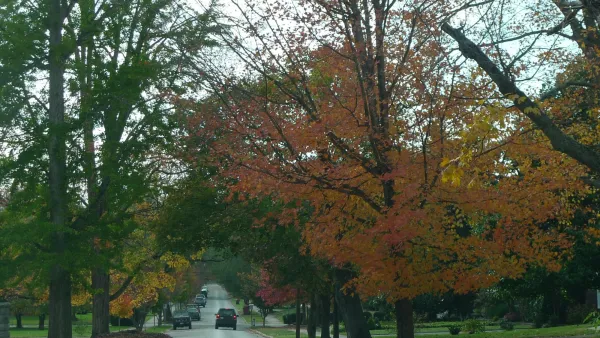
Research Shows Urban Trees Stave off Depression
A new study shows that regular exposure to trees and green spaces has a powerful impact on depression and mental health.
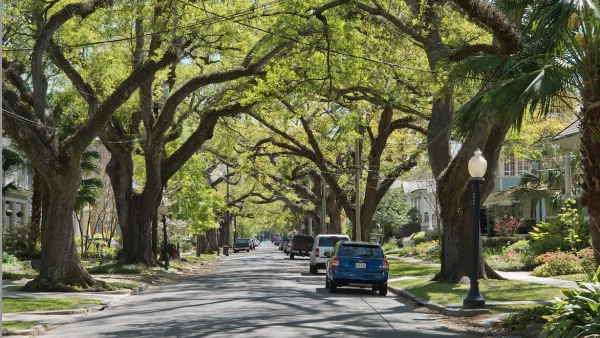
Art in the Shade: Confronting Climate and Equity Through Creativity
Through powerful, multisensory installations, Roots of Cool uses art to illuminate Los Angeles’ climate and shade inequities, inviting visitors to imagine a more just, tree-filled future.

Forest Service Rescinds Tree Planting Grants
The $75 million program fell victim to the federal government’s purge of ‘DEI’-related projects.

Amtrak, CN end decades-long dispute with eight-year agreement
The new operating agreement establishes an updated framework for the companies to work together, including processes to resolve disputes.

Northwest rail fans eager for Sept. 30 debut of Amtrak’s Airo fleet
Get ready for that new train smell and more seats. But they won’t go faster or run more frequently on the Cascades route in Washington and Oregon.

Judges permit Denver to divert 77,000 acre feet from the Colorado River for reservoir expansion
Overuse and climate change have caused the Colorado River’s water levels to plummet.

NYC to turn city-owned property into thousands of homes
The city has scheduled a public hearing regarding the development for October.

Buses travel at 5mph along this route in NYC. The Bronx's first-ever busway looks to change that
Prior to the busway, buses on the Bx36 route traveled as slowly as 5 miles per hour.

Pittsburg launches 'EZ permits,' aims for one-day turnaround for low-risk permits
The pilot ‘fast lane’ for permits is part of a bundle of modernization efforts for Pittsburg’s permitting process.

FREE Course: Walkable City 1: Why Walkability?
After describing his path towards focusing on walkability as the essence of good planning, Jeff Speck marches through his five principal reasons for making more walkable places.
Reinventing Malls: Planning Alchemy—Turning Gray Fields Into Gold
The course focuses on the opportunities and imperatives that shape reinvention of mall sites.

City of Thousand Oaks
City of Wisconsin Rapids
Harvard University Graduate School of Design
The Architects Foundation
University of Cincinnati Online
The Pocatello Development Authority
The Urban Renewal Agency of the City of Pocatello