With tens of thousands of unoccupied housing units on the market, the full impact of "problematic" real estate investments on the country's economy remains to be seen.


In the decade leading up the financial crisis, Spain experienced an "astonishing" real estate boom, say Suzanne Daley and Raphael Minder. Land prices rose over 500 percent and hundreds of thousands of new units were built to accommodate new immigrants and vacationers from Northern European countries. The subsequent collapse of the country's economy has spawned "ghost towns," or clusters of of unoccupied apartment buildings. There are up to 50,000 empty units near the capital city of Madrid alone, according to government estimates.
Though the Spanish government says the 12.8 percent drop in housing prices from the peak constitutes the market bottom, some speculate that prices may fall another 30 to 40 percent. Additionally, the true implications for the nation's banks are not yet clear, the authors say:
"The Bank of Spain says the banks have about $240 billion in 'problematic exposure' out of $580 billion invested in real estate and construction, a situation, they say, the banks are capable of handling. But not everyone believes that. Unlike American banks, Spanish banks have done little to open their books."
Read the full story: Ghostly Developments Also Haunt Spain's Banks


The $5 Billion Question: Will Cities Win or Lose in the Bid for Amazon's Second Headquarters?
We asked more than a dozen urban experts: How will cities gain or lose from the competition to host Amazon's second North American headquarters?
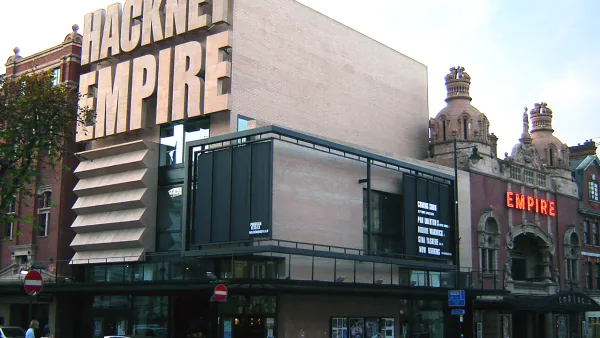
What's the Value of a Music Venue in a Neighborhood? Let's Find Out
With market pressures pushing landowners in London to build pricey new flats, local music venues are getting the boot; but does this make sense economically?
Doing it Anyway: How Nonprofits are Tackling the Challenge of Scattered-Site Rentals
Scattered-site rental management is something nonprofits have long found to be a challenge. But there are ways of pulling it off, and those who have done it tell Shelterforce how, and why it’s worth it.

Planetizen Federal Action Tracker
A weekly monitor of how Trump’s orders and actions are impacting planners and planning in America.

Amtrak, CN end decades-long dispute with eight-year agreement
The new operating agreement establishes an updated framework for the companies to work together, including processes to resolve disputes.

Northwest rail fans eager for Sept. 30 debut of Amtrak’s Airo fleet
Get ready for that new train smell and more seats. But they won’t go faster or run more frequently on the Cascades route in Washington and Oregon.

Boston sues Trump administration over revoked infrastructure grant
The Trump administration withdrew the infrastructure grant because less than 1% of the money would go to electric vehicle charging infrastructure.

NYC to turn city-owned property into thousands of homes
The city has scheduled a public hearing regarding the development for October.

Buses travel at 5mph along this route in NYC. The Bronx's first-ever busway looks to change that
Prior to the busway, buses on the Bx36 route traveled as slowly as 5 miles per hour.

FREE Course: Walkable City 1: Why Walkability?
After describing his path towards focusing on walkability as the essence of good planning, Jeff Speck marches through his five principal reasons for making more walkable places.
Reinventing Malls: Planning Alchemy—Turning Gray Fields Into Gold
The course focuses on the opportunities and imperatives that shape reinvention of mall sites.

City of Thousand Oaks
City of Wisconsin Rapids
Harvard University Graduate School of Design
The Architects Foundation
University of Cincinnati Online
The Pocatello Development Authority
The Urban Renewal Agency of the City of Pocatello