Thomas Sevcik says that hoping for an economic benefit by attracting the creative class and artists is a wrongheaded strategy.


Yael Friedman at Urban Omnibus comments on Sevcik's provocative presentation at Art Babel, which Sevcik admits is the wrong audience, saying, "I'm very sorry, I should be talking to mayors and art strategists at cities instead of the people in the art business."
Friedman summarizes Sevcik's presentation:
"Sevcik posed several challenges to the accepted wisdom about the impact of the creative industries on cities. Along with questioning the Bilbao Effect, he targeted the value of the 'creative industries' themselves. He posited that the creative industries are actually innovation-averse, citing several studies that argue that, due to chronic under-funding, 'once [creative industries] find a formula [of] how they can sell a product – a special type of website or special strategy – they tend then to sell the same thing over and over.'"
Art Salon | Urbanism | Why Art and the Creative Class will Never Save Cities from Art Basel on Vimeo.
Read the full story: Thomas Sevcik: Why Art and the Creative Class will Never Save Cities

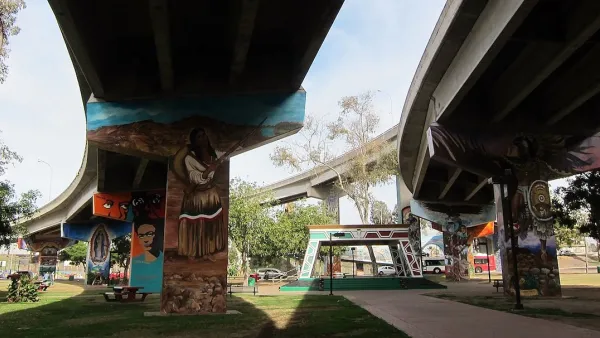
Opinion: Enhancing Inclusive Development: The Crucial Role of the Creative Class in Urban Planning
How bringing local artists into the development process can foster more vibrant, equitable neighborhoods.
Let Your Freak Flag Fly
In the celebratory spirit of Cinco de Mayo, Scott Doyon invites you to let your freak flag fly.
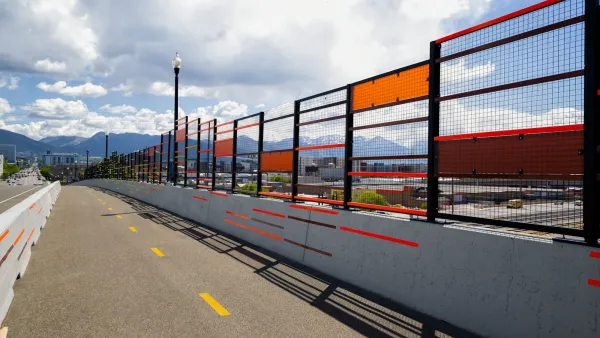
Salt Lake City opens protected bike path on viaduct trail
The 400 South Viaduct Trail features the state's longest continuous piece of public art.

Planetizen Federal Action Tracker
A weekly monitor of how Trump’s orders and actions are impacting planners and planning in America.

‘Going backwards:’ Baltimore mayor, students rally against state's transit funding plan
Maryland's proposed six-year plan provides no funding for Baltimore’s BMORE bus program and reduces its road maintenance funding.

Detroit to transform waterfront with $2.2 billion investment
Developers will convert about 18 acres of unused parking lot space into civic spaces.

San Antonio approves $1.1 billion transit agenda
The agency has also begun construction of its Via Rapid Green line, which will service passengers from the San Antonio International Airport.

Guerilla urbanists’ DIY benches joined by sanctioned seats in Chicago
The group behind the original homemade benches said they will continue installing them across bench-less bus stops in Chicago.

Boston spent $765 million to lease battery-powered trains
The trains will serve Boston’s Fairmount Line for fifteen years.

FREE Course: Walkable City 1: Why Walkability?
After describing his path towards focusing on walkability as the essence of good planning, Jeff Speck marches through his five principal reasons for making more walkable places.
Reinventing Malls: Planning Alchemy—Turning Gray Fields Into Gold
The course focuses on the opportunities and imperatives that shape reinvention of mall sites.

One Hundred Miles
County of Mendocino
planning NEXT
The Architects Foundation
University of Cincinnati Online
Montrose County
Northern Illinois Transit Authority (NITA)
The Pocatello Development Authority