Local property taxes are often levied disproportionately on multifamily developers, resulting in higher taxes for apartment-dwellers, says Stephen Smith.


Smith looks at a 2006 paper published in the journal Housing Policy Debate:
The study finds that for the nation as a whole, multifamily rental housing bears an effective tax rate (tax divided by property value) that is at least 18 percent higher than the rate on single-family owner-occupied housing. This gap appears to have arisen during the 1990s. The level of taxation and the apartment/house differential vary considerably by location. Much-but not all-of the differential is associated with the fact that apartments have a lower average property value per unit than houses. The residential property tax, as implemented, promotes low-density development, disproportionately burdens lower-value properties, and may impose higher taxes on apartment residents than on homeowners with identical incomes.
Thanks to Stephen Smith
Read the full story: How local property taxes discourage density

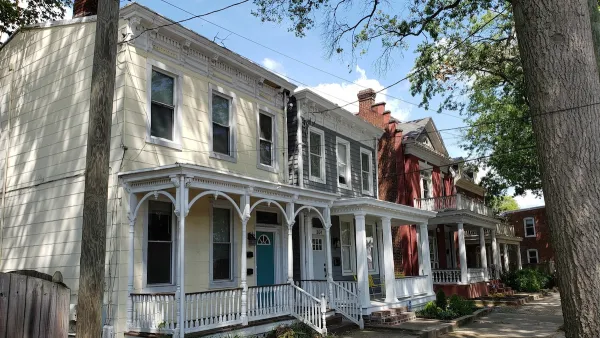
Property Taxes Cuts on the Ballot in at Least Eight States
From completely eliminating property tax to creating new exemptions, voters in eight states across the country will cast their votes on a variety of ballot measures that could have major implications for local budgets.

Affordable Housing Bond Nixed From the California Ballot
Supporters of the proposed bond say the measure will have more success in the future.
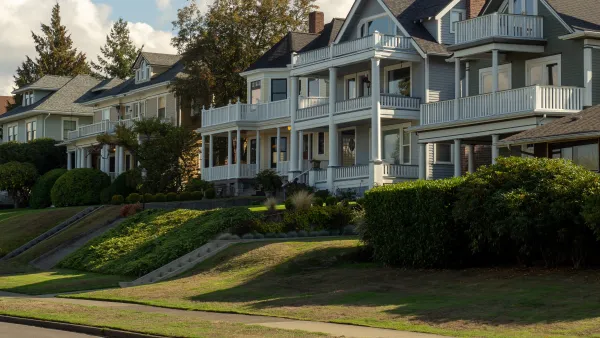
Washington State Legislates Statewide Cohousing Development
The new law will prevent local governments from prohibiting the development of coliving multifamily development through zoning and other regulations.

Planetizen Federal Action Tracker
A weekly monitor of how Trump’s orders and actions are impacting planners and planning in America.

Amtrak, CN end decades-long dispute with eight-year agreement
The new operating agreement establishes an updated framework for the companies to work together, including processes to resolve disputes.

Nation's most wind-powered state turns to coal as data centers increase energy demand
For the first time in decades, Iowa has increased its generation of coal power.

Alabama scores up to $2.5 billion federal loan for largest infrastructure project in state’s history
The Mobile River Bridge and Bayway Project aims to ease congestion at Alabama’s worst bottleneck.

Trump is considering data centers on 6 states' public land — some state officials say they had no idea
If the administration approves the proposed projects, data center and data center-related developments will cover 17,600 acres of public land.

Despite court ruling, Trump is keeping nearly all wind projects in the US on hold
At least 110 wind energy projects have not heard from the government since a federal judge ruled that the Trump administration's freeze on wind turbine clearances was likely illegal.

FREE Course: Walkable City 1: Why Walkability?
After describing his path towards focusing on walkability as the essence of good planning, Jeff Speck marches through his five principal reasons for making more walkable places.
Reinventing Malls: Planning Alchemy—Turning Gray Fields Into Gold
The course focuses on the opportunities and imperatives that shape reinvention of mall sites.

KFH Group Inc.
Greater Baltimore Committee
Eagle County Government
The Architects Foundation
University of Cincinnati Online
The Pocatello Development Authority
The Urban Renewal Agency of the City of Pocatello