Shopping malls are scattered all over Bangkok. On one hand they create a distinct urban setting in the city, but they also fall far short of creating actual community, according to this post.


Writing for This Big City, Tao Rugkhapan argues that the merits of these public places don't outweigh their overall imitation of urban life.
"While the malls are treated with such delicate design intentions, their sugar-coated shortcomings are glaring in other aspects. A mall, in essence, mimics a market by appropriating the old functions and packaging them into an experiential, air-conditioned utopia. In a traditional market or the downtown street where humble shophouses densely line the street, you stroll along the tiny alleys, lose yourself in the twists and turns, and come into contact with other people, public amenities and institutions, for everything in the public realm is woven into the same urban fabric. The faux urban marketplaces try to achieve the same effect but they do so by privatizing public space and putting all these elements in a fenced bubble independent of everything outside of it."
Read the full story: Introvert Urbanism in Bangkok
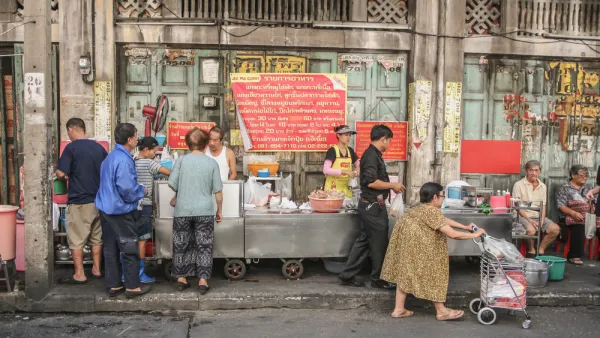
Is the End of Bangkok Street Food Vending Near?
Street food vendors are an integral part of the Bangkok urban landscape, but city planners want to see them gone.
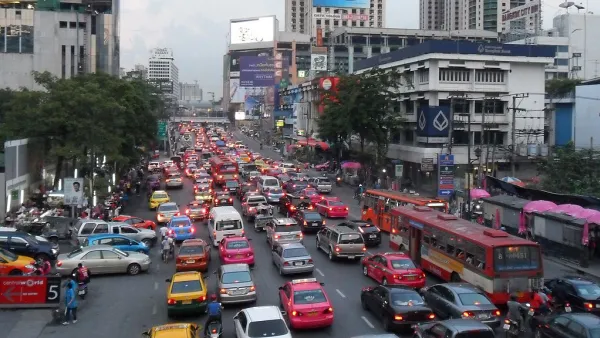
Congested, Threatened by Climate Change, Thailand Considers a New Location for Capital
The prime minister of Thailand has proposed the idea of moving the location of the country's capital, currently in Bangkok, to another location.
The World's Best City for Street Food Bans Street Food
The city of Bangkok, Thailand, is famous for its cheap and flavorful street food. City leaders, however, have decided that the city would be less appealing without street vendors.

Planetizen Federal Action Tracker
A weekly monitor of how Trump’s orders and actions are impacting planners and planning in America.

California plans to bury El Niño’s downpour
If the state plays its cards right, it may be able to store a billion acre-feet of El Niño’s water in aquifers.

Desperate measures: Advocates weigh draining Lake Powell to fill Colorado River
Draining the reservoir could reduce evaporation losses by a couple hundred thousand acre-feet.

Mamdani’s pied-à-terre tax survives legal challenge
A panel of judges found that the plaintiffs failed to demonstrate injury as a result of New York City's implementation of the tax.

Eastern Nebraska is running out of electricity
Data centers and electrification are straining eastern Nebraska’s grid, throttling economic development.

Seattle passes record-breaking transit services expansion
Proposition 1 will double the city’s transit tax to add 95,000 more bus trips and preserve 180,000 bus trips annually.

FREE Course: Walkable City 1: Why Walkability?
After describing his path towards focusing on walkability as the essence of good planning, Jeff Speck marches through his five principal reasons for making more walkable places.
Reinventing Malls: Planning Alchemy—Turning Gray Fields Into Gold
The course focuses on the opportunities and imperatives that shape reinvention of mall sites.

City of Rosemead
Rutgers University, Edward J. Bloustein School of Planning and Public Policy
One Hundred Miles
University of Michigan School for Environment and Sustainability (SEAS)
Hunter College, City University of New York (CUNY)
The Architects Foundation
City of Cambridge
Montrose County
The Pocatello Development Authority