Major developments have been popping up all over Japan's heavily urbanized cities. This piece from The Diplomat looks at what urban future lies ahead for Japan.


But some worry that some of the major developments coming to the country are killing its urban diversity.
"[E]ven in the almost 20 years since the economic bubble burst, there's still a sense of confidence that's been incorporated into super-urban Japanese settings-best-exemplified by ambitious developments in Tokyo such as ‘Artelligent City' Roppongi Hills, the trendy new buildings that comprise the Marunouchi district by Tokyo Station and the modern facilities of Tokyo Midtown, which debuted with much fanfare in 2007. All have emerged over the past 10 years, each time stirring the imagination of locals and visitors alike and changing the neighbourhoods they dominate dramatically.
But Worrall asserts that while these sorts of developments are created with good intentions-for example the Tokyo Midtown complex as ‘an environment of high-end, good-taste design, luxuriously appointed and fastidiously executed'-in the end they can become something that's ‘devoid of the urban diversity' that is boasted as being their guiding principle."
Read the full story: Japan’s Future Look
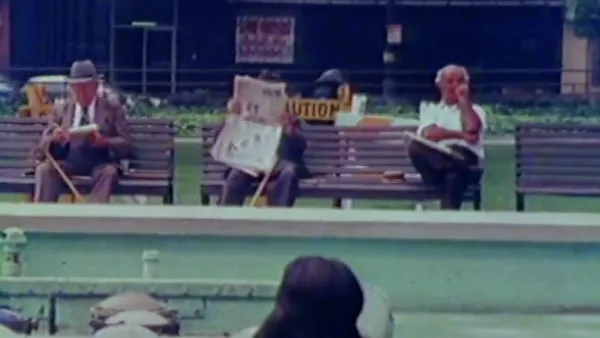
William Whyte’s Seminal Urban Film Restored
‘The Social Life of Small Urban Spaces’ changed the way planners view public space and ushered in a new way of understanding urban patterns.
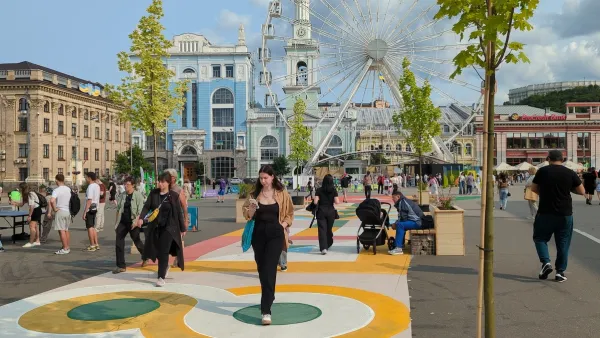
In Praise of Analog Cities: Futureproofing in a Time of Crisis
I didn’t need a pandemic or a war to teach me that smart cities weren’t the future — but it sure drove the message home.
Is This Urbanism?
Chuck Wolfe ponders a recommended subscription list of Substack urbanists and wonders — as have others — about the utility of the "urbanist" moniker.

Planetizen Federal Action Tracker
A weekly monitor of how Trump’s orders and actions are impacting planners and planning in America.

California plans to bury El Niño’s downpour
If the state plays its cards right, it may be able to store a billion acre-feet of El Niño’s water in aquifers.

Desperate measures: Advocates weigh draining Lake Powell to fill Colorado River
Draining the reservoir could reduce evaporation losses by a couple hundred thousand acre-feet.

Chicago voters approve permanent festival grounds, penalty for vacant property owners
Currently, major summer and fall festivals take over public parks for weeks at a time, drawing criticism from nearby residents

NYC votes to cut outdoor dining red tape, speed up permitting
New York City also voted to allow the Department of Transportation to begin work on urgent projects before notifying elected officials.

California appears to reject Prop. 45
The proposition would have expanded the projects that qualify for a streamlined environmental review, effectively paring down the California Environmental Quality Act.

FREE Course: Walkable City 1: Why Walkability?
After describing his path towards focusing on walkability as the essence of good planning, Jeff Speck marches through his five principal reasons for making more walkable places.
Reinventing Malls: Planning Alchemy—Turning Gray Fields Into Gold
The course focuses on the opportunities and imperatives that shape reinvention of mall sites.

City of Rosemead
Rutgers University, Edward J. Bloustein School of Planning and Public Policy
One Hundred Miles
Hunter College, City University of New York (CUNY)
The Architects Foundation
University of Cincinnati Online
City of Cambridge
Montrose County
The Pocatello Development Authority