Eric Jaffe highlights projects across the country that could be impacted by today's gubernatorial contests.


With New Jersey Governor Chris Christie's recent decision to kill the ARC tunnel, the power of state leaders to make or break high speed rail projects is more evident than ever, writes Jaffe. He argues that DOT's recent announcement of $2.4 billion in new funding makes today's races even more critical.
Contests from Massachusetts to Texas are worth watching, though California has the most at stake, writes Jaffe:
"California just added more than $900 million to the billions it already received in federal high-speed rail funding. A spokesman for Republican candidate Meg Whitman recently told the New York Times that Whitman 'doesn't believe we can afford the costs associated with new high-speed rail at this time.' Democrat Jerry Brown's campaign website makes it clear that he supports rail 'as a clean, fast, accessible alternative' to air and highway travel-one that will create jobs to boot. Brown leads, 53-45."
Read the full story: The Survival of U.S. High-Speed Rail Comes Down to Tomorrow

FresYes: How Fresno Fueled and Funded a Comeback
Recently termed-out Mayor Ashley Swearengin sits down for an exclusive interview about how she planned for high speed rail investments, championed sustainable water management, and took steps to rebuild the local economy.
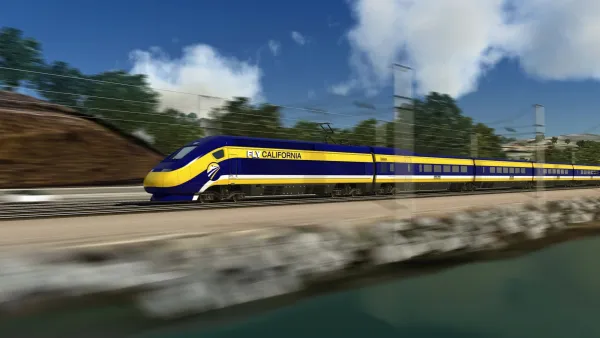
Proposed California Ballot Measure From Gas Tax Opposition Goes After High-Speed Rail
A follow-up initiative to Proposition 6 would put the brakes on high-speed rail in California and funnel gas tax funds to roads.
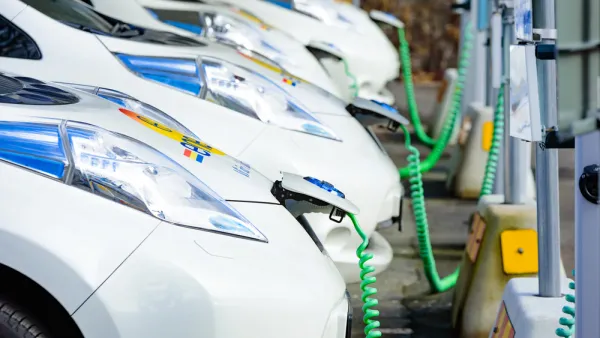
EVs Not Exempt From California’s Transportation Infrastructure Plan
Governor Jerry Brown and the California Legislature reached a historic agreement to raise the gas tax, but electric vehicle owners will now be required to pay a yearly fee, Will this impact EV sales in the US's best market?

Planetizen Federal Action Tracker
A weekly monitor of how Trump’s orders and actions are impacting planners and planning in America.

California plans to bury El Niño’s downpour
If the state plays its cards right, it may be able to store a billion acre-feet of El Niño’s water in aquifers.

Chicago breaks ground on $3 billion megadevelopment
The new neighborhood, titled Foundry Park, will one day host 3,700 residences.

California High-Speed Rail Authority CEO resigns after $600,000 scandal
Under Ian Choudri, the authority used taxpayer dollars to fund first class flights and trips to nightclubs.

Want to study the Missouri River? Soon, you may need unanimous approval from 10 states
Legislation would require 10 governors’ permission to study or build projects moving water outside the basin.

Desperate measures: Advocates weigh draining Lake Powell to fill Colorado River
Draining the reservoir could reduce evaporation losses by a couple hundred thousand acre-feet.

FREE Course: Walkable City 1: Why Walkability?
After describing his path towards focusing on walkability as the essence of good planning, Jeff Speck marches through his five principal reasons for making more walkable places.
Reinventing Malls: Planning Alchemy—Turning Gray Fields Into Gold
The course focuses on the opportunities and imperatives that shape reinvention of mall sites.

City of Rosemead
Rutgers University, Edward J. Bloustein School of Planning and Public Policy
One Hundred Miles
Hunter College, City University of New York (CUNY)
The Architects Foundation
University of Cincinnati Online
City of Cambridge
Montrose County
The Pocatello Development Authority