The Town of Kingston, Massachusetts won a lawsuit this week, filed over whether land around the town's commuter rail station was properly rezoned -- but lost the promised developer and a state grant for smart growth in the process.


The developer had planned 730 units of housing and 300,000 sq. ft. of commercial space, but bailed when the legal process got too long and costly. The state grant of $600,000 is still in question.
Reporter Jon Chesto writes that instead, "property owner Mary O'Donnell is moving forward with plans to build four wind turbines on the 109-acre site off Marion Drive."
The State Supreme Court, in their decision, said that the town had made some errors but they weren't egregious enough to negate the zoning amendment.
Read the full story: SJC sides with Kingston in battle over zoning near train station

Pre-Permitted Housing Plans Can Combat Blight, Revive Neighborhoods
Faced with blighted neighborhoods where the cost of building a house would exceed its eventual market value, the city of Kalamazoo, Michigan, streamlined the permitting process to help lower development costs.
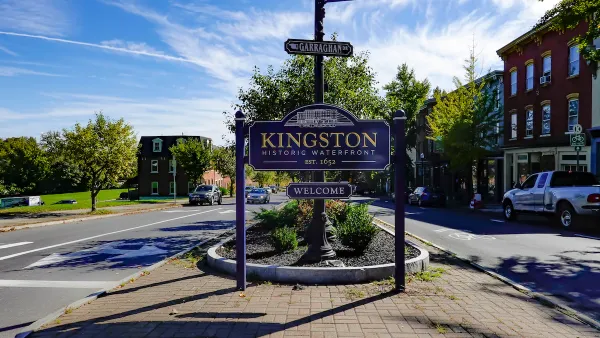
Kingston, New York Goes 100 Percent Form-Based for its New Code
Kingston recently adopted a form-based code, taking the rare step to entirely replace its old zoning code with form-based standards while also repealing parking requirements and allowing accessory dwelling units and missing middle housing.

Where and Why Rezonings Are More Likely to Succeed
A new analysis of developer-initiated rezonings in Louisville, Kentucky sheds light on how the land use regulation system works.

Planetizen Federal Action Tracker
A weekly monitor of how Trump’s orders and actions are impacting planners and planning in America.

California plans to bury El Niño’s downpour
If the state plays its cards right, it may be able to store a billion acre-feet of El Niño’s water in aquifers.

Desperate measures: Advocates weigh draining Lake Powell to fill Colorado River
Draining the reservoir could reduce evaporation losses by a couple hundred thousand acre-feet.

Los Angeles just elected an urban planner as its mayor
Transportation analysts are optimistic that Raman will be more aggressive in addressing transit issues than Bass.

Mamdani’s pied-à-terre tax survives legal challenge
A panel of judges found that the plaintiffs failed to demonstrate injury as a result of New York City's implementation of the tax.

Eastern Nebraska is running out of electricity
Data centers and electrification are straining eastern Nebraska’s grid, throttling economic development.

FREE Course: Walkable City 1: Why Walkability?
After describing his path towards focusing on walkability as the essence of good planning, Jeff Speck marches through his five principal reasons for making more walkable places.
Reinventing Malls: Planning Alchemy—Turning Gray Fields Into Gold
The course focuses on the opportunities and imperatives that shape reinvention of mall sites.

City of Rosemead
Rutgers University, Edward J. Bloustein School of Planning and Public Policy
One Hundred Miles
University of Michigan School for Environment and Sustainability (SEAS)
Hunter College, City University of New York (CUNY)
The Architects Foundation
City of Cambridge
Montrose County
The Pocatello Development Authority