A new report from the American Wind Energy Association (AWEA) says that the number of small wind turbines in the U.S. has grown considerably over the last year, adding 20 megawatts of production.


Martin LaMonica writes, "Consumer demand and improved technology are helping fuel sales, but the most important factor was the passage in October 2008 of a 30 percent tax credit for renewable energy systems. About half of the total industry growth has happened in the last three years, said Ron Stimmel, the manager of legislative affairs and small systems at AWEA, in an interview earlier this month. There have been about 100,000 units sold since 1980."
From the report: "The world's leading 15 manufacturers continue to predict exponential sales growth in the U.S. market over the next five years, with projections of over one gigawatt (1,000 Megawatts) of cumulative installed small wind capacity in the U.S. by 2015..."
Full report can be downloaded here.
Read the full story: Small wind turbines add megawatts to U.S. grid

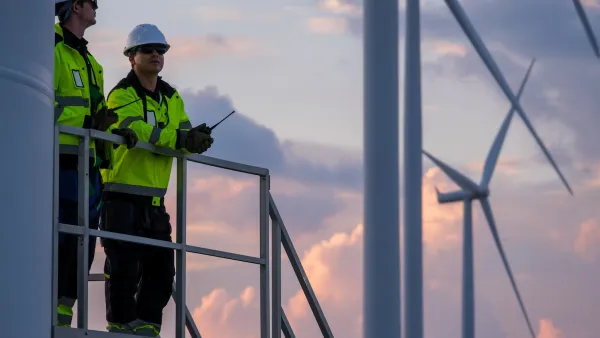
Despite court ruling, Trump is keeping nearly all wind projects in the US on hold
At least 110 wind energy projects have not heard from the government since a federal judge ruled that the Trump administration's freeze on wind turbine clearances was likely illegal.
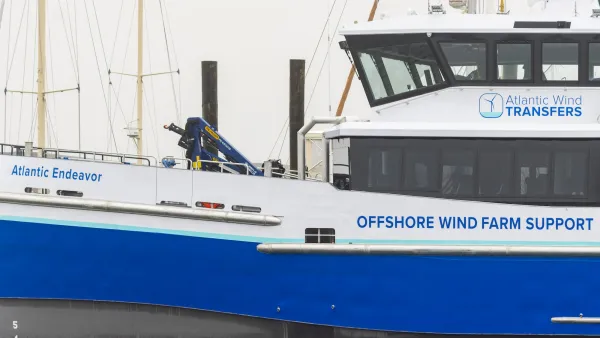
Nation’s Largest Offshore Wind Project, Suspended by Trump, Restarts Construction
A judge issued a temporary restraining order against the Trump administration’s suspension of five East Coast offshore wind projects.
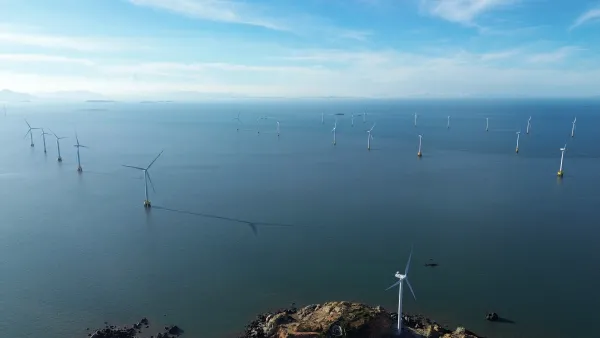
China is Building the World’s First Underwater, Wind-Fuelled Data Center
The facility claims it will cut energy demand by 22.8%.

Planetizen Federal Action Tracker
A weekly monitor of how Trump’s orders and actions are impacting planners and planning in America.
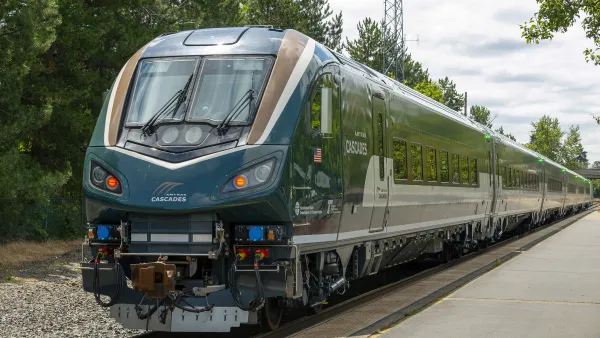
Northwest rail fans eager for Sept. 30 debut of Amtrak’s Airo fleet
Get ready for that new train smell and more seats. But they won’t go faster or run more frequently on the Cascades route in Washington and Oregon.

Trump is considering data centers on 6 states' public land — some state officials say they had no idea
If the administration approves the proposed projects, data center and data center-related developments will cover 17,600 acres of public land.

After decades of planning, Sacramento gains new light rail station
Trains will arrive every 15 minutes during peak hours and every 30 minutes during non-peak hours.

Massive tunnel-boring machine breaks ground on Gateway Project
The Trump administration revoked funding for the project in October 2025, and then restored it earlier this year.

Airo trainsets begin service on Amtrak Cascades route
The trains feature panoramic windows, complementary wifi and over 300 seats per train set.

FREE Course: Walkable City 1: Why Walkability?
After describing his path towards focusing on walkability as the essence of good planning, Jeff Speck marches through his five principal reasons for making more walkable places.
Reinventing Malls: Planning Alchemy—Turning Gray Fields Into Gold
The course focuses on the opportunities and imperatives that shape reinvention of mall sites.

City of Thousand Oaks
City of Wisconsin Rapids
Harvard University Graduate School of Design
The Architects Foundation
University of Cincinnati Online
Northern Illinois Transit Authority (NITA)
The Pocatello Development Authority
The Urban Renewal Agency of the City of Pocatello