Five young architects have taken over a derelict home in Detroit and are using it as a full-scale studio for new design ideas.


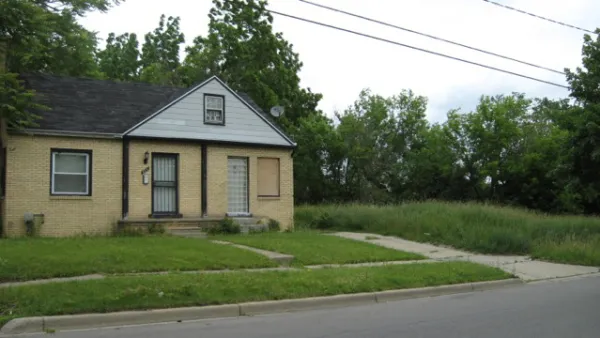
The five students from the University of Michigan pooled their funding and used part of it to buy a derelict house at auction for $500.
"From the get-go, the designers received some real street lessons in actualizing their concepts within Detroit's challenging framework of devastated neighborhoods. The house had no plumbing, electricity, doors, or windows. While these conditions would cause heart-stopping anxiety in any homeowner, it all came with the territory, according to fellow Catie Newell, who turned these challenges into assets: "Instantly, we had a site, materials, and something extraordinary to respond to." Vacant lots and abandoned homes fallen victim to foreclosure or arson surround the home. It's not likely these homes will be filled with residents anytime soon. This led the group to explore various interventions, challenging traditional single-family home typology."
Read the full story: Domestic Intervention

How Risky Lending Hollowed Out Detroit
Over one half of Detroit's foreclosed homes are blighted or abandoned. Buyers who purchased the homes for as little as $1 have little incentive to keep them in good shape—or pay taxes.
Detroit Mayor Makes Big Plans in State of City Speech
Detroit Mayor Dave Bing recently delivered his first "state of the city" speech since taking office, and included a broad list of proposals that could bring about a widespread revisioning of the struggling city.
Tough Times in Detroit, But Some Hope Remains
One in five Detroit homes is in foreclosure and asking prices are dropping to extreme lows. Many in the city question what lies in the future for the struggling city.

Planetizen Federal Action Tracker
A weekly monitor of how Trump’s orders and actions are impacting planners and planning in America.

Amtrak, CN end decades-long dispute with eight-year agreement
The new operating agreement establishes an updated framework for the companies to work together, including processes to resolve disputes.

Judges permit Denver to divert 77,000 acre feet from the Colorado River for reservoir expansion
Overuse and climate change have caused the Colorado River’s water levels to plummet.

Atlanta City Council unanimously backs $3.5 billion Beltline light rail project
The resolution was drafted after Atlanta Mayor Andre Dickens pulled support for the Atlanta Streetcar extension last year.

SEPTA to bring nearby frequent transit to over 1 million new riders as part of decade-long plan
The agency's Accelerate plan will also bring frequent transit to twice the amount of jobs that are currently located near it.

NYC plants over 18,000 trees, the most new foliage in a decade
Many of the trees were planted in communities vulnerable to extreme heat.

FREE Course: Walkable City 1: Why Walkability?
After describing his path towards focusing on walkability as the essence of good planning, Jeff Speck marches through his five principal reasons for making more walkable places.
Reinventing Malls: Planning Alchemy—Turning Gray Fields Into Gold
The course focuses on the opportunities and imperatives that shape reinvention of mall sites.

City of Thousand Oaks
City of Wisconsin Rapids
Harvard University Graduate School of Design
The Architects Foundation
University of Cincinnati Online
The Pocatello Development Authority
The Urban Renewal Agency of the City of Pocatello