Though funding is usually the limiting factor in road projects, the current shortage of a chemical is creating a sharp undersupply of the paint used to paint road lines.


The shortage of traffic striping paint is affecting the abilities of departments of transportation to put those final touches on a variety of road projects.
"The timing could scarcely be worse. Spring is when road workers emerge from their winter hibernations, and orange traffic cones pop up like yellow daffodils. In an industry whose favored medium is acrylic on pavement, the paint shortage is gumming up the works.
The Associated General Contractors of America, a major industry trade group, warned state and federal transportation officials last week that the shortage has 'very significant ramifications for completion of highway projects this summer,' and asked them not to penalize contractors and suppliers if they are unable to finish projects on time because of a paint shortage that is beyond their control."
Read the full story: Traffic Paint Shortage Threatens Roadwork
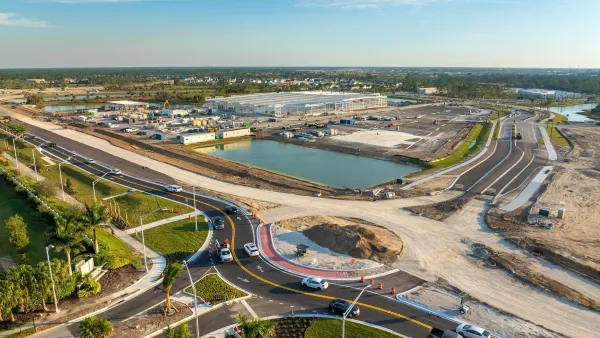
Analysis: What does America want from surface transportation reauthorization?
Over 13,000 comments were submitted in the federal Request for Information on surface transportation reauthorization. We analyzed all of them.
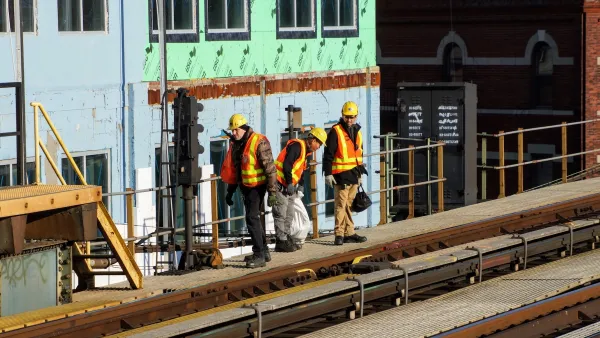
Follow Planetizen’s analysis of surface transportation reauthorization
Follow along as we explore the upcoming surface transportation reauthorization bill and its potential impacts on US transportation infrastructure in the coming years.
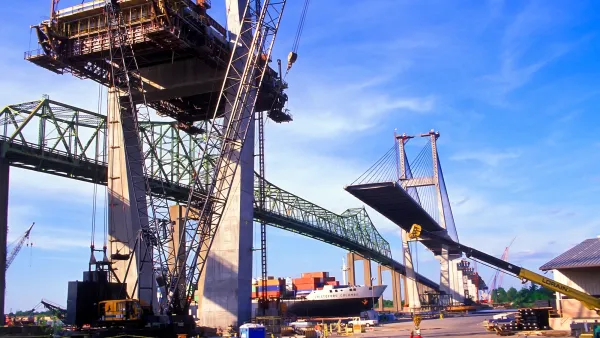
Five reasons infrastructure costs are spiking
State DOTs face a $86 billion shortfall over the next 10 years.

Desperate measures: Advocates weigh draining Lake Powell to fill Colorado River
Draining the reservoir could reduce evaporation losses by a couple hundred thousand acre-feet.

Eastern Nebraska is running out of electricity
Data centers and electrification are straining eastern Nebraska’s grid, throttling economic development.

Malls are becoming the midtowns of the future
Mall and office park redevelopments are a generational opportunity to create new nodes of urbanity.

NYC breaks ground on anti-flooding infrastructure project
New York City's new system will reduce stormwater flows to local sewers by 90%.

One Kentucky town’s secret to affordable housing
The Smoketown Community Land Trust has already built seven affordable homes for community members.

Houston gains petal-shaped cooling infrastructure to make streets more ‘delightful’
The city has installed the pavilions along 15 blocks in Houston.

FREE Course: Walkable City 1: Why Walkability?
After describing his path towards focusing on walkability as the essence of good planning, Jeff Speck marches through his five principal reasons for making more walkable places.
Reinventing Malls: Planning Alchemy—Turning Gray Fields Into Gold
The course focuses on the opportunities and imperatives that shape reinvention of mall sites.

City of Rosemead
Rutgers University, Edward J. Bloustein School of Planning and Public Policy
One Hundred Miles
University of Michigan School for Environment and Sustainability (SEAS)
Hunter College, City University of New York (CUNY)
The Architects Foundation
City of Cambridge
Montrose County
The Pocatello Development Authority