The Urbanophile reviews Richard Florida's new book, defending his populist approach and tackling Florida's central arguments of investing in the grassroots, encouraging "rentership" and the fundamental societal changes coming soon.


Florida's new book, The Great Reset: How New Ways of Living and Working Drive Post-Crash Prosperity
"Florida's recipe for cities is to favor grass roots change over big, top down redevelopment initiatives like stadiums, and investing in quality of life and place making. But he, like Glaeser, says that the primary focus of investments ought to be people, not places. This isn't a matter of writing off cities or not writing off cities, but rather a political or philosophical question about where the focus of our investments ought to be. I don't think it is either/or and neither does Florida, but you've got to make some choice as there aren't unlimited funds. Where do you give the priority?"
Renn also gives a rebuttal to recent criticism of Florida, particularly Alec McGillis' biting critique The Ruse of the Creative Class.
Read the full story: Review: The Great Reset by Richard Florida


What Are America's Fastest-Growing Cities?
Views about urban growth and decline often rely on statistics for metropolitan regions rather than cities proper. Here, Richard Florida looks at the fastest- and slowest-growing cities in America, separate from their metro areas.
Study: Good Access to Transit Attracts Startups
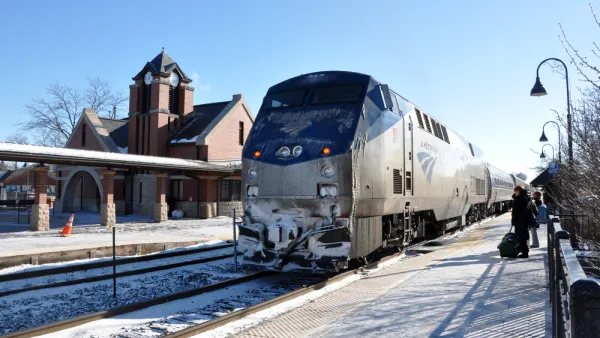
Startups are increasingly abandoning the suburban office park to try their luck in denser urban cores. According to this study, good transit is one factor behind that trend. But it's not the only one.

How Some Cities Are Losing People and Staying Prosperous
Population loss doesn't always equate to economic decline. Richard Florida discusses a study examining American metros that are retaining their economic vitality as they shrink.

Planetizen Federal Action Tracker
A weekly monitor of how Trump’s orders and actions are impacting planners and planning in America.

California plans to bury El Niño’s downpour
If the state plays its cards right, it may be able to store a billion acre-feet of El Niño’s water in aquifers.

Chicago breaks ground on $3 billion megadevelopment
The new neighborhood, titled Foundry Park, will one day host 3,700 residences.

California High-Speed Rail Authority CEO resigns after $600,000 scandal
Under Ian Choudri, the authority used taxpayer dollars to fund first class flights and trips to nightclubs.

Want to study the Missouri River? Soon, you may need unanimous approval from 10 states
Legislation would require 10 governors’ permission to study or build projects moving water outside the basin.

Desperate measures: Advocates weigh draining Lake Powell to fill Colorado River
Draining the reservoir could reduce evaporation losses by a couple hundred thousand acre-feet.

FREE Course: Walkable City 1: Why Walkability?
After describing his path towards focusing on walkability as the essence of good planning, Jeff Speck marches through his five principal reasons for making more walkable places.
Reinventing Malls: Planning Alchemy—Turning Gray Fields Into Gold
The course focuses on the opportunities and imperatives that shape reinvention of mall sites.

City of Rosemead
Rutgers University, Edward J. Bloustein School of Planning and Public Policy
One Hundred Miles
Hunter College, City University of New York (CUNY)
The Architects Foundation
University of Cincinnati Online
City of Cambridge
Montrose County
The Pocatello Development Authority