2.5 million workers are set to scour the country in the most complex demographic collection effort to date, reports the Times of India.


Though India takes its census every ten years just like in the States, 2010 will be much harder. Provided all goes according to the 11 month plan, though, the results should be much more rewarding.
The Indian government aims to not only collect demographic and biometric data, but also photographs and fingerprints from each of its billion-plus constituents. For the first time ever, residents will then each be given multi-use personal identity cards.
Keeping track of the one of the fastest growing populations in the world will be no easy task, admits Census Commissioner C. Chandramouli. The government is expected to spend Rs. 60 billion on the head count.
"India has been conducting national census since 1872," said Chandramouli. "Nothing -- floods, droughts, even wars -- has been able to stop it."
Read the full story: Counting a billion: India begins new census


US Census Starts Using Postal Workers as Census Takers
A test program is using postal carriers to administer Census questionnaires.

Two Lawsuits Aim to Strip Immigrants, Privacy Protections From US Census
The two cases could have major impacts on how Americans are counted in the next census.
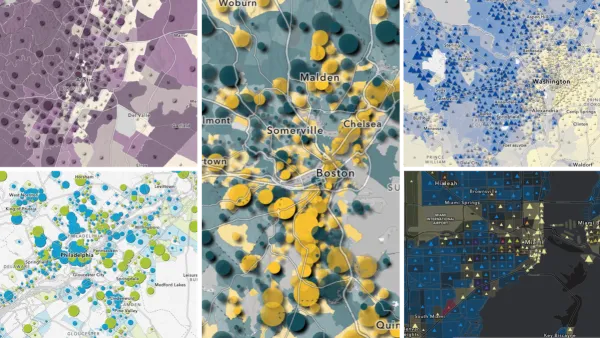
Explore US Demographics With the New ACS Atlas Collection
Esri's new ACS Atlas Collection offers interactive applications that visualize the latest U.S. demographic and socio-economic data, enabling users to explore over 175 curated web maps across various thematic areas.

Planetizen Federal Action Tracker
A weekly monitor of how Trump’s orders and actions are impacting planners and planning in America.

Amtrak, CN end decades-long dispute with eight-year agreement
The new operating agreement establishes an updated framework for the companies to work together, including processes to resolve disputes.

Nation's most wind-powered state turns to coal as data centers increase energy demand
For the first time in decades, Iowa has increased its generation of coal power.

Alabama scores up to $2.5 billion federal loan for largest infrastructure project in state’s history
The Mobile River Bridge and Bayway Project aims to ease congestion at Alabama’s worst bottleneck.

Trump is considering data centers on 6 states' public land — some state officials say they had no idea
If the administration approves the proposed projects, data center and data center-related developments will cover 17,600 acres of public land.

Despite court ruling, Trump is keeping nearly all wind projects in the US on hold
At least 110 wind energy projects have not heard from the government since a federal judge ruled that the Trump administration's freeze on wind turbine clearances was likely illegal.

FREE Course: Walkable City 1: Why Walkability?
After describing his path towards focusing on walkability as the essence of good planning, Jeff Speck marches through his five principal reasons for making more walkable places.
Reinventing Malls: Planning Alchemy—Turning Gray Fields Into Gold
The course focuses on the opportunities and imperatives that shape reinvention of mall sites.

KFH Group Inc.
Greater Baltimore Committee
Eagle County Government
The Architects Foundation
University of Cincinnati Online
The Pocatello Development Authority
The Urban Renewal Agency of the City of Pocatello