A group of investors bought New York City's Stuyvesant Town and Peter Cooper Village in 2006 at the height of the market for $5.4 billion. The speculative deal is now underwater and the investors have decided to walk away from their loans.


From The Wall St. Journal: "Tishman Speyer Properties and its primary partner BlackRock Inc. decided over the weekend to turn over the 56-building complex to creditors rather than pursue other options including potentially putting it into bankruptcy. The move came after the venture was unable to restructure the $4.4 billion in debt used to help finance its top-of-the-market purchase. The decision means that the owners won't use bankruptcy as a defensive strategy to keep control."
Who takes control over the properties is up in the air at this moment. At the time the deal was made, it was the largest real estate deal of its kind in U.S. history.
Read the full story: Control of Stuyvesant Takes Center Stage

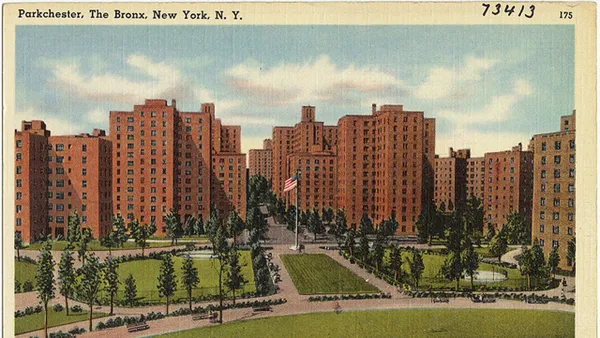
Affordable Living in The Bronx
A look at Parkchester, one of four planned communities built by the Metropolitan Life Insurance Company in New York City, circa 1940s. The complex includes over 12,000 rental and ownership apartments, located near the #6 subway.
World Record Sale for Manhattan Real Estate, Again
The $5.46 billion sale last October for the private 83 acres of Stuyvesant Town and Peter Cooper Village barely topped the prior world record set for the same property in 2006 and preserved 5,000 apartments for middle income renters.
The Ancient Cities Lost to Time and Tides
While the 2000-year-old quest to locate the submerged island of Atlantis continues to this day, plenty of cities have suffered the same fate. The futurist website io9 looks at several "once-majestic" cities now buried beneath the sea.

Planetizen Federal Action Tracker
A weekly monitor of how Trump’s orders and actions are impacting planners and planning in America.

Amtrak, CN end decades-long dispute with eight-year agreement
The new operating agreement establishes an updated framework for the companies to work together, including processes to resolve disputes.

Judges permit Denver to divert 77,000 acre feet from the Colorado River for reservoir expansion
Overuse and climate change have caused the Colorado River’s water levels to plummet.

Philadelphia to invest $2 billion into upgrading city airports as PHL places last in customer satisfaction
Modernizations to Philadelphia's airports will include baggage system upgrades and a new automated parking garage guidance system.

The LA housing policies making developers turn away from the city
Despite LA’s housing shortage, developers say the city’s "mansion-tax" and pandemic-era policies make it an unappealing place to build housing.

New density bill would require 7 California cities to establish regional transit hubs
The bill would also require major cities in California to permit high-rise residential buildings.

FREE Course: Walkable City 1: Why Walkability?
After describing his path towards focusing on walkability as the essence of good planning, Jeff Speck marches through his five principal reasons for making more walkable places.
Reinventing Malls: Planning Alchemy—Turning Gray Fields Into Gold
The course focuses on the opportunities and imperatives that shape reinvention of mall sites.

City of Wisconsin Rapids
Harvard University Graduate School of Design
KFH Group Inc.
The Architects Foundation
University of Cincinnati Online
The Pocatello Development Authority
The Urban Renewal Agency of the City of Pocatello