Steven Mouzon reflects on the huge investment a roadside reference like a Waffle House must make in infrastructure versus the relatively low expense for an inner-city restaurant.


Mouzon writes, "The first thing they are forced to do is to erect the 200 foot tall sign that probably costs $200,000, because travelers at highway speeds will only be on the bridge for a few seconds, and if Waffle House doesn't entice them to exit by then, they've lost their business. Next, because their entire customer base arrives by motor vehicle, they must pave every square yard of their site not occupied by their building for parking to accommodate their customers' cars (the semis must park on the street.) So is there any shadow of doubt why poor Waffle House has such ugly buildings?"
FULL STORY: the Localized Operations

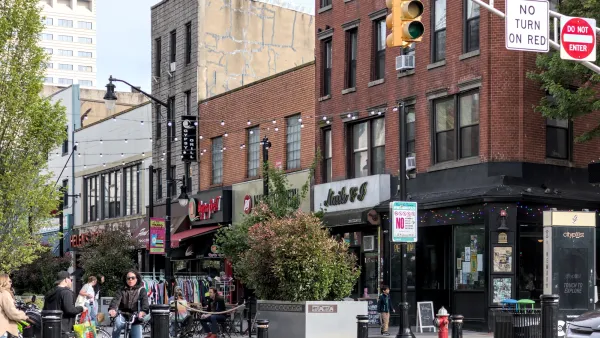
Jersey City could build 700 homes on city-owned parking lots
If approved, a redevelopment proposal would build hundreds of new homes on a pair of city parking lots.
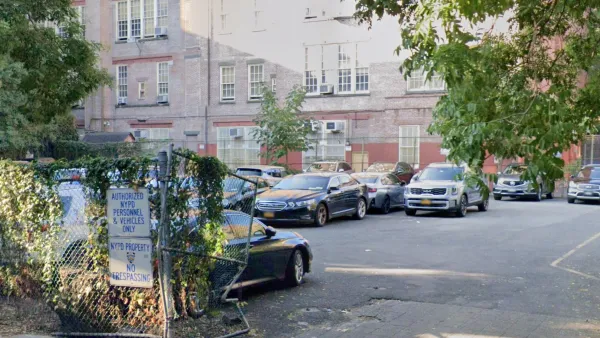
NYPD parking lot to become affordable housing as part of Mamdani's Block by Block initiative
The city awarded the lot to a group of developers to build a mixed-use project with 131 housing units.
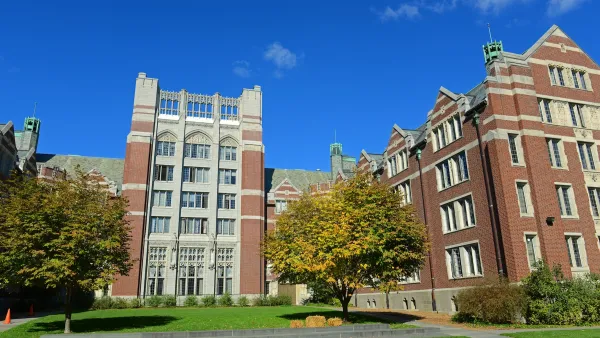
Wellesley sues state over proposed housing on state-owned parking lot
The college town opposes a 180-unit development that it says creates too much density for the area.

Planetizen Federal Action Tracker
A weekly monitor of how Trump’s orders and actions are impacting planners and planning in America.

The state-sanctioned urbicide of Austin
People don’t kill cities. Freeways do.

US to reduce Colorado River water deliveries to Mexico
A new Colorado Treaty amendment reduces Mexico’s Colorado River water allocation by 250,000 acre feet.

5 New England states march closer to 800 megawatt wind energy project
Securing federal approval for the project may be complicated under the Trump administration, which has historically been hostile towards domestic wind power.

Baltimore to break ground on $50 million Transit Priority Project
The project will bring faster bus trips, safer streets and better bike connections to Baltimore.

Airbnb launches $250 million 'last-dollar financing' housing accelerator, makes first investment in Austin
The company will put $6.4 million towards affordable housing development in Texas’ capital.

FREE Course: Walkable City 1: Why Walkability?
After describing his path towards focusing on walkability as the essence of good planning, Jeff Speck marches through his five principal reasons for making more walkable places.
Reinventing Malls: Planning Alchemy—Turning Gray Fields Into Gold
The course focuses on the opportunities and imperatives that shape reinvention of mall sites.

Eagle County Government
Harvard University Graduate School of Design
Nashville Planning Department
The Architects Foundation
University of Cincinnati Online
The Pocatello Development Authority
The Urban Renewal Agency of the City of Pocatello
Journal of the American Planning Association