Officials in Hawaii have unveiled a strategic plan for removing garbage and debris from the ocean near the Hawaiian Archipelago.


The plan was developed by the U.S. Environmental Protection Agency, the National Oceanic and Atmospheric Administration and a variety of local and environmental groups. Garbage and debris in the ocean has been a growing problem, especially since the discovery of a massive floating patch of plastic garbage was discovered in the Pacific Ocean.
"The Hawaiian Archipelago acts as a giant comb, collecting large swaths of marine debris circulating on ocean currents in the Pacific. Whales, turtles, monk seals and seabirds can be killed, injured or made sick when they eat or become entangled in marine debris, which also can damage coral reefs.
In addition, marine debris can create navigation hazards and threaten public health and safety.
Morishige said many of the partners who helped develop the Hawai'i Marine Debris Plan already are involved in debris removal, research, education and prevention activities."
FULL STORY: Ocean debris action plan debuts

A City on the Pacific Garbage Patch?
Dutch conservationists are proposing to create a floating community built on top of the patch of garbage swirling out in the middle of the Pacific Ocean.
The Island of Garbage
This 12-part video series from Vice gives a gritty look at the Texas-sized patch of plastic flotsam that has formed in the Pacific Ocean -- and the global environmental and health hazards it presents.
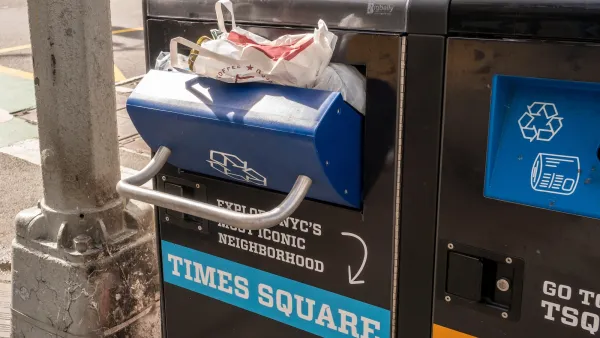
Why is Public Sanitation so Hard?
U.S. cities struggle to keep streets and sidewalks clean. Some are turning to high-tech trash cans to help.

Planetizen Federal Action Tracker
A weekly monitor of how Trump’s orders and actions are impacting planners and planning in America.

The state-sanctioned urbicide of Austin
People don’t kill cities. Freeways do.

US to reduce Colorado River water deliveries to Mexico
A new Colorado Treaty amendment reduces Mexico’s Colorado River water allocation by 250,000 acre feet.

5 New England states march closer to 800 megawatt wind energy project
Securing federal approval for the project may be complicated under the Trump administration, which has historically been hostile towards domestic wind power.

Baltimore to break ground on $50 million Transit Priority Project
The project will bring faster bus trips, safer streets and better bike connections to Baltimore.

Airbnb launches $250 million 'last-dollar financing' housing accelerator, makes first investment in Austin
The company will put $6.4 million towards affordable housing development in Texas’ capital.

FREE Course: Walkable City 1: Why Walkability?
After describing his path towards focusing on walkability as the essence of good planning, Jeff Speck marches through his five principal reasons for making more walkable places.
Reinventing Malls: Planning Alchemy—Turning Gray Fields Into Gold
The course focuses on the opportunities and imperatives that shape reinvention of mall sites.

Eagle County Government
Harvard University Graduate School of Design
Nashville Planning Department
The Architects Foundation
University of Cincinnati Online
The Pocatello Development Authority
The Urban Renewal Agency of the City of Pocatello
Journal of the American Planning Association