The market for big box spaces plunged during the recession as companies like Circuit City folded. But demand is very slightly picking up, and in some places it never went away.


Retail Traffic Magazine reports that certain retailers are still looking for the right locations to expand, and that reusing existing space is seen as a money saver over new construction. But even more than before, the selling point is location, location, location.
"During the peak of the market many big-box operators opened locations in emerging areas, hoping to capitalize on future residential growth. Those stores might sit unoccupied for years, until the residential sector resurges, [David Solomon, president of NAI ReStore] notes. In many of those cases, landlords will eventually be faced with options ranging from leasing the space to non-retail uses like schools or government agencies to walking away and giving the keys back to the lender."
FULL STORY: Expanding Retailers Begin to Look at Big-Box Spaces, but Supply Outstrips Demand

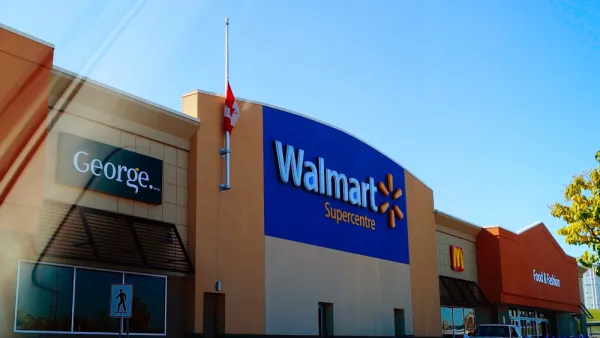
Opinion: When New Growth Is Really a 'Giant Ponzi Scheme'
Development that depends on subsidies is not fostering true growth and instead is a financial house of cards.
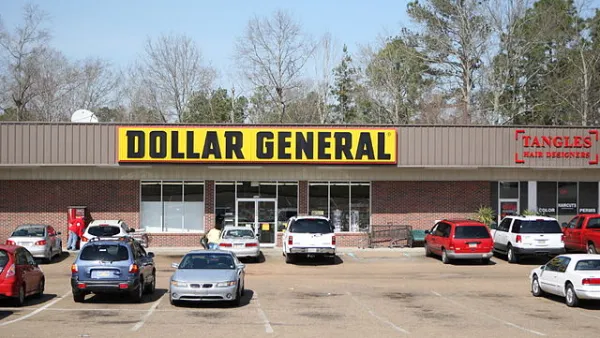
Dollar General Unveils Urban Format Store For Millennials
Now proposing to add another 900 stores in 2018, Dollar General continues to rapidly expand throughout the U.S. However, their push for a smaller more urban format is something seriously worth watching.
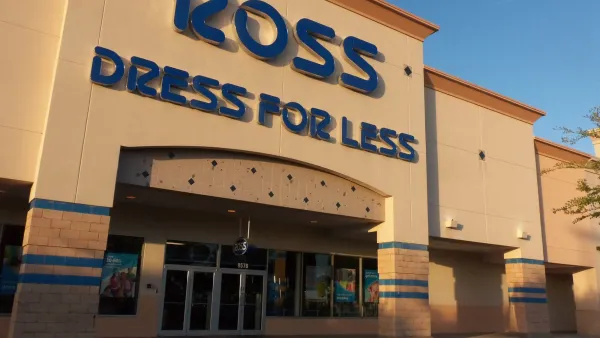
Ross May Be Immune from the Amazon Effect
Ross Stores continues its expansion in the face of a much-foretold retail apocalypse. The shopping experience it provides may be one reason it can stand up to Amazon.

The state-sanctioned urbicide of Austin
People don’t kill cities. Freeways do.

US to reduce Colorado River water deliveries to Mexico
A new Colorado Treaty amendment reduces Mexico’s Colorado River water allocation by 250,000 acre feet.

New Jersey’s second-largest city bans standalone data centers
Jersey City will continue to allow co-location facilities, such as those meant for research institutions that store their own data.

Amtrak not solely to blame for New Jersey commuter rail's unreliability, report finds
A new study from the Garden State Initiative found that NJ Transit’s budget grew 20% across a 4 year period, but reliability declined significantly over the same period.

EPA erases limits on planet-warming pollution from power plants
Under Monday’s plan, power plants would still have some limits on how much mercury, arsenic and other contaminants they can emit.

Phoenix announces new on-demand transit service, more frequent RAPID buses
Both new services will launch in October, and are part of Phoenix's Project Effective Access Solutions for Easing Congestion.

FREE Course: Walkable City 1: Why Walkability?
After describing his path towards focusing on walkability as the essence of good planning, Jeff Speck marches through his five principal reasons for making more walkable places.
Reinventing Malls: Planning Alchemy—Turning Gray Fields Into Gold
The course focuses on the opportunities and imperatives that shape reinvention of mall sites.

Eagle County Government
Harvard University Graduate School of Design
Nashville Planning Department
The Architects Foundation
University of Cincinnati Online
The Pocatello Development Authority
The Urban Renewal Agency of the City of Pocatello
Journal of the American Planning Association