Local food and small farming are part of a growing food trend in the U.S. But, as Steph Larsen writes, the trend is going to need more infrastructure down the supply chain to sustain itself


"Society is beginning to see farming as a dignified and profitable profession again, and with that comes market demand for good farmers, respect for the profession, government programs to encourage new farmers, and training and educational opportunities. We need similar opportunities for small-scale butchers, millers, bakers, and other types of processors.
Local food distribution has received even less attention than processing, and it is a complex piece of the food chain we'll have to get creative about if local food will be available in grocery stores. In Nebraska, where I live, the distributor serving most of the rural grocery stores has a weekly buying minimum. A grocer won't even consider buying produce from a local farmer if it will put them below their minimum because the distributor levies a fine."
When small farms were replaced by big agri-business, many of the community-based related industries like butchers and millers dried up. Larsen wrties that small farming will need those related industries to re-emerge if local food is to be a sustainable industry.
Read the full story: It takes a community to sustain a small farm

Infrastructure the Limiting Factor for Local Food Movement
The local food movement is growing in popularity, but a lack of related agricultural and processing infrastructure is holding back its spread.
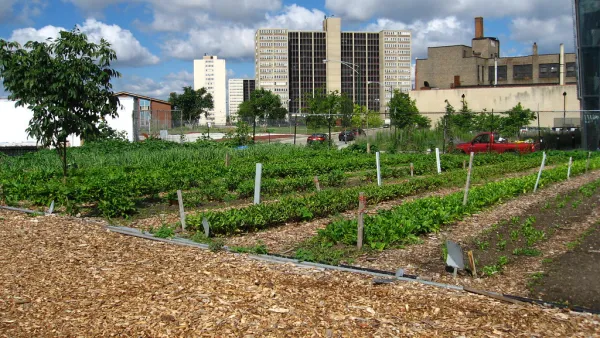
Is This a Way Forward for Urban Farming?
Pulling in community members and a network of local nonprofits, Phoenix's "Spaces of Opportunity" is an attempt to make urban farming something more than a catchphrase.
What Distinguishes a 'Real' CSA?
Community-supported agriculture (CSA) programs originally let local buyers support local growers. But with a rise in subscription-based "food box" clubs, it's getting harder to say what a real CSA looks like.

Planetizen Federal Action Tracker
A weekly monitor of how Trump’s orders and actions are impacting planners and planning in America.

Data reveals that NYC’s bet on congestion pricing has paid off
After almost two years of the program, reports show positive impacts on traffic and air quality and no disruptions to parking.

HUD modernizes 50-year-old manufactured housing framework
The Next Generation Manufactured Housing Action Plan establishes new energy-efficiency standards for manufactured homes, and new guidelines for anchoring them.

Developers sue Mississippi landowners who object to pipeline through their land
Because the Federal Energy Regulatory Commission approved the pipeline project, the developer can use private land without the consent of the owner.

A gas leak in NYC is costing residents $300 million
More than 90% of NYC’s electricity is from natural gas. About 2% of that gas is leaking and escaping into the air.

CA officials have the power to fix the state’s riskiest dams. They’ve never used it
California’s 40 most hazardous dams would endanger up to 1.5 million people if they failed.

FREE Course: Walkable City 1: Why Walkability?
After describing his path towards focusing on walkability as the essence of good planning, Jeff Speck marches through his five principal reasons for making more walkable places.
Reinventing Malls: Planning Alchemy—Turning Gray Fields Into Gold
The course focuses on the opportunities and imperatives that shape reinvention of mall sites.

One Hundred Miles
County of Mendocino
planning NEXT
The Architects Foundation
University of Cincinnati Online
Montrose County
Northern Illinois Transit Authority (NITA)
The Pocatello Development Authority