Britain is becoming increasingly privatized as urban regeneration projects put entire neighborhoods in the hands of developers. One project spans 34 of Liverpool's streets, putting public space in private control.


Anna Minton writes, "In their defence, politicians and developers point out that people like these places and flock to shop in them. But they also raise a challenge to the kind of public life, culture and democracy that has been taken for granted in British cities for the last 150 years. A host of seemingly innocuous activities – skateboarding, rollerblading, even eating in some places – are routinely banned, along with filming and, of course, taking photographs. So is begging, homelessness, selling the Big Issue, handing out political leaflets, and holding political demonstrations. It's a very different and far less democratic idea of the city and citizenship."
Read the full story: These cities within cities are eating up Britain's streets
Why Public Spaces Are Crucial for 'the Future of the Human Race'
Jay Walljasper chronicles the decline of lively public spaces in the era of "rampant traffic, proliferating privatization, heightened security...and the internet," and human kind's existential need for protecting and expanding the public realm.
Park Funding Problems? Privatize
More parks in the U.S. should fight funding issues through privatization, writes John Stossel.
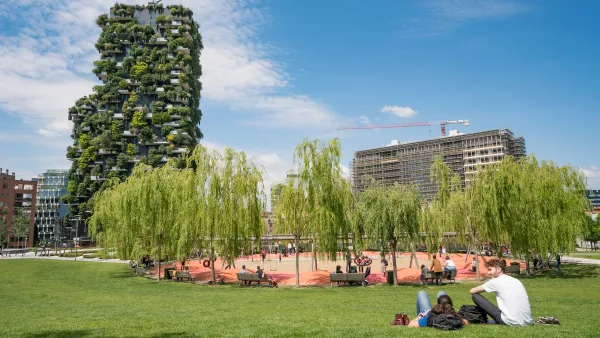
Planning for Love, Part 1: The link between urban form and dating
A brief exploration of dating through history highlights how the spaces in which we live and move shape our social lives and relationships.

Planetizen Federal Action Tracker
A weekly monitor of how Trump’s orders and actions are impacting planners and planning in America.

California plans to bury El Niño’s downpour
If the state plays its cards right, it may be able to store a billion acre-feet of El Niño’s water in aquifers.

Desperate measures: Advocates weigh draining Lake Powell to fill Colorado River
Draining the reservoir could reduce evaporation losses by a couple hundred thousand acre-feet.

Los Angeles just elected an urban planner as its mayor
Transportation analysts are optimistic that Raman will be more aggressive in addressing transit issues than Bass.

Mamdani’s pied-à-terre tax survives legal challenge
A panel of judges found that the plaintiffs failed to demonstrate injury as a result of New York City's implementation of the tax.

Eastern Nebraska is running out of electricity
Data centers and electrification are straining eastern Nebraska’s grid, throttling economic development.

FREE Course: Walkable City 1: Why Walkability?
After describing his path towards focusing on walkability as the essence of good planning, Jeff Speck marches through his five principal reasons for making more walkable places.
Reinventing Malls: Planning Alchemy—Turning Gray Fields Into Gold
The course focuses on the opportunities and imperatives that shape reinvention of mall sites.

City of Rosemead
Rutgers University, Edward J. Bloustein School of Planning and Public Policy
One Hundred Miles
University of Michigan School for Environment and Sustainability (SEAS)
Hunter College, City University of New York (CUNY)
The Architects Foundation
City of Cambridge
Montrose County
The Pocatello Development Authority