Developer Jim Jacoby likes to joke that his move into alternative energy and mixed-use development is penance for a history of building WalMarts.


Jacoby talks about a number of interesting brownfields he's been redeveloping.
"The expansion to alternative energy for Jacoby started in 2001 with a project in Hawaii. Kona Kai Ola was a proposed massive development spanning more than 350 acres, eventually scrapped because of an unfavorable political climate. The mixed-use community, which never came to fruition, was to be based around he use of alternative energy. Water taken from 3,000 feet under the ocean, for instance, was to be used to air-condition the entire project."
FULL STORY: Brownfield Developer Jim Jacoby Is Aglow Over Alternative Energy Business

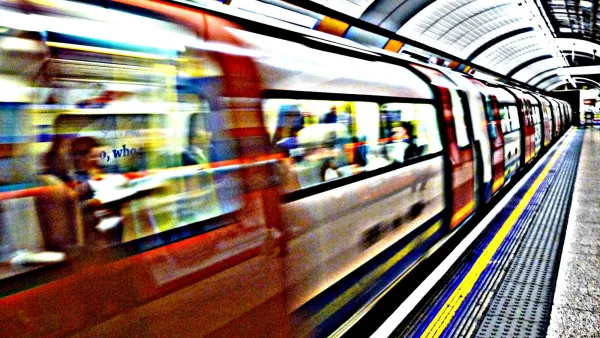
London Underground 'Waste Heat' to Warm City Homes
Part of a plan to move United Kingdom to renewable energy involves using heat from the London Underground to heat homes.
Global Call for Ideas Reveals Promising Resilience Solutions
Superstorm Sandy spurred the New York City Economic Development Corporation to form the RISE:NYC program, a global competition for innovative solutions to post-disaster resiliency. Arup's Sarah Wesseler spoke with them to learn more.
Friday Funny: Alternative Energy Will Enable Americans to Waste More Energy
A fake news report from the fake news site The Onion lampoons the American culture of excess and its disregard for environmental consequences.

Planetizen Federal Action Tracker
A weekly monitor of how Trump’s orders and actions are impacting planners and planning in America.

The state-sanctioned urbicide of Austin
People don’t kill cities. Freeways do.

US to reduce Colorado River water deliveries to Mexico
A new Colorado Treaty amendment reduces Mexico’s Colorado River water allocation by 250,000 acre feet.

5 New England states march closer to 800 megawatt wind energy project
Securing federal approval for the project may be complicated under the Trump administration, which has historically been hostile towards domestic wind power.

Baltimore to break ground on $50 million Transit Priority Project
The project will bring faster bus trips, safer streets and better bike connections to Baltimore.

Airbnb launches $250 million 'last-dollar financing' housing accelerator, makes first investment in Austin
The company will put $6.4 million towards affordable housing development in Texas’ capital.

FREE Course: Walkable City 1: Why Walkability?
After describing his path towards focusing on walkability as the essence of good planning, Jeff Speck marches through his five principal reasons for making more walkable places.
Reinventing Malls: Planning Alchemy—Turning Gray Fields Into Gold
The course focuses on the opportunities and imperatives that shape reinvention of mall sites.

Eagle County Government
Harvard University Graduate School of Design
Nashville Planning Department
The Architects Foundation
University of Cincinnati Online
The Pocatello Development Authority
The Urban Renewal Agency of the City of Pocatello
Journal of the American Planning Association