In his forward to James McCommons' new book, Waiting on a Train: The Embattled Future of Passenger Rail Service, James Howard Kunstler lays out the case for investing in a revival of passenger rail.


Kunstler, nostalgically recalling his pleasant and even luxurious childhood journeys by train, laments the fact that these days
"...train travel in the United States has become a pretty bare-bones affair. Amtrak has become the laughingstock of the world. Most Americans now living have never even been passengers on a train -- for them it's as outmoded as the stagecoach."
However, with the economy in crisis and traditional energy supplies running low, investing in passenger rail may be the best way to keep people and goods moving, and rebuilding the economy. He argues that
"the tracks are still lying out there rusting in the rain, waiting to be fixed. The job doesn't require the reinvention of anything -- we already know how to do it. Rebuilding the system would put scores of thousands of people to work at meaningful jobs at all levels. The fact that we're barely talking about it shows what an unserious people we have become."
Read the full story: It's Time to Rebuild Our Passenger Railroad System
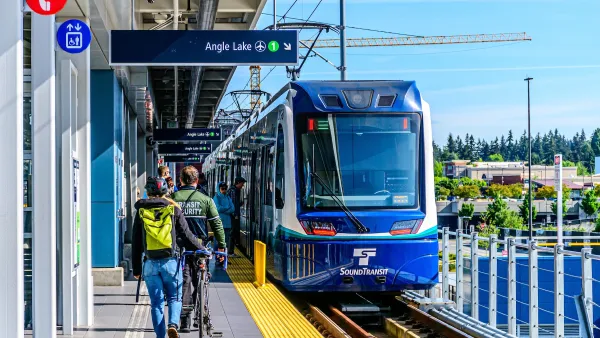
Sound Transit says train to Ballard is still coming
Agency officials say reports of the line's demise are exaggerated and that it remains in its plans.
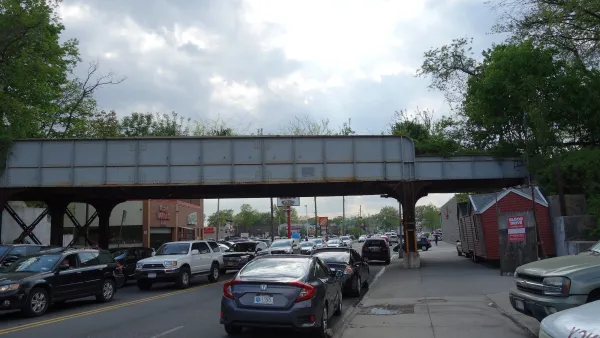
Mamdani Budget Funds Queensway, Dimming Hope for Reactivated Long Island Rail
Supporters of a proposed rail extension say building the elevated park as proposed would make it harder to bring trains back to this part of Queens.
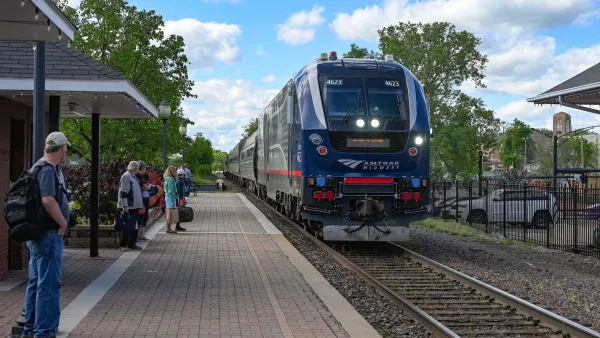
FRA Wants to Split Amtrak in 3, Sparking Privatization Fears
A proposal to restructure the rail agency could streamline accountability — or add more bureaucracy.

Planetizen Federal Action Tracker
A weekly monitor of how Trump’s orders and actions are impacting planners and planning in America.

Eastern Nebraska is running out of electricity
Data centers and electrification are straining eastern Nebraska’s grid, throttling economic development.

Study reveals best places in the U.S. for cycling, walking
New research from Streetlight Data examines bicycle and pedestrian miles per capita in the 100 largest U.S. cities by population.

DSA members accuse Mamdani of 'abandoning values' over housing redevelopment
New York City's mayor plans to replace about 2,000 units of public housing with private, mixed-income housing.

All sides of BRT debate unhappy with CDOT’s most recent move
The Colorado Department of Transportation is no longer considering center-running bus lanes for Colorado Boulevard.

Massachusetts bogs generate both power, and cranberries
Putting solar panels above farmland is one way Massachusetts is advancing toward its goal of net-zero carbon emissions by 2050.

FREE Course: Walkable City 1: Why Walkability?
After describing his path towards focusing on walkability as the essence of good planning, Jeff Speck marches through his five principal reasons for making more walkable places.
Reinventing Malls: Planning Alchemy—Turning Gray Fields Into Gold
The course focuses on the opportunities and imperatives that shape reinvention of mall sites.

City of Rosemead
Rutgers University, Edward J. Bloustein School of Planning and Public Policy
One Hundred Miles
University of Michigan School for Environment and Sustainability (SEAS)
Hunter College, City University of New York (CUNY)
The Architects Foundation
City of Cambridge
The Pocatello Development Authority
The Urban Renewal Agency of the City of Pocatello