M.I.T.'s Senseable City Laboratory launched a project to track the journey of garbage and recyclables, using small electronic sensors, in Seattle and New York City, in part to highlight the high cost of waste to the environment and cities.


"Collecting, transporting, storing and getting rid of garbage is a costly and often daunting task for cities. Lynn Brown, a spokeswoman for Waste Management Inc., a company that runs both landfills and recycling centers nationwide and is helping to underwrite the tracking project with $300,000, said garbage moved through a vast network of sites run by multiple contractors, which makes it challenging to find the most efficient way to handle it.
It also means hundreds of possible journeys for trash.
'From a logistics standpoint, it's a very complicated situation,' Ms. Brown said. 'When you look at how waste is handled in different cities, it's like snowflakes. It's all different.'"
Thanks to ArchNewsNow
Read the full story: Following Trash and Recyclables on Their Journey

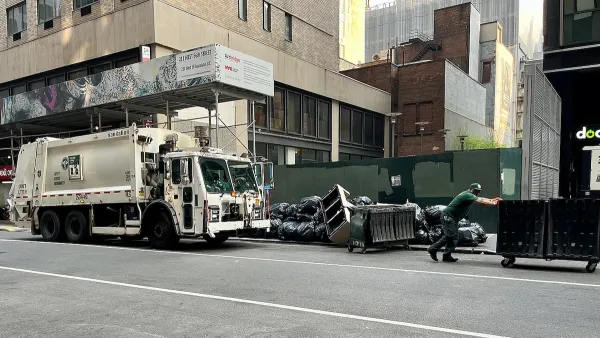
Parked Cars Hamper NYC Trash Containerization Effort
Sanitation workers must manually collect bags from containers blocked by parked cars, slowing a process that is meant to be safer and more efficient.
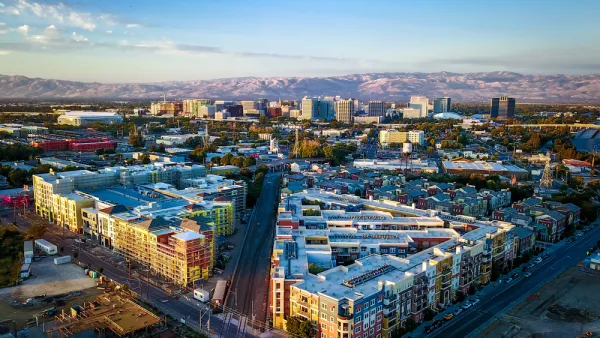
Cities Are Interested in Adopting Generative AI. What’s Stopping Them?
Only a fraction of cities interested in using generative artificial intelligence to enhance how they operate have made moves to adopt to the technology. What are the obstacles to adoption and what can be learned from local governments who’ve already taken the leap?
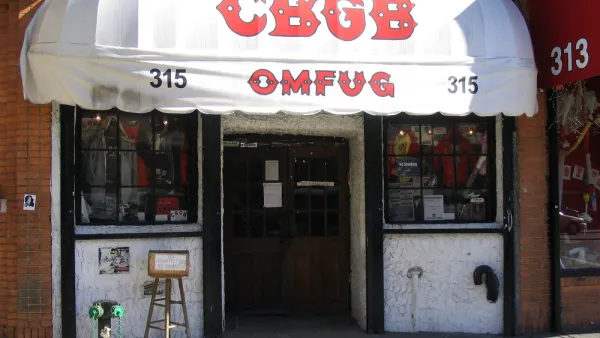
Opinion: Lower Rents Will Give Downtown Spaces Back to the ‘Weirdos’
Introducing the “CBGB theory of city planning.”

Planetizen Federal Action Tracker
A weekly monitor of how Trump’s orders and actions are impacting planners and planning in America.

Amtrak, CN end decades-long dispute with eight-year agreement
The new operating agreement establishes an updated framework for the companies to work together, including processes to resolve disputes.

Judges permit Denver to divert 77,000 acre feet from the Colorado River for reservoir expansion
Overuse and climate change have caused the Colorado River’s water levels to plummet.

NYC DOT wants faster, more permanent street upgrades
The city is examining ways to build more concrete infrastructure without getting entangled in 'decades-long' projects.

'Something we’ve never seen before:' rising utility rates could strain city finances nationwide
Data centers, climate change and other factors have caused utility rates in the United States to increase by 38% since 2020.

Trump to overrule local leaders, lease millions of acres of America’s Pacific Island territories’ seafloors to mining companies
International law says that the Indigenous people of America’s territories have a right to prior and informed consent regarding projects that impact their countries.

FREE Course: Walkable City 1: Why Walkability?
After describing his path towards focusing on walkability as the essence of good planning, Jeff Speck marches through his five principal reasons for making more walkable places.
Reinventing Malls: Planning Alchemy—Turning Gray Fields Into Gold
The course focuses on the opportunities and imperatives that shape reinvention of mall sites.

Harvard University Graduate School of Design
KFH Group Inc.
Greater Baltimore Committee
The Architects Foundation
University of Cincinnati Online
The Pocatello Development Authority
The Urban Renewal Agency of the City of Pocatello