Witold Rybczynski provides an illustrated history of airport architecture on Slate [Slideshow].


Witold Rybczynski reviews the history of airports with some prominent examples of airport design, and concludes that after a string of spectacular and ambitious airports -- and some equally spectacular failures -- perhaps a utilitarian approach would be best.
"What should an airport look like?...Excitement and elegance have long since worn off air travel. People just want to get where they're going as quickly and painlessly as possible. The best you hope for is that you get through the security line quickly, your flight's on time, there's space for your bag in the overhead bin, and if you're really lucky, the adjacent seat is empty. Airports have become as ubiquitous-and about as glamorous-as bus stations. Perhaps that's really the new model. In the talented hands of a Piano or a Foster, the bus station will be light and airy, but the kind of theatricality shown by the first generation of airports now seems out of place."
Read the full story: Gate Change
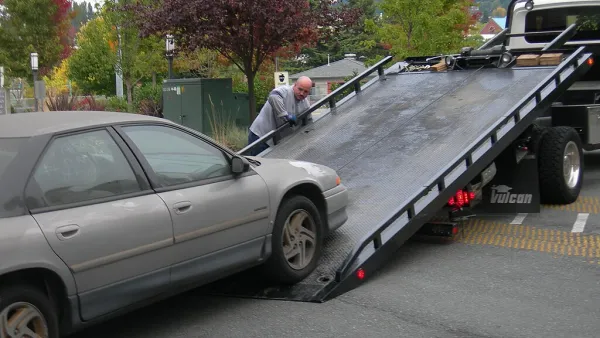
Milwaukee can now Impound Cars of Reckless Drivers
The city compares reckless drivers to firearms — “Let’s get as many of them off the street as possible.”
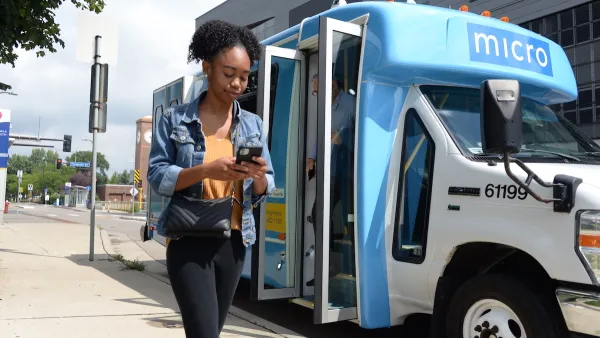
Public Transit Alternatives to Rideshare Offer Affordable and Accessible Mobility
In Minnesota, local transit agencies are seeing growth in ridership for on-demand microtransit services since the start of the pandemic.
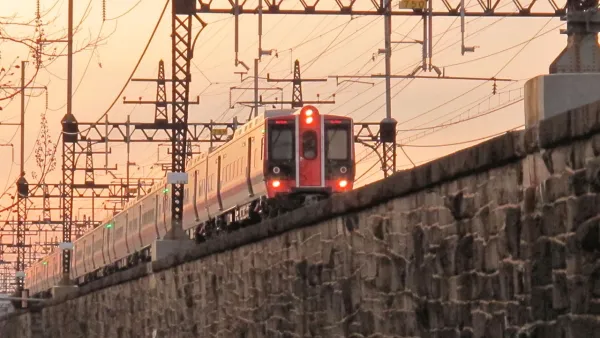
Opinion: Transportation Funding Priorities Are Outdated
Investing in technology and promoting innovation in the transportation sector can further the Biden administration's goals of reducing carbon emissions and improving public transit.

Desperate measures: Advocates weigh draining Lake Powell to fill Colorado River
Draining the reservoir could reduce evaporation losses by a couple hundred thousand acre-feet.

Eastern Nebraska is running out of electricity
Data centers and electrification are straining eastern Nebraska’s grid, throttling economic development.

Malls are becoming the midtowns of the future
Mall and office park redevelopments are a generational opportunity to create new nodes of urbanity.

NYC breaks ground on anti-flooding infrastructure project
New York City's new system will reduce stormwater flows to local sewers by 90%.

One Kentucky town’s secret to affordable housing
The Smoketown Community Land Trust has already built seven affordable homes for community members.

Houston gains petal-shaped cooling infrastructure to make streets more ‘delightful’
The city has installed the pavilions along 15 blocks in Houston.

FREE Course: Walkable City 1: Why Walkability?
After describing his path towards focusing on walkability as the essence of good planning, Jeff Speck marches through his five principal reasons for making more walkable places.
Reinventing Malls: Planning Alchemy—Turning Gray Fields Into Gold
The course focuses on the opportunities and imperatives that shape reinvention of mall sites.

City of Rosemead
Rutgers University, Edward J. Bloustein School of Planning and Public Policy
One Hundred Miles
University of Michigan School for Environment and Sustainability (SEAS)
Hunter College, City University of New York (CUNY)
The Architects Foundation
City of Cambridge
Montrose County
The Pocatello Development Authority