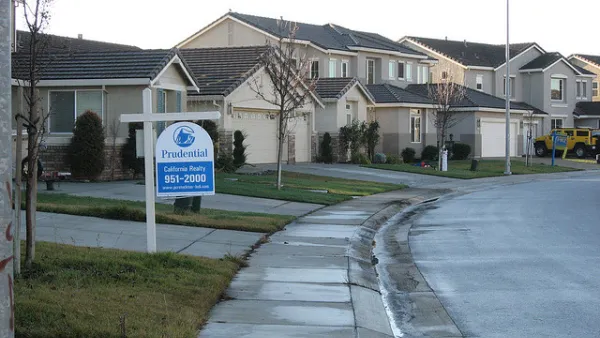
Schadenfreude is a German concept that means "taking pleasure in the suffering of others." Columnist Meghan Daum is experiencing 'debtenfreude'; the pleasure in watching house flippers and McMansion builders fall to the economic downturn.


"Characterized by self-righteous finger-wagging at over-mortgaged neighbors, and downright glee at the site of luxury car owners power washing their own tires at the coin-operated carwash, debtenfreude is at once utterly despicable and utterly human. And though it's not exactly new -- people have been judging the acquisitions of others since the first caveman envied his neighbor's stone tools -- the current strain of debtenfreude seems particularly virulent and widespread.
I think debtenfreude may have started to gain momentum during the Bernard Madoff scandal. Despite public sympathy for the duped investors, you also got the sense that some people were feeling decidedly smug. For all the outrage directed at Madoff himself, there was also a sense that his victims should have known better. "Just about anybody who actually took the time to kick the tires of Mr. Madoff's operation tended to run in the other direction," Joe Nocera of the New York Times wrote in March.
But for all the debtenfreude floating around the Madoff story, the petri dish in which the virus best thrives is the one labeled Other People's Real Estate Fiascoes. Whenever I need a fix of this special blend of callousness and cluelessness, I visit the real estate blog Curbed, which has editions in several cities and provides data and (frequently cantankerous) opinions about local real estate trends. One of the site's regular features, PriceChopper, involves showcasing a property that's had a recent price reduction and asking readers to weigh in on whether it's still overpriced."
Read the full story: Real estate's happy horror stories

Subprime Loans Are Back—Now They're Called Nonprime Loans
Some say that "nonprime" loans will create the same financial ruins as their "subprime" predecessors. Others say the housing market needs ways for more people to buy homes and drive the industry.
The Last Days of the Home Affordable Modification Program
The Washington Post takes stock of the Home Affordable Modification Program (HAMP) in its final days, finding a program hampered by bad faith from large banks and bad oversight by the Treasury Department.
The Case for Making Federal Housing Programs Like HAMP and HARP Permanent
There have been a number of federal and state programs to address the housing and foreclosure crisis. While these programs have helped a lot of people and continue to do so, many people that are qualified still have trouble completing these programs.

Planetizen Federal Action Tracker
A weekly monitor of how Trump’s orders and actions are impacting planners and planning in America.

‘Going backwards:’ Baltimore mayor, students rally against state's transit funding plan
Maryland's proposed six-year plan provides no funding for Baltimore’s BMORE bus program and reduces its road maintenance funding.

Detroit to transform waterfront with $2.2 billion investment
Developers will convert about 18 acres of unused parking lot space into civic spaces.

Exemption applications for NYC’s pied-à-terre tax see 55% success rate
The city sent nearly 40% of its initial pied-à-terre tax warnings erroneously.

MTA invests $1.1 billion in ‘nearly-impossible’-to-evade fare gates
The new technology marks the Metropolitan Transit Authority's first turnstile redesign in decades.

HUD modernizes 50-year-old manufactured housing framework
The Next Generation Manufactured Housing Action Plan establishes new energy-efficiency standards for manufactured homes, and new guidelines for anchoring them.

FREE Course: Walkable City 1: Why Walkability?
After describing his path towards focusing on walkability as the essence of good planning, Jeff Speck marches through his five principal reasons for making more walkable places.
Reinventing Malls: Planning Alchemy—Turning Gray Fields Into Gold
The course focuses on the opportunities and imperatives that shape reinvention of mall sites.

One Hundred Miles
County of Mendocino
planning NEXT
The Architects Foundation
University of Cincinnati Online
Montrose County
Northern Illinois Transit Authority (NITA)
The Pocatello Development Authority