An Arizona company is proposing a solar-powered elevated train running between Tucson and Phoenix.


"A Tucson company wants to send you someday on a sun-fueled ride from one end of the state to the other. The idea of a high-speed train that runs on solar power is still in its early stage, but the project's creators are pitching the idea to area cities and potential investors. The idea is to start a train system that connects Tucson and Phoenix in a first phase. In the future it would extend north to Grand Canyon and south to Nogales. The cost for the first phase alone is estimated at $27 billion.
The train would require 110 megawatts of electricity and would operate with solar power generated from overhead panels. It would have a dedicated right-of-way. A local transportation official said the solar-train idea may be worth further study but faces major obstacles. [A]rranging the billions in government funding likely needed for the train would be tough, especially since the Tucson-Phoenix route was not on a list of priority high-speed rail corridors released recently by the Obama administration."
Read the full story: High-speed solar train proposed as Tucson-Phoenix connection
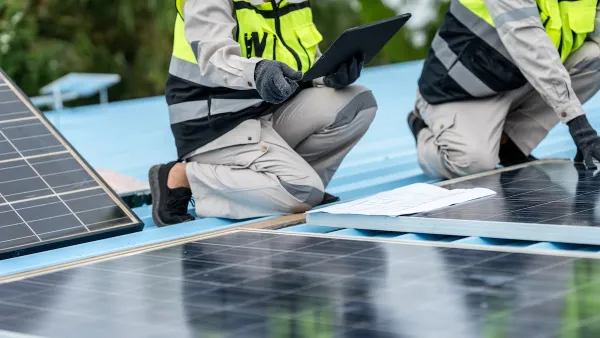
Trump administration unlawfully slashed $7 billion in clean energy grants, judge rules
The Environmental Protection Agency ended the Solar For All program, which provided the grants, after President Donald Trump’s inauguration.
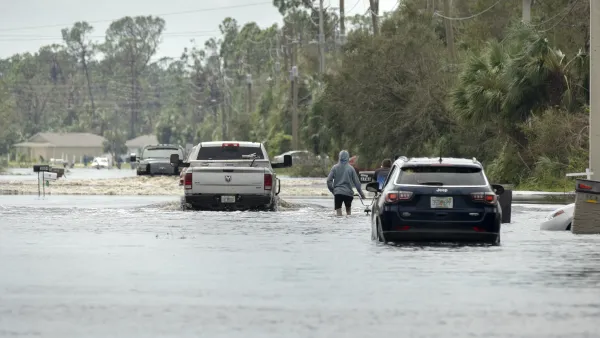
Courts order EPA to release billions in climate grants
The grants primarily funded projects aimed at Black, low-income and disadvantaged communities.
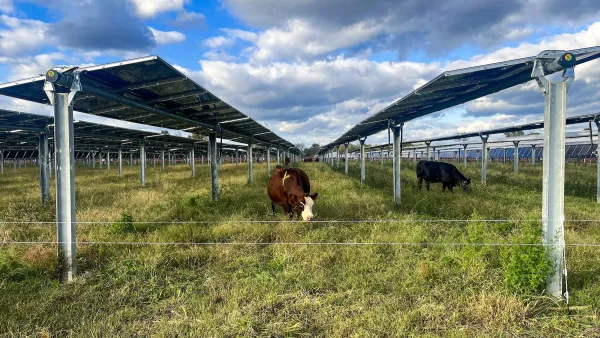
Cows at Tennessee's 'Silicon Ranch' graze under solar panels
The project aims to prove that agriculture and solar energy production can work in tandem.

Planetizen Federal Action Tracker
A weekly monitor of how Trump’s orders and actions are impacting planners and planning in America.

California plans to bury El Niño’s downpour
If the state plays its cards right, it may be able to store a billion acre-feet of El Niño’s water in aquifers.

Desperate measures: Advocates weigh draining Lake Powell to fill Colorado River
Draining the reservoir could reduce evaporation losses by a couple hundred thousand acre-feet.

In Texas, data centers are swallowing promised parkland
Residents who moved to Taylor, Texas for a rural community now have to contend with three data centers in their backyard.

How a Chicago-sized wind farm beat the odds and powered on
The project spanned five presidential administrations and a standoff with a U.S. military base.

MTA gives itself 30 days to transform pit into basketball court
The site has been under construction since 2022; the city originally estimated it would finish the court in 2024.

FREE Course: Walkable City 1: Why Walkability?
After describing his path towards focusing on walkability as the essence of good planning, Jeff Speck marches through his five principal reasons for making more walkable places.
Reinventing Malls: Planning Alchemy—Turning Gray Fields Into Gold
The course focuses on the opportunities and imperatives that shape reinvention of mall sites.

City of Rosemead
Rutgers University, Edward J. Bloustein School of Planning and Public Policy
One Hundred Miles
Hunter College, City University of New York (CUNY)
The Architects Foundation
University of Cincinnati Online
City of Cambridge
Montrose County
The Pocatello Development Authority