The City of Austin is set to take in a record amount of solar power to advance towards a goal of deriving 30% of local energy from renewable sources by 2020.


"The facility would open in late 2010 and produce enough energy annually to power up to 5,000 homes."
"It would also raise the monthly electricity bill of an average Austin homeowner, who uses 1,000 kilowatt-hours, by an estimated 60 cents, according to Austin Energy. And it has generated concern among some of Austin's large manufacturers, who say the plant could raise their bills substantially."
"The average monthly electricity bill in fiscal year 2008 among Austin single-family homes was $98.51, the utility said."
"The city has already decided to reduce its dependence on fossil fuels, and the plant would put Austin Energy on pace to meet its goal of getting 30 percent of its power from renewable power sources by 2020, utility officials said."
"'We think this is a good project,' said Michael McCluskey, Austin Energy's chief operating officer, 'and we think this is a very competitive solar project.'"
Read the full story: Austin Proposes Nation's Largest Solar Array

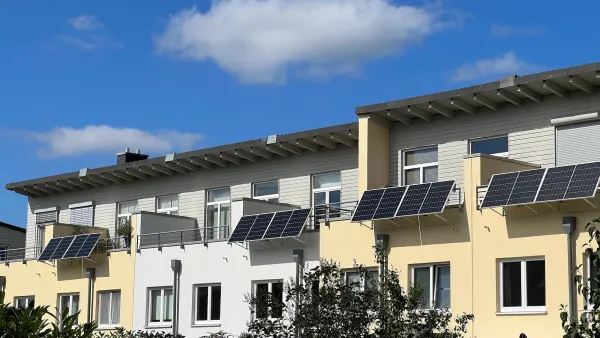
28 States and DC Could Legalize ‘Balcony Solar’
Plug-in solar panels, which are becoming popular across Europe, live in a regulatory gray area in the United States.
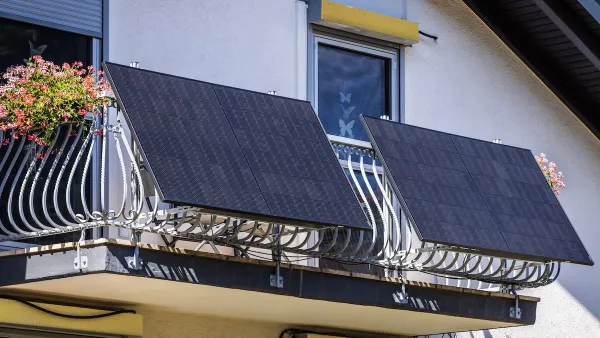
Bay Area Embraces ‘Balcony Solar’
Popular in Germany, wall- or balcony-mounted solar panels come at a lower cost and face fewer regulatory hurdles than rooftop solar, but their legal status in California is murky.
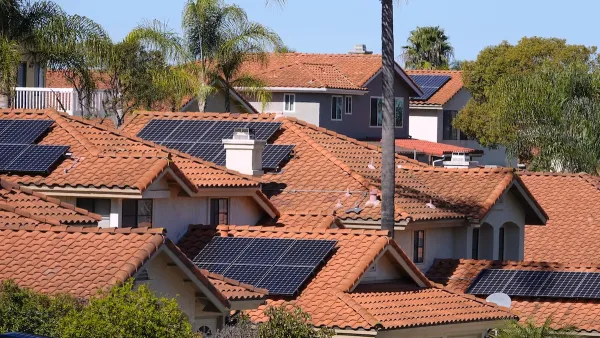
California Leads in Solar Rooftops
A combination of state and local incentives and building code mandates has helped California far outpace other states in residential rooftop solar permits.

Planetizen Federal Action Tracker
A weekly monitor of how Trump’s orders and actions are impacting planners and planning in America.

California plans to bury El Niño’s downpour
If the state plays its cards right, it may be able to store a billion acre-feet of El Niño’s water in aquifers.

Chicago breaks ground on $3 billion megadevelopment
The new neighborhood, titled Foundry Park, will one day host 3,700 residences.

One of Denver’s busiest corridors to gain BRT
The project will span 18 miles and contain 74 bus rapid transit stations.

275,000 bus trips are at stake on Seattle's ballot
If passed, the Seattle Transit Measure would trigger a 0.3% sales tax and raise an average of $138 million per year to maintain and expand Seattle’s bus services.

Texas may pay Israeli company billions to ease water woes
Texas awarded IDE Technologies the contract for its Harbor Island project, which is slated to become the Western Hemisphere's largest desalination plant.

FREE Course: Walkable City 1: Why Walkability?
After describing his path towards focusing on walkability as the essence of good planning, Jeff Speck marches through his five principal reasons for making more walkable places.
Reinventing Malls: Planning Alchemy—Turning Gray Fields Into Gold
The course focuses on the opportunities and imperatives that shape reinvention of mall sites.

City of Rosemead
Rutgers University, Edward J. Bloustein School of Planning and Public Policy
One Hundred Miles
Hunter College, City University of New York (CUNY)
The Architects Foundation
University of Cincinnati Online
City of Cambridge
Montrose County
The Pocatello Development Authority